



Antique Music Chair
An antique music chair offers adjustable comfort and period character for the pianist, harpist or cellist.
What an antique music chair is
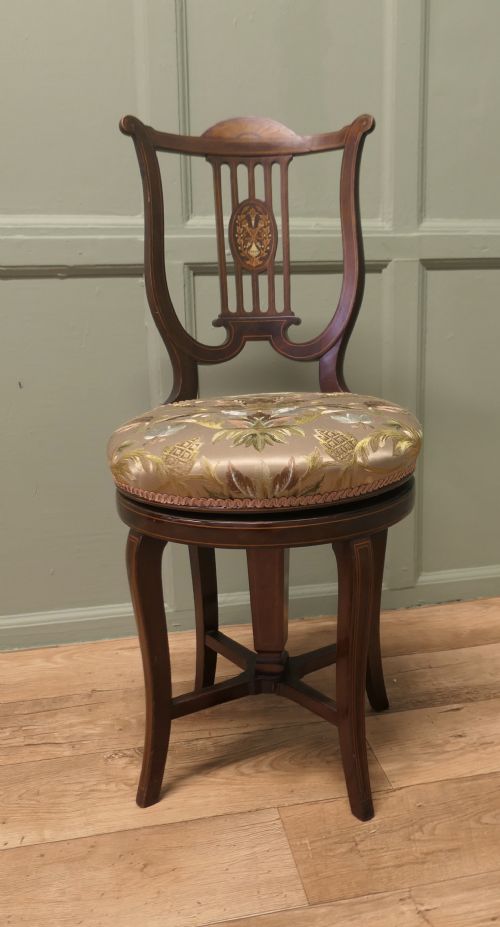
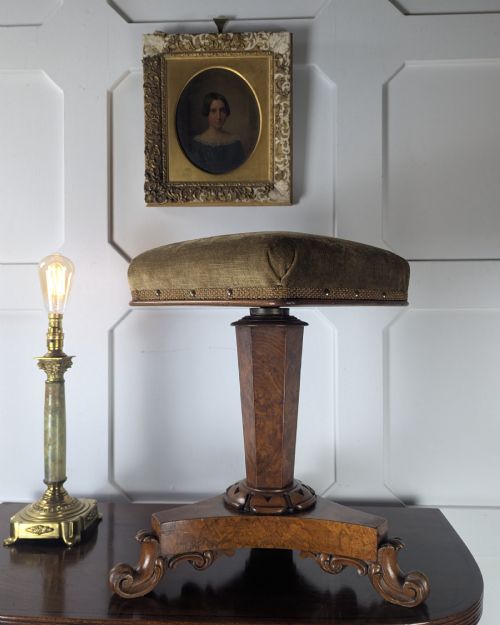
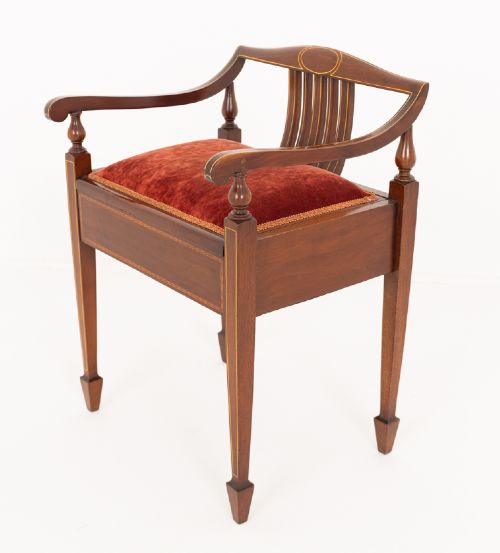
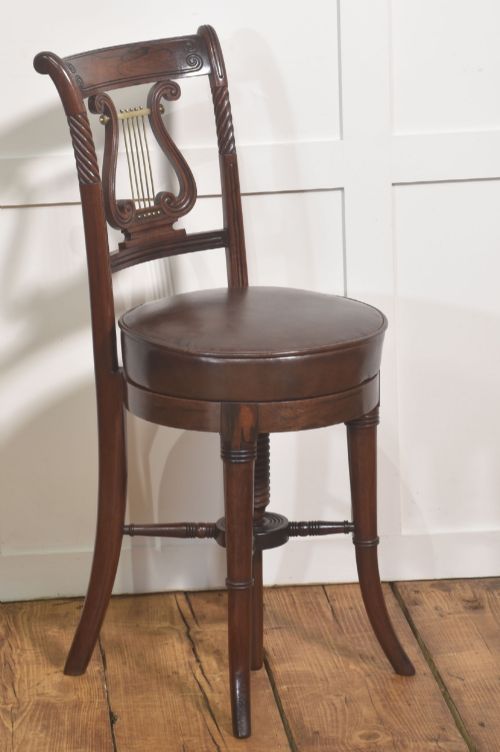
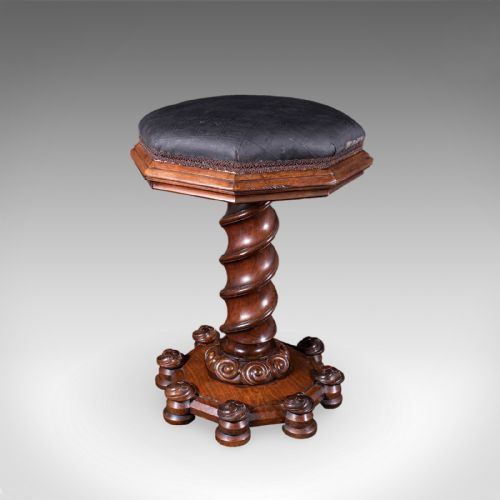
An antique music chair serves the musician by providing a stable yet adaptable seat at the piano, harp or cello. When buyers search for an antique music chair, they encounter revolving seats, rise and fall mechanisms and specialised forms designed for specific instruments.
The pieces appearing on this page span the Victorian and Regency periods, alongside specific items from 1890 and 1900. Alongside standard chairs, the inventory includes piano stools, music stools and harpist chairs executed in various woods.
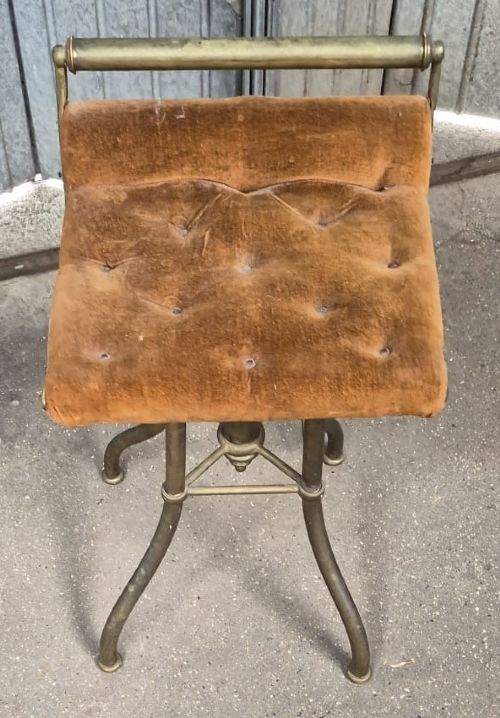
Makers and designers of these seats incorporated clever mechanical actions to alter height and angle. This functional design allows the player to maintain proper posture while performing historical repertoire.
How they were made
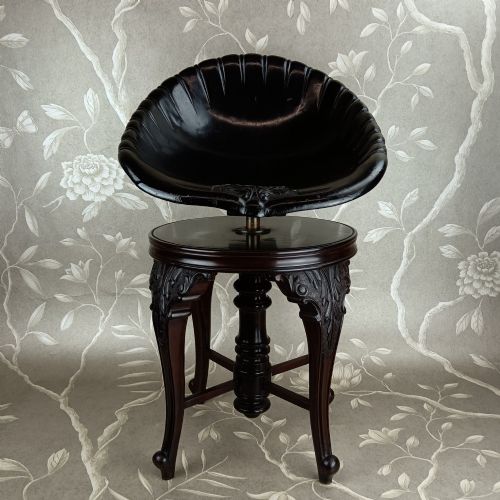
Cabinet makers utilised dense timbers such as mahogany, rosewood, walnut and padouk wood to construct the frames of an antique music chair. Some examples incorporate boxwood inlay or delicate papier-mâché finishes to decorative effect.
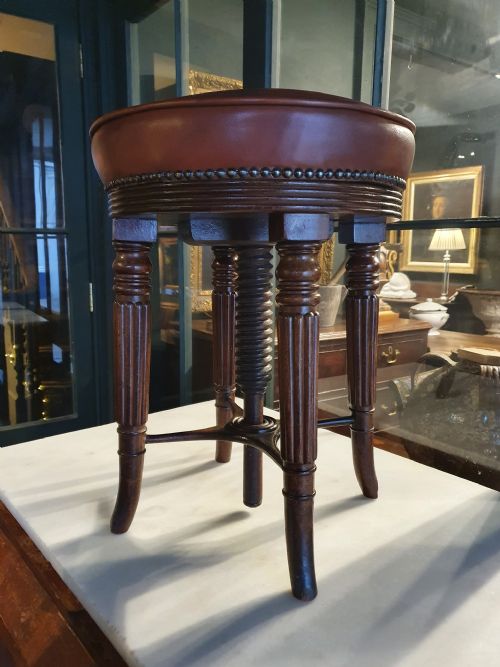
Upholstery materials selected for the seats include velvet, fabric and green leather. Mechanical elements relied on brass for screw threads, pivots and rise and fall adjustment apparatus.
Retail Price Guide 2026
Typical UK retail prices for music chair, calculated from the Sellingantiques database of over a million retail prices indexed since 2003. This retail price guide relies exclusively on Sellingantiques data; no external sources or auction records are used, so the figures do not describe the wider market.
Periods represented include Regency and Victorian eras, alongside specific dates from 1890 and 1900.
What varies in quality
The sophistication of the mechanical adjustment mechanism dictates much of the distinction between standard examples and finer work. Smooth rotation and precise height alteration without wobble indicate superior engineering.
Jennens and Bettridge
The Antique Music Chair Glossary
- Revolving seat
- A seating platform mounted on a central threaded spindle that turns to alter the height.
- Rise and fall
- A mechanical action that raises or lowers the seat height via a handle or winding mechanism.
- Padouk wood
- A dense tropical timber valued for its rich reddish-brown hue and durable properties.
- Papier-mâché
- A composite material made from paper pulp or layers of paper bound with glue, pressed and lacquered.
Frequently Asked Questions
How do you adjust the height on an antique music chair?
Many examples feature a revolving seat that twists on a central wooden or brass screw to move up and down. Other versions utilise a rise and fall mechanism operated by turning the seat or a side handle.
Once the desired height is reached, the musician sits down to play the piano, cello or harp with correct alignment.
Why do some music chairs lack arms?
Chairs designed specifically for harpists or cellists often omit arms to allow freedom of movement for the instrument and the player's arms. Standard piano stools and revolving chairs likewise prioritize unobstructed leg and torso mobility.
Specialised musician chairs adapt their silhouette to the physical demands of the specific instrument.
Where should an antique music chair be placed?
These seats suit a corner, a dressing table or a desk just as well as a historic keyboard instrument. Their compact proportions and decorative timber frames make them versatile accent pieces in a living room.
The revolving function also adds a playful and practical element to everyday seating.
How do I identify the wood used?
Mahogany and walnut display deep brown grain patterns, whilst rosewood often shows darker figuring and an oily lustre. Padouk wood exhibits a distinct reddish tone, and papier-mâché presents a smooth, black lacquered surface often embellished with inlay.
Examining the underside or unpolished areas reveals the true nature of the timber used in construction.