




Music Room Seating
Music room seating gathers together the piano stools, duet stools, and chairs built to support musicians through long hours of practice.

Music Room Seating
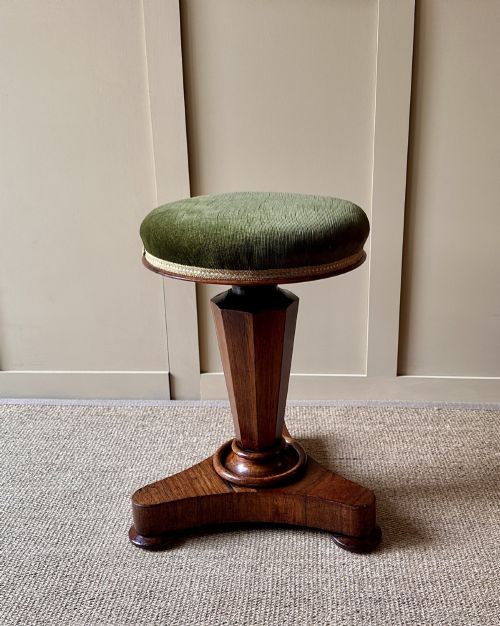
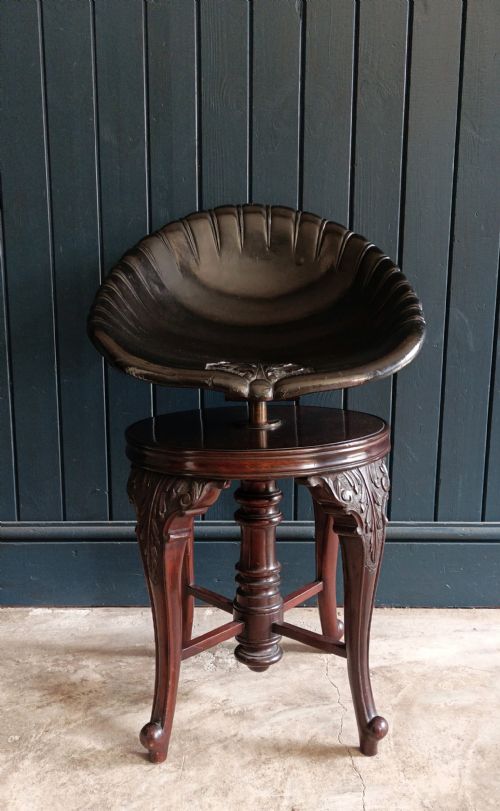
Music room seating encompasses piano stools, music stools, duet stools, and specialised chairs designed for performance and practice. Buyers searching for music room seating encounter practical revolving stools, lift-up seat designs, and patent music chairs.
The pieces appearing on this page span the Georgian, Victorian, and Edwardian eras, alongside the wider nineteenth century. Common forms include single revolving piano stools and larger duet stools intended for shared seating at the keyboard.
Most examples originate from the nineteenth and early twentieth centuries, reflecting the domestic popularity of the piano during those periods. Alongside physical stools, the selection occasionally includes related visual art depicting musicians seated at instruments.
How they were made
Makers constructed these seats primarily in mahogany, rosewood, and walnut, often utilising brass for mechanical revolving components and patent hardware. Cabinetmakers shaped the timber frames to match prevailing Georgian, Victorian, and Edwardian tastes.
Upholstery forms a central part of the construction, employing traditional fabrics such as velvet and leather to pad the seats. Specialised pieces like papier-mâché and mahogany harpist stools combine decorative surface finishes with sturdy wooden framing.
Music Room Seating Retail Price Guide 2026
Typical asking prices for music room seating among the pieces listed under this phrase on Sellingantiques today, from the lower quarter to the upper quarter. They describe what is for sale here now, not the wider market.
What varies in quality
Quality rests in the smoothness of the revolving mechanism and the integrity of the patent hardware found on adjustable chairs. Superior examples maintain steady movement without looseness in the central screw or supporting column.
The refinement of the timber carving and the subtlety of inlay work distinguish finer Edwardian and Georgian pieces from simpler utilitarian seating. Original upholstery materials and well-preserved leather or velvet surfaces also elevate the standing of a piece.
The Music Room Seating Glossary
- Revolving piano stool
- A seat featuring a threaded spindle mechanism allowing the height to be adjusted by turning the top. This design became standard in the Victorian period for player comfort.
- Duet piano stool
- A wider seating form built to accommodate two players side by side at the keyboard. These often incorporate lift-up seats revealing interior storage for sheet music.
- Papier-mâché
- A composite material made from paper pulp or layers of paper mixed with glue, then moulded and lacquered. It provided a lightweight yet durable base for decorative music furniture.
- Patent music chair
- An adjustable seating form incorporating mechanical improvements patented during the nineteenth century. These chairs often feature specialised backrests or tilting actions for musicians.
Music Room Seating: Frequently Asked Questions
What is a revolving piano stool?
A revolving piano stool is a seat equipped with a central screw mechanism that lets the user raise or lower the height by spinning the top. This allowed musicians of different statures to achieve the correct posture at the keyboard.
Most surviving examples from the Victorian period use this wooden screw system, often supported by three or four carved legs.
How do I use a duet stool?
A duet stool provides extra width so two people can sit together to play piano duets. Many versions include a hinged lid that lifts up to hold collections of sheet music.
These pieces function well as standard occasional seating in modern living rooms while offering discreet storage space.
What woods were used for music stools?
Cabinetmakers built music seating primarily in mahogany, rosewood, and walnut to match the prevailing furniture of the Georgian, Victorian, and Edwardian eras. Finer Edwardian pieces frequently feature delicate wood inlay.
These dense timbers provided the structural strength needed to support the twisting motion of revolving seats.
How can I date a music stool?
Dating relies on combining the timber choice, decorative style, and mechanical construction. Georgian pieces display simpler classical lines in rosewood or mahogany, while Victorian stools often feature heavier turned legs and revolving mechanisms.
Edwardian examples frequently showcase lighter mahogany frames with decorative inlay work and upholstered lift-up lids.