



Revolving Music Stool
A revolving music stool is the proper seat for a parlour instrument, letting the player turn to face the room or adjust for height.

Revolving Music Stool
A revolving music stool is designed for the keyboard player or harpist, offering a comfortable seat that rotates on a central screw or swivel mechanism. When you search for a revolving music stool, you encounter nineteenth-century forms spanning the Regency, William IV and Victorian periods.
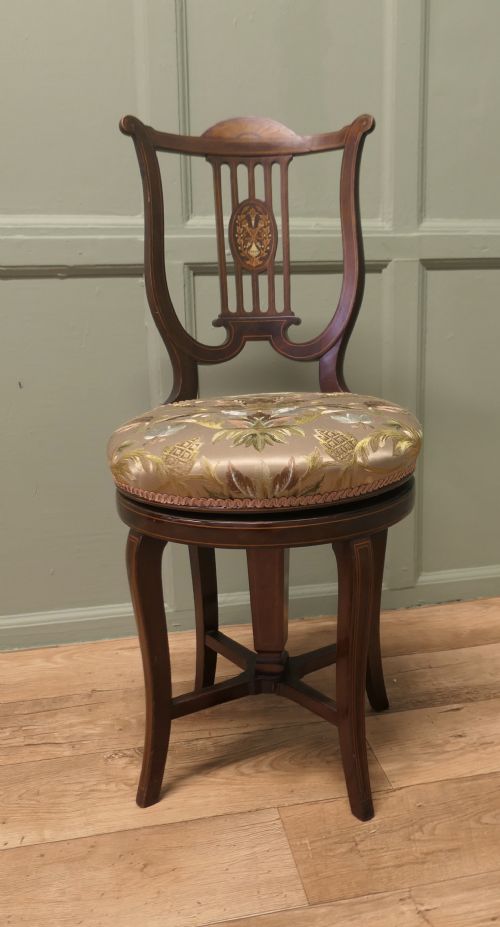
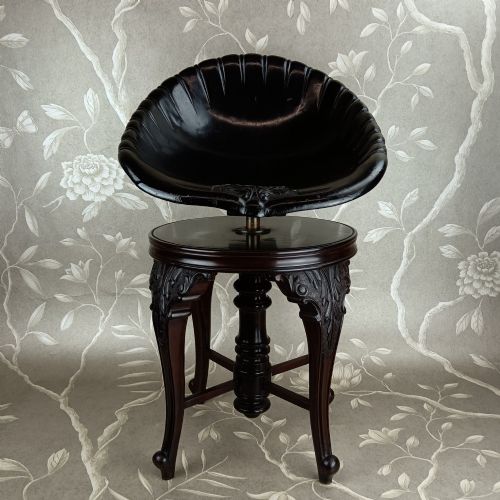
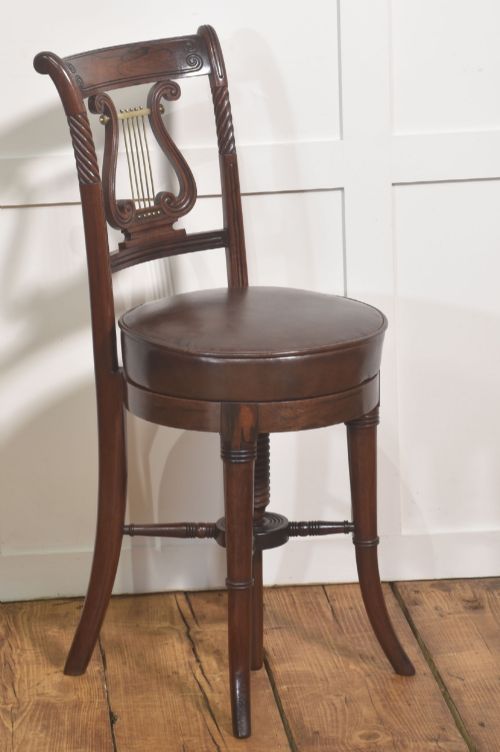
The most common versions on this page are walnut and mahogany piano stools, alongside rosewood music chairs and occasional harpist seats. These pieces range from simple round-topped swivel stools to elaborate lyre-back designs with carved details.
Makers and workshops of the nineteenth century produced these stools in considerable variety, adapting them for organs, pianos and dressing tables alike. They function both as practical music furniture and as decorative seating within a period interior.
How they were made
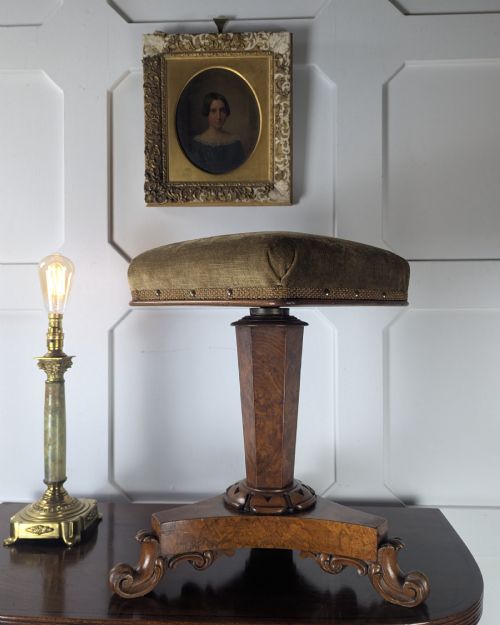
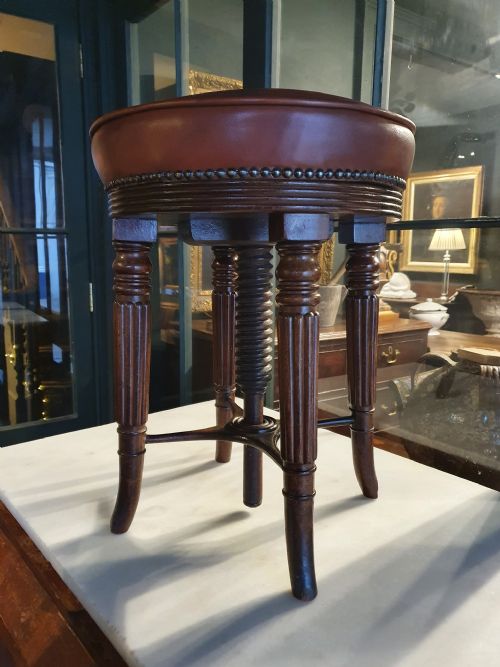
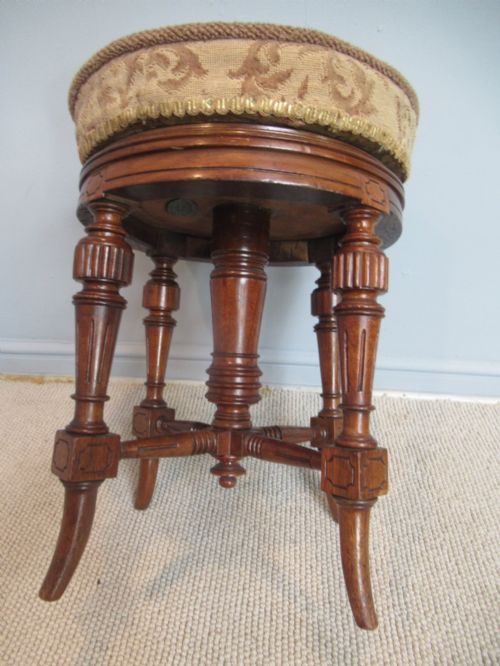
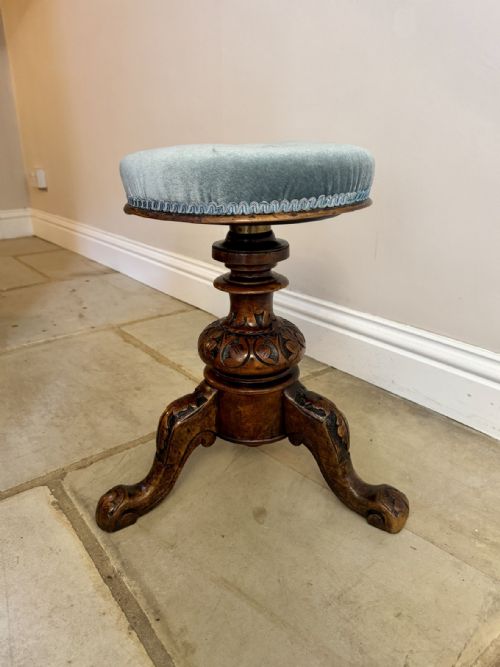
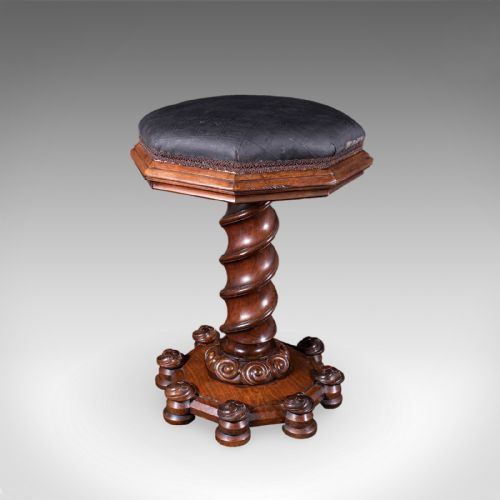
Cabinet makers utilised dense timbers such as mahogany, walnut and rosewood, often turning the central columns on a lathe and carving the legs with cabriole or reeded details. Brass mechanisms were integrated into the wooden columns to provide the rise and fall action for height adjustment.
Seating portions were upholstered in materials including velvet, leather, fabric and needlework, secured over padding to the revolving tops. Some specialised examples incorporated papier-mâché or brass framing alongside the primary timber construction.
Revolving Music Stool Retail Price Guide 2026
Typical asking prices for revolving music stool among the pieces listed under this phrase on Sellingantiques today, from the lower quarter to the upper quarter. They describe what is for sale here now, not the wider market.
Recorded materials include brass, leather, velvet and fabric upholstery paired with solid hardwood frames.
What varies in quality
The sophistication of the timber carving and the smoothness of the mechanical screw thread separate simpler models from the finer productions of workshops like Gillows. Cabinet work seen in the joinery of the frame and the retention of original brass components indicates higher grade construction.
The selection of figured veneers, such as figured walnut or rosewood, together with the integrity of the original upholstery platform, marks the difference between standard commercial pieces and exceptional examples.

Jennens & Bettridge·Gillows·James Shoolbred·Charles Wadman·J. Fitter
The Revolving Music Stool Glossary
- Rise and fall
- A mechanical height adjustment system operating through a central wooden or iron screw thread. Turning the seat raises or lowers the sitting height.
- Lyre back
- A chair back carved in the shape of a classical musical instrument. This motif appears frequently on nineteenth-century music chairs.
- Swivel top
- A revolving seat mechanism that allows full rotation without a vertical screw adjustment. These are commonly found on Victorian piano and dressing stools.
- Papier-mâché
- A composite material made from paper pulp mixed with glue and resin, pressed in moulds and finished with lacquer. It provides a hard surface often inlaid with mother-of-pearl.
- Simulated rosewood
- A painted or stained finish applied to a lighter wood, such as beech or birch, to imitate the dark grain of rosewood. This treatment was common during the Regency period.
Revolving Music Stool: Frequently Asked Questions
How do I adjust the height?
Most revolving music stools adjust by rotating the seat itself, which turns on a threaded wooden or iron spindle concealed within the central column. Turning the top clockwise or anticlockwise raises or lowers the sitting position.
Some variants utilise a side lever or a simpler swivel mechanism without height adjustment, relying on the fixed proportions of the original nineteenth-century design.
Were they only used for pianos?
While primarily intended for keyboard players and harpist performers, these seats served multiple functions in nineteenth-century homes. Their adjustable height made them suitable for dressing tables and writing desks.
Many examples survive in domestic settings as occasional chairs or piano stools, reflecting the versatile nature of seating in period parlours and music rooms.
How do I date a revolving music stool?
Dating relies upon the timber species, leg styling and mechanical construction observed across the piece. Regency and William IV examples often feature rosewood with brass inlay or robust mahogany frames, while Victorian pieces commonly display carved walnut or papier-mâché.
Cabinet makers' marks or stamps, where present on the underside of the wooden base, provide a direct link to specific workshops active during the nineteenth century.
How should I care for the mechanism?
The internal screw mechanism benefits from occasional inspection to ensure the wooden or metal threads remain clean and free from obstruction. Gentle rotation prevents the screw from binding over time.
Applying a minimal amount of appropriate lubricant to metal moving parts helps preserve the smooth operation of the rise and fall action without damaging the surrounding timber.