
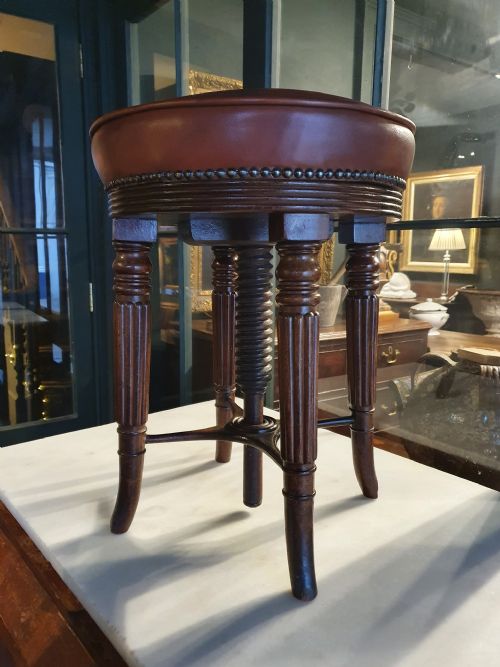

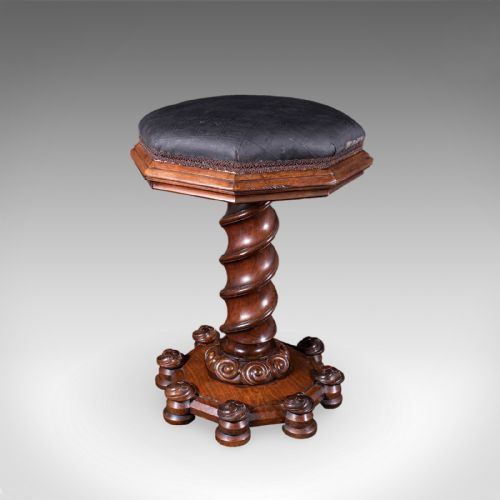


Revolving Piano Chair
A revolving piano chair offers adjustable height and steady support for musicians, bringing practical Victorian engineering directly to your music room.
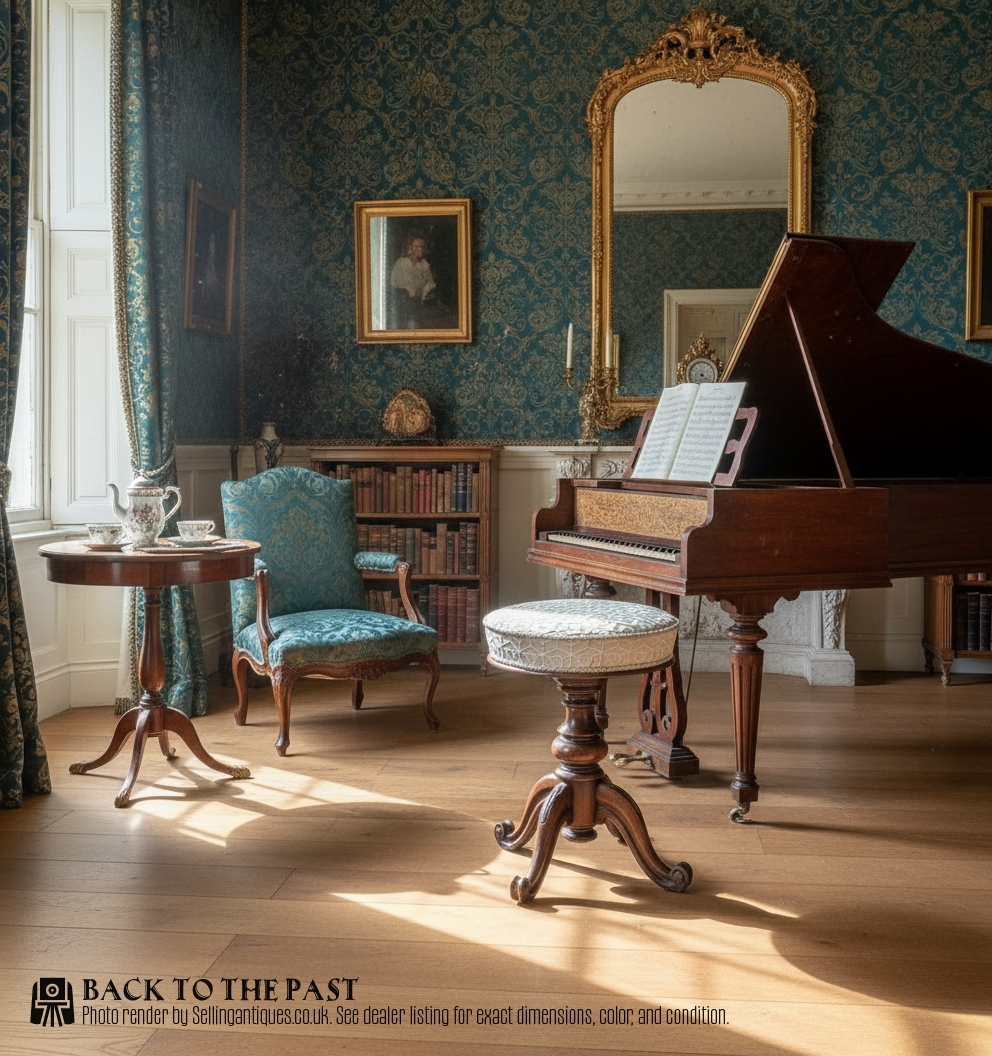
What They Are
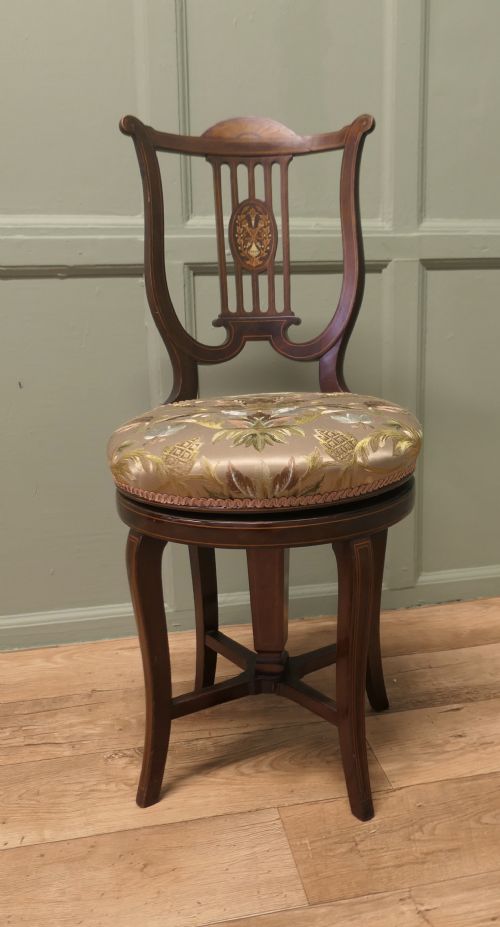
A revolving piano chair is designed to provide comfortable, adjustable seating for keyboard players and musicians during practice and performance. These pieces span the nineteenth century, including Victorian and Anglo-Burmese colonial styles, and serve double duty as dressing stools.
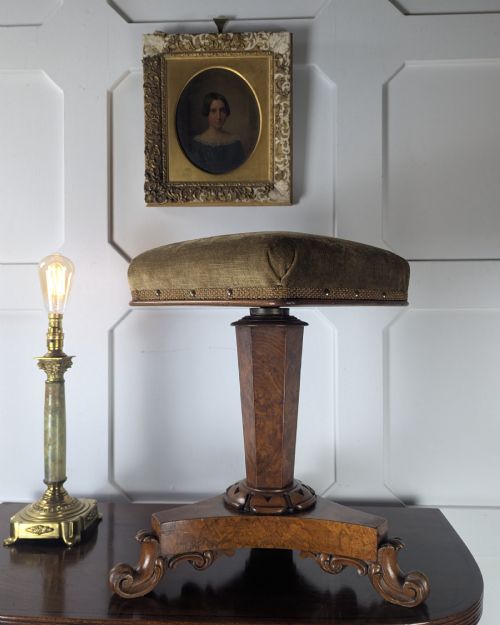
The most common examples you will meet on this page are nineteenth century Victorian pieces featuring swivel bases and adjustable seats. Forms vary from simple tripod piano stools to specialised harpist chairs with specific backrest configurations.
Makers of the period produced these seats in various formats, such as music chairs and piano stools, accommodating players of different heights and instruments. The combination of a revolving seat and sturdy timber construction defines the category across all listed examples.

How They Were Made
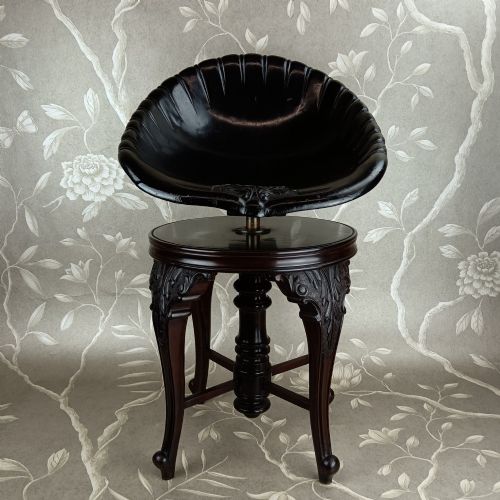
Makers utilised a variety of dense timbers including mahogany, walnut, padouk wood, rosewood, and ebonised wood to build the frames. Brass mechanisms were integrated into the swivel and adjustable screw bases to allow smooth rotation and height alteration.
Upholstery and velvet were applied to the seats to ensure comfort during extended periods of sitting at the keyboard. Papier-mache was also utilised on specific decorative models to provide ornamented surfaces alongside traditional woodwork.
Retail Price Guide 2026
Typical UK retail prices for revolving piano chair, calculated from the Sellingantiques database of over a million retail prices indexed since 2003. This retail price guide relies exclusively on Sellingantiques data; no external sources or auction records are used, so the figures do not describe the wider market.
Victorian pianists evidently spun in circles between movements, leaving behind a trail of remarkably well-engineered brass screw threads.
What Varies in Quality
The distinction between standard examples and top-tier pieces lies in the choice of cabinet timber and the complexity of the carving. Richly figured rosewood, padouk wood, and elaborate carved walnut elevate a piece well above simple ebonised wood alternatives.
Engineering precision in the brass swivel and screw mechanism dictates the mechanical fluidity of the seat. Superior craftsmanship shows in the seamless integration of adjustable height systems with stable tripod or four-legged bases.
The Revolving Piano Chair Glossary
- Revolving piano chair
- A seat featuring a swivel or screw mechanism that allows the user to rotate or adjust the height while playing a keyboard instrument.
- Ebonised wood
- Timber treated with a dark finish to imitate expensive ebony. This treatment was popular in nineteenth-century cabinet making for a sleek appearance.
- Padouk wood
- A dense exotic hardwood native to Southeast Asia, utilised in colonial pieces such as Anglo-Burmese harpist chairs for its durability and rich colour.
- Papier-mache
- A composite material made from paper pulp and binder, moulded and lacquered to create decorated surfaces on Victorian music stools.
- Tripod base
- A three-legged support structure commonly found on adjustable piano stools to ensure stability on uneven nineteenth-century floors.
Frequently Asked Questions
How do I adjust the height on a revolving piano chair?
Most of these seats utilise a central wooden or metal screw mechanism hidden beneath the upholstery. Turning the seat clockwise or anti-clockwise raises or lowers the sitting surface to the desired playing level.
Once the correct height is achieved, steady your weight and ensure the swivel action remains balanced. Older brass mechanisms may require gentle handling to preserve their original threading.
Can I use a piano chair at a modern desk?
These nineteenth-century seats fit very well beneath standard writing desks if the adjustable height matches your requirements. Their compact footprints and swivel mobility make them practical for daily seating in study spaces.
Keep in mind that original Victorian seat heights might run slightly lower than modern office chairs. Checking the minimum and maximum extension of the screw mechanism will confirm suitability for your workspace.
What is the difference between a piano stool and a harpist chair?
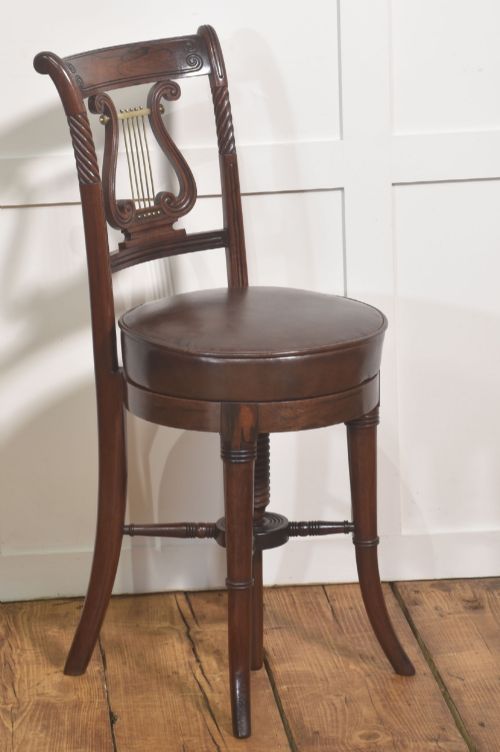
Harpist chairs often include specialised backrests or differing support angles designed to accommodate the posture required for playing the harp. Standard piano stools typically feature flat, round revolving tops without back support.
Both forms utilise similar swivel and adjustable timber bases from the nineteenth century. The presence of a backrest remains the primary visual indicator separating the two seating types.
How should I care for the velvet upholstery?
Velvet seats require gentle brushing with a soft-bristled brush to maintain the nap and lift away settled dust. Avoid harsh chemical cleaners or excessive moisture which can damage the delicate pile and the underlying wood frame.
Position the chair away from direct sunlight to prevent the velvet and polished timber from fading over time. Regular inspection of the revolving screw will keep the mechanical parts operating smoothly.