




Adjustable Piano Seat
An adjustable piano seat offers the precise height required for keyboard performance, combining mechanical utility with period craftsmanship.

Adjustable Piano Seat
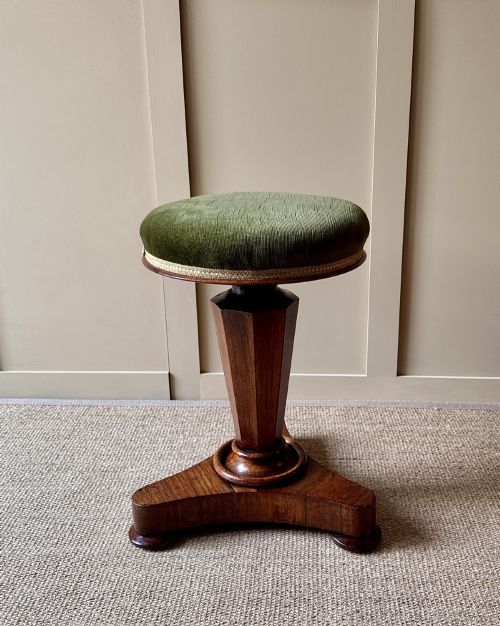
An adjustable piano seat serves players at the keyboard by providing a mechanism to alter height, appearing frequently as a revolving stool or a rise-and-fall design. These pieces originate predominantly across the nineteenth century, spanning Victorian, William IV, and Regency periods.
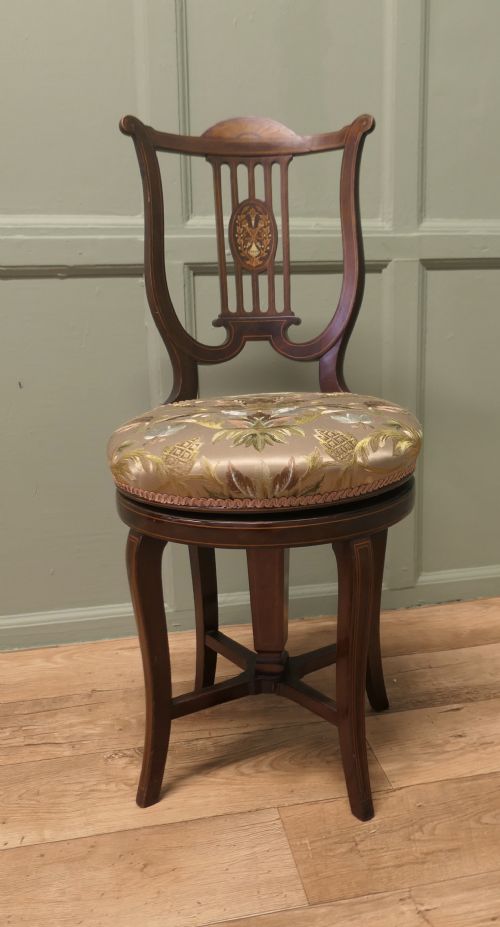
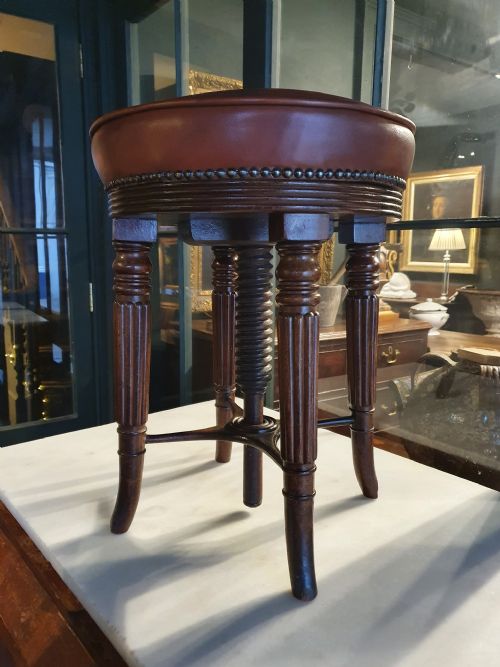
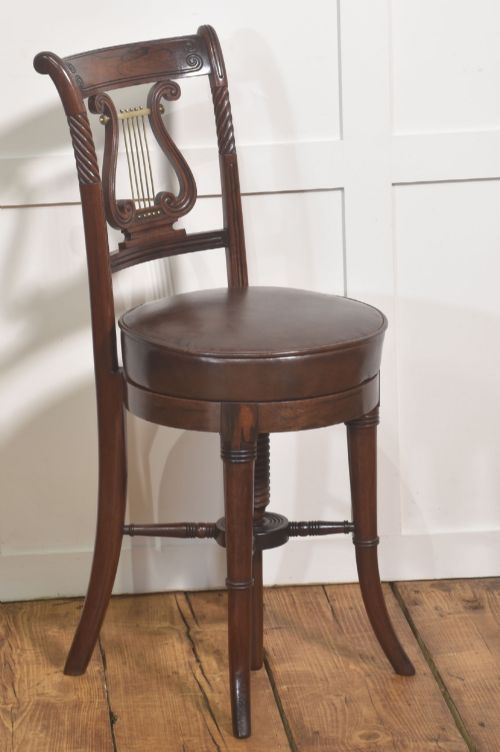
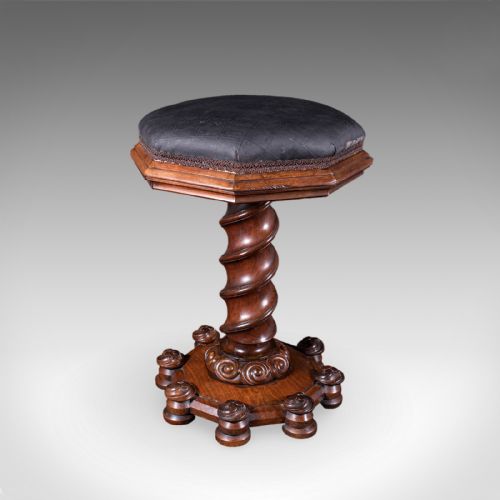
Makers designed these seating forms specifically for music rooms, utilising swivelling mechanisms or central threaded screws to adjust elevation. Buyers encounter variants configured as music chairs with backs, revolving stools, and square-topped pedestals intended for pianists and harpists alike.
The materials and styles reflect the prevailing cabinet-making standards of their respective decades, incorporating rich timbers and upholstered tops. Such seating bridges domestic utility and decorative refinement, remaining a practical fixture in modern homes.

How They Were Made
Cabinet makers utilised dense hardwoods such as mahogany, walnut, and rosewood to construct the frames and central pedestals of these seats. These timbers were frequently turned, carved, or veneered to match the aesthetic demands of Victorian, Regency, and Edwardian interiors.
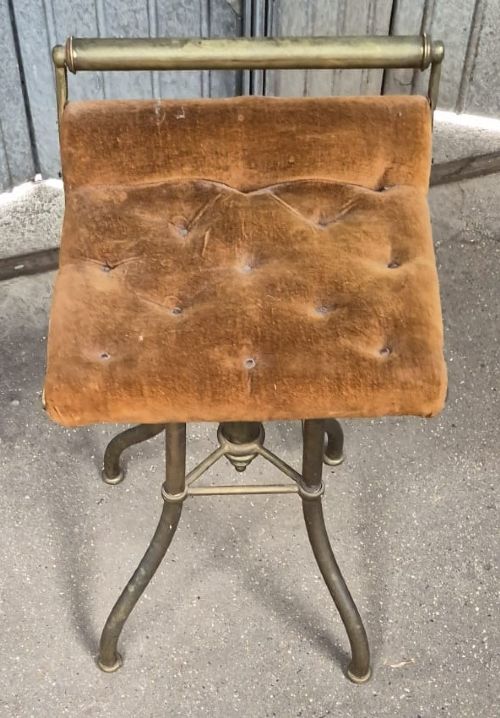
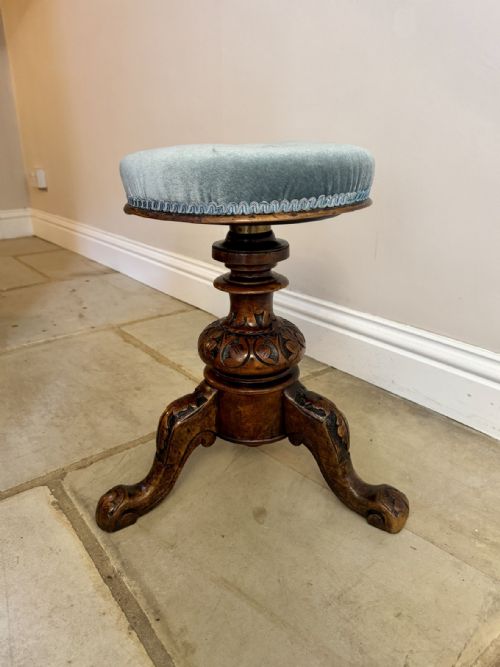
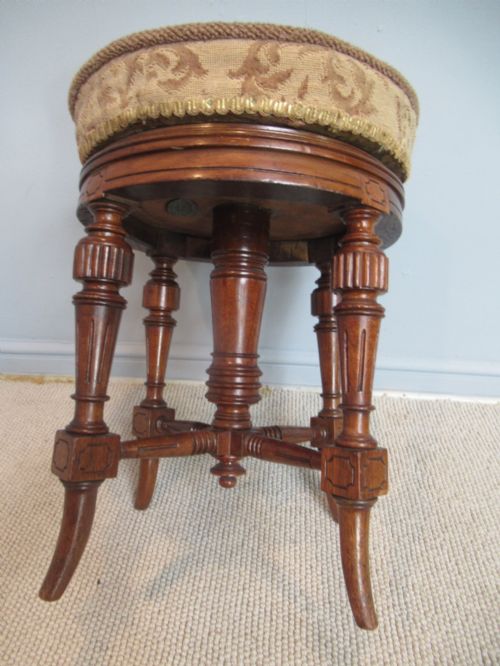
Mechanisms relied on sturdy engineering, combining iron screws, brass framing, and cast iron components to achieve smooth height adjustment. Upholstery materials including leather, velvet, tapestry, and woven fabric were then affixed over padding to complete the seat top.
Adjustable Piano Seat Retail Price Guide 2026
Typical asking prices for adjustable piano seat among the pieces listed under this phrase on Sellingantiques today, from the lower quarter to the upper quarter. They describe what is for sale here now, not the wider market.
Some nineteenth-century harpists required specialist revolving seats just to manage the awkward angles of their instruments.
What Varies in Quality
The refinement of the carving and the selection of figured timber distinguish superior examples from standard workshop production. Dense, richly grained rosewood and walnut signify higher-tier cabinet-making, whereas simpler hardwoods indicate utilitarian manufacture.
The integrity and smoothness of the mechanical adjustment mechanism dictate the functional standard of the piece. Robust brass fittings and well-engineered rise-and-fall screws demonstrate superior craftsmanship compared to loose or binding components.
Jennens & Bettridge·Gillows·James Shoolbred
The Adjustable Piano Seat Glossary
- Rise and fall
- A mechanical system utilising a central threaded screw to alter the height of the seat when rotated. This allows the player to tailor the elevation precisely to their preference.
- Revolving stool
- A seat featuring a top that spins on a central axis, often incorporating a concealed wooden or iron screw thread. These designs provide swift adjustment during performance.
- Lyre back
- A chair back shaped in the form of a classical musical instrument, frequently seen on music room seating. This motif reflects Regency and Victorian stylistic influences.
- Aesthetic Movement
- A late nineteenth-century design current prioritising artistic visual qualities over orthodox historical revivalism. Pieces from this period often display ebonised finishes and simplified linear forms.
- William IV
- A transitional architectural and decorative style spanning the 1830s, characterised by robust proportions and classical motifs. Furniture from this era displays heavy, secure turning and rich mahogany or rosewood timbers.
Adjustable Piano Seat: Frequently Asked Questions
How do these adjustment mechanisms work?
Most adjustable piano seats operate via a central wooden or iron screw concealed beneath the upholstery. Turning the seat top clockwise or anticlockwise raises or lowers the height.
Some examples utilise brass framing and levers to lock the seat into position once the desired elevation is reached.
Can I use a music stool at a dressing table?
Many historical music stools share identical dimensions and revolving mechanisms with period dressing table chairs. Their compact circular or square footprints suit modern vanity spaces.
Their adjustable height makes them adaptable for various table clearances and seating preferences.
What is the difference between a music chair and a piano stool?
Music chairs generally feature an integrated backrest, sometimes carved in a lyre or open design to support the player during long practice sessions. Piano stools typically present a backless configuration with a revolving or rise-and-fall top.
Both forms served the same fundamental purpose in nineteenth-century drawing rooms.
How do I identify a Regency piano seat?
Regency and William IV pieces often display heavier mahogany or rosewood timbers, robust turned pedestals, and classical brass inlay. The carving reflects early nineteenth-century design vocabulary.
Later Victorian and Edwardian variants tend towards lighter walnut frames, ebonised surfaces, or more eclectic stylistic influences.