
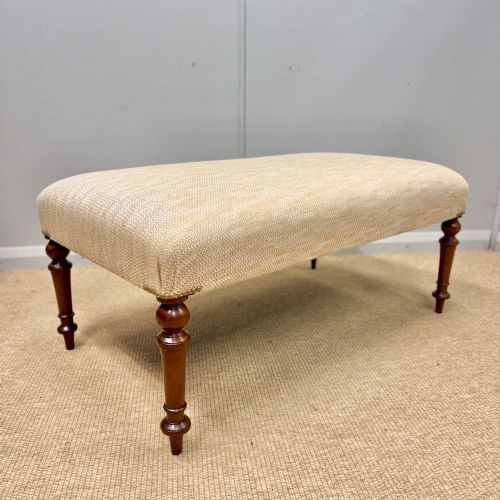
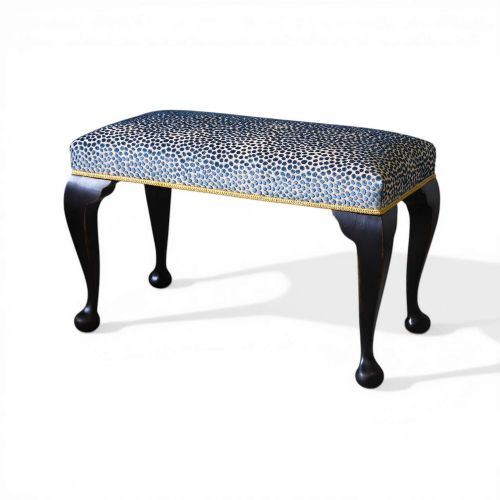
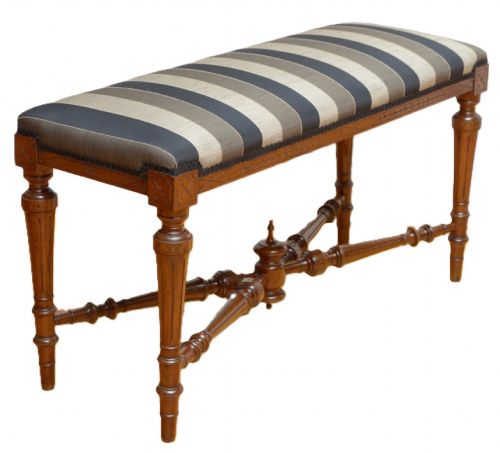
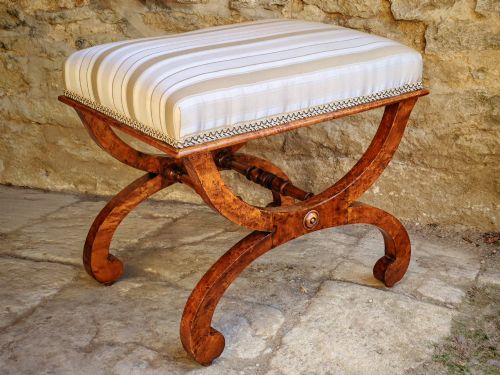
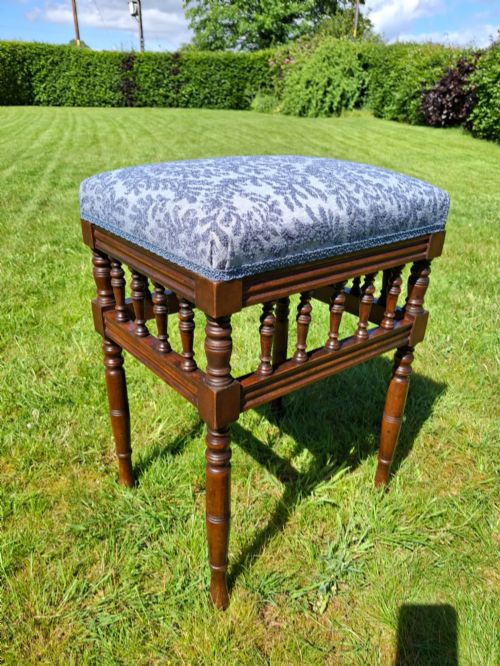


Turned Leg Piano Stool
A turned leg piano stool brings Victorian and Edwardian utility into the modern home as an adjustable seat or small side table.
What they are
A turned leg piano stool is a seat designed for keyboard players, appearing most frequently in Victorian and Edwardian forms across this inventory. These pieces range from simple stationary beech designs to swivel top adjustable stools resting on turned supports.
The materials recorded in these listings include mahogany, ebonised wood, rosewood, and beech, often finished with fabric, textile, or upholstery. Brass and cast iron frequently appear in the internal mechanisms that allow the seats to rise and fall.
How they were made
Cabinet makers turned solid hardwoods like mahogany, rosewood, and beech on a lathe to create the distinctive legs. Wood was ebonised to imitate costlier materials, while structural joints relied on traditional carpentry and turning techniques.
Makers integrated brass and cast iron components to construct swivel bases and revolving mechanisms. Upholstery was tacked over textile or fabric pads to complete the upper seat.
Retail Price Guide 2026
Typical UK retail prices for turned leg piano stool, calculated from the Sellingantiques database of over a million retail prices indexed since 2003. This retail price guide relies exclusively on Sellingantiques data; no external sources or auction records are used, so the figures do not describe the wider market.
Listings span the Victorian and Edwardian eras, incorporating timber species such as mahogany, rosewood, and ebonised wood alongside beech.
What varies in quality
The sophistication of the turning work and the choice of primary timber separate standard utility examples from finer pieces. Dense timbers such as rosewood and figured mahogany indicate a higher grade of production than basic beech.
The engineering of the revolving mechanism defines the upper tier of the range. Smooth swivel action supported by robust cast iron or brass hardware distinguishes superior execution from simpler fixed constructions.
H Brooks and Co
The Turned Leg Piano Stool Glossary
- Swivel base
- A mechanical mounting that allows the seat top to rotate freely on a central axis. This mechanism often utilises iron or brass components.
- Ebonised wood
- Timber treated with a dark finish to resemble ebony. This technique was popular in the nineteenth century for accentuating turned details.
- Revolving piano stool
- A seat designed with an adjustable height mechanism operated by turning the top. These pieces allow the player to alter their seating position.
- Splayed legs
- Support members that angle outward from the centre for increased stability. This stance is frequently paired with turned woodwork.
Frequently Asked Questions
How do you adjust the height?
Many of these stools feature a revolving top that winds upward or downward on a central screw mechanism. Turning the upholstered seat alters the height to suit the player.
Other variations utilise fixed heights or different mechanical adjustments concealed beneath the upholstery. The presence of brass or cast iron parts usually indicates a rotating mechanism.
Are these stools comfortable to sit on?
The seats are padded with textile or fabric upholstery supported by a wooden frame. They were originally built to provide firm support during piano practice.
While functional as occasional seating, buyers often use them as piano benches or small decorative accent chairs in living spaces.
What woods were commonly used?
Mahogany, rosewood, and beech appear across these nineteenth and early twentieth-century pieces. Some frames were ebonised to achieve a dark, uniform appearance.
The choice of timber typically reflects the period and the intended quality of the furniture.
How do I date a piano stool?
Dating relies on observing the timber, the style of the turned legs, and the hardware used in the construction. Victorian and Edwardian examples show distinct shifts in decorative preference.
Archival records and maker marks, such as those by H Brooks and Co, provide further confirmation of the manufacturing period.