



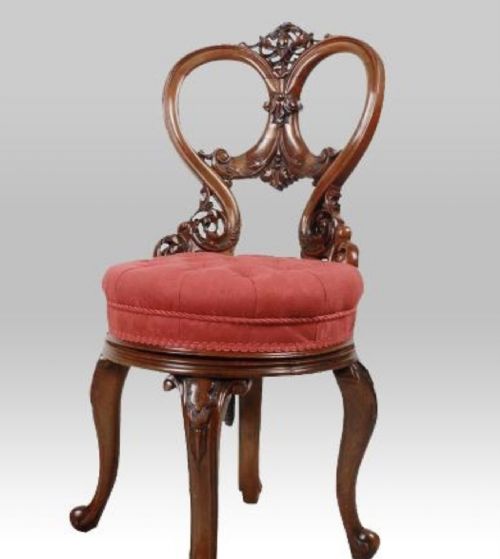


Vintage Adjustable Music Chair
A vintage adjustable music chair is a practical revolving seat designed for musicians, and these period examples bring mechanical ingenuity straight to your room.
Vintage Adjustable Music Chair
When you search for a vintage adjustable music chair, you are looking at specialised seating created for pianists, harpists, and cellists. These pieces combine height adjustment mechanisms with revolving seats to give musicians comfort and reach during long practice sessions.
On this page, you are most likely to meet Victorian and 19th-century examples alongside earlier Regency and Georgian forms. They appear primarily as piano stools, revolving music chairs, and specialised harpist or cello seats made from rich timbers.
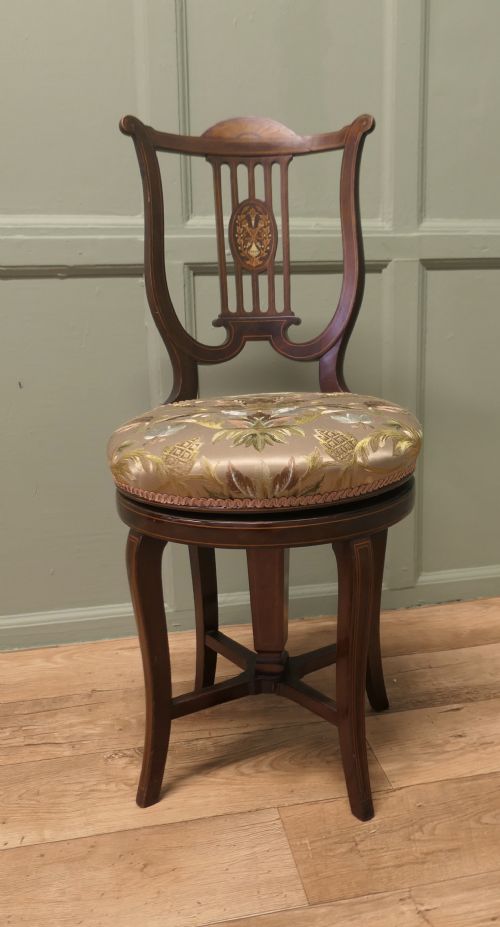
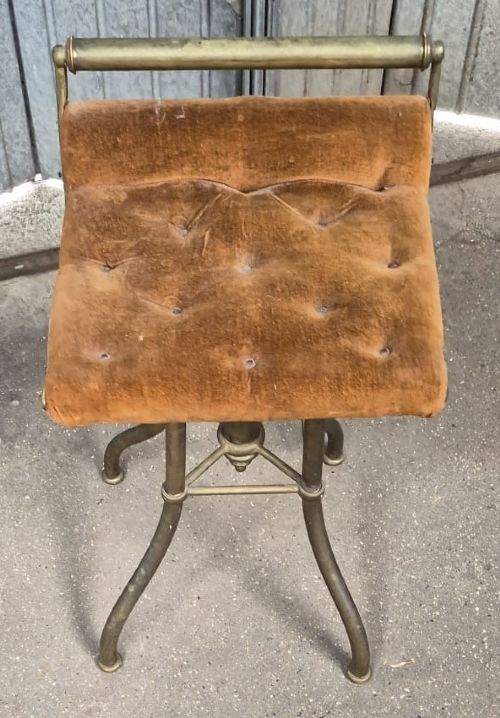
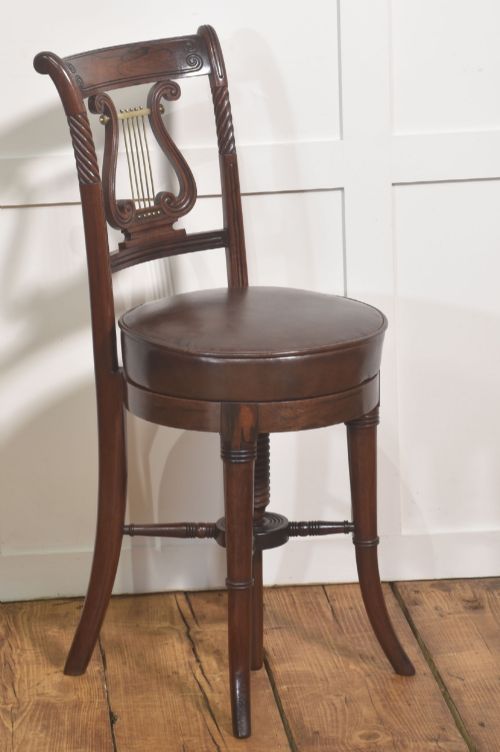
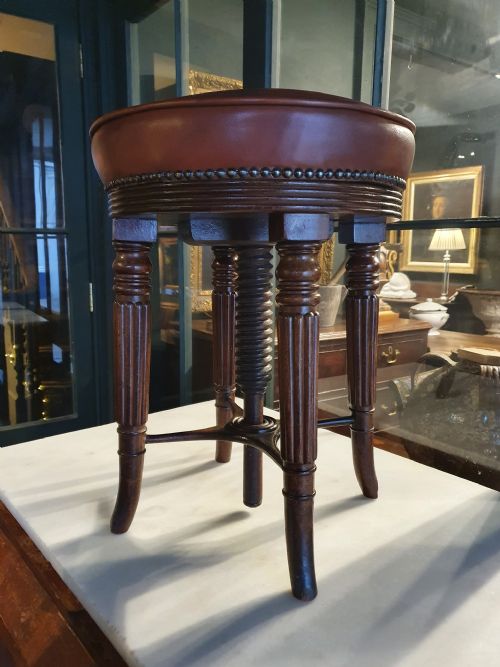
The selection ranges from simple screw-top mahogany stools to elaborate brass-framed designs and lyre-back chairs. Each piece reflects the domestic music-making culture of its period, adapted for both professional salons and everyday parlour use.
How they were made
Cabinet makers constructed these seats using dense hardwoods such as mahogany and rosewood, often shaped into circular tops or curved backs. Brass fittings and internal screw mechanisms were engineered to allow smooth height adjustment without wobbling.
Upholstery played a central role in the construction, utilising durable materials like leather, velvet, and patterned fabric over padded seats. Frames frequently featured decorative details like gilt paint or carved woodwork reflecting Sheraton Revival, Empire, and Victorian styles.
Vintage Adjustable Music Chair Retail Price Guide 2026
Typical asking prices for vintage adjustable music chair among the pieces listed under this phrase on Sellingantiques today, from the lower quarter to the upper quarter. They describe what is for sale here now, not the wider market.
Harpists needed chairs without arms, proving that musicians dictated furniture design long before ergonomics had a name.
What varies in quality
Quality in these seats rests upon the engineering of the revolving and screw-action mechanism, which should operate smoothly without excessive play in the column. Maker attribution, such as work by Gillows or James Shoolbred, distinguishes high-workshop production from standard cabinet making.
The choice of primary timber and secondary framing woods alters the heft and longevity of the piece. Superior examples feature dense rosewood or figured mahogany paired with robust brass hardware and well-preserved period upholstery materials.
Gillows·James Shoolbred
The Vintage Adjustable Music Chair Glossary
- Revolving
- A seat function allowing the top to spin fully on a central pivot screw or spindle. This movement enabled musicians to turn easily toward instrument stands or sheet music cabinets.
- Screw top
- A height-adjustment mechanism where turning the seat raises or lowers it along a central threaded metal rod. It represents the primary method used to alter elevation in period piano stools.
- Lyre back
- A chair backrest shaped in the open-work silhouette of an ancient musical lyre. This motif appears frequently on seating designed specifically for harpists and cellists.
- Rosewood
- A heavy, dark timber with distinct figuring utilised extensively in high-end nineteenth-century cabinet making. Its dense grain made it ideal for turned columns and revolving stool bases.
Vintage Adjustable Music Chair: Frequently Asked Questions
How do I adjust the height?
Most period music chairs feature a screw-top mechanism operated by turning the upholstered seat clockwise or counter-clockwise. This action raises or lowers the platform along a threaded central metal spindle.
Ensure the mechanism is clean and lightly lubricated if needed, avoiding forced turns that might strain the historical threads.
How do I date a music chair?
Dating relies on identifying stylistic markers like Regency curves, Victorian rosewood turning, or Edwardian proportions. Hardware patents, timber choices, and maker stamps also provide clear chronological anchors.
Compare the turned column details and upholstery construction against known period pieces to narrow down the decade of manufacture.
How do I care for the mechanism?
Keep the metal screw threads free from dust and debris by gently wiping them down during routine cleaning. Avoid using modern chemical solvents on historical brass or iron components.
Period joints and revolving pivots benefit from stable indoor humidity and minimal exposure to direct heat sources.
Can I use one as daily seating?
These chairs were built for daily use in nineteenth-century homes and handle normal sitting well. However, the revolving screw mechanism means they are not suited to rough leaning or heavy lateral weight.
Treating the height adjustment with care preserves the internal wooden and metal threads for continued everyday function.