




Inlaid Music Stool
These inlaid music stool examples combine practical seating with refined marquetry, offering a touch of period elegance to any piano room.

Inlaid Music Stool
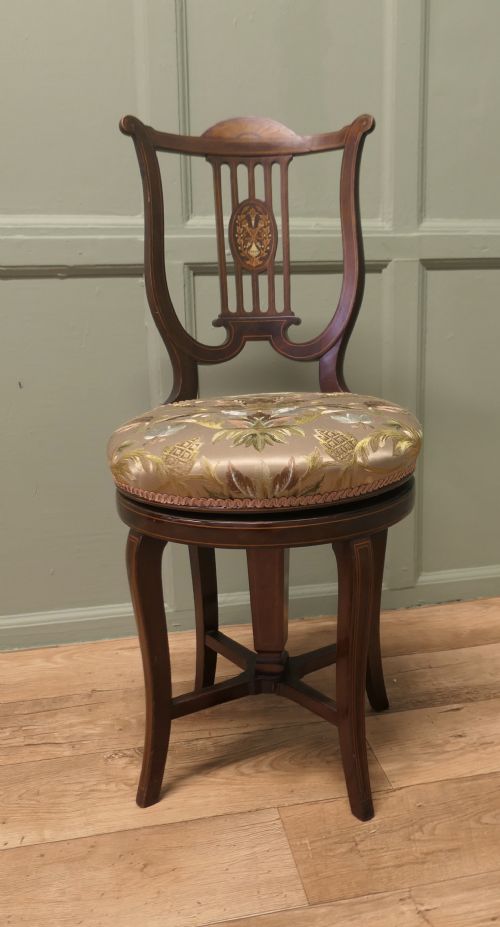
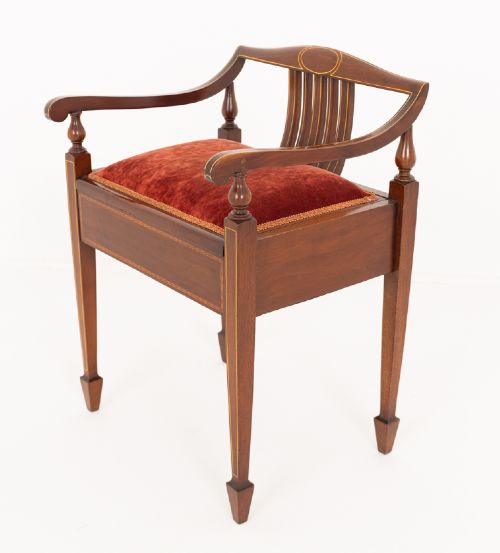
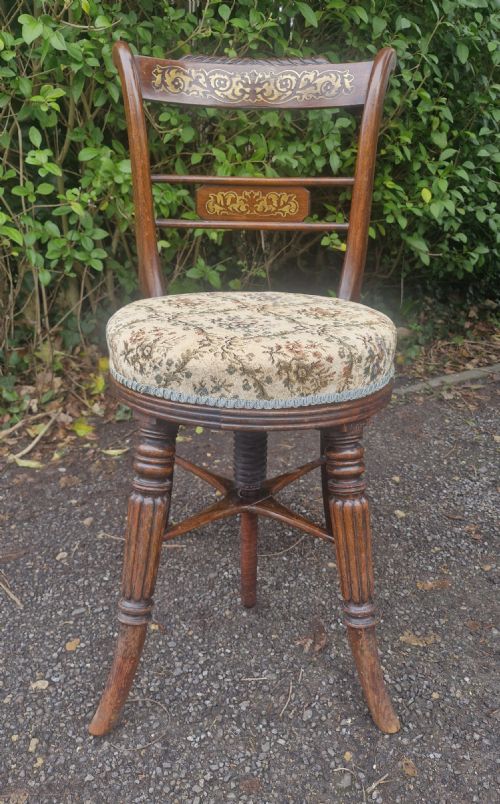
An inlaid music stool provides dedicated seating for musicians, frequently featuring compartments for sheet music storage beneath the seat. When searching this phrase, buyers encounter various forms designed for the parlour or drawing room, ranging from simple piano seats to revolving chairs.
The Edwardian period dominates the selection currently available, alongside pieces from the Victorian, Regency, and 1890 eras. Mahogany forms the primary structural timber, often enhanced with satinwood inlay or boxwood stringing.
Makers utilised different configurations to suit varying domestic spaces, including box seats, rise and fall mechanisms, and X-framed supports. These variations reflect the shifting demands of nineteenth and early twentieth century musical households.
How they were made
Cabinet makers constructed the frames predominantly from solid mahogany or rosewood, applying contrasting timbers such as satinwood and boxwood for decorative banding. Skilled artisans hand-cut individual pieces of veneer to create intricate marquetry motifs across the seat rails and backrests.
Upholstery techniques varied from simple drop-in pads covered in fabric to elaborate velvet and tapestry top sections. Mechanical elements like screw threads for rise and fall action required precision engineering from metalworkers to ensure smooth height adjustment.
Mahogany and rosewood serve as the primary timbers across these listings, complemented by satinwood and boxwood inlay.
What varies in quality
The refinement of the marquetry and the crispness of the boxwood stringing separate standard production pieces from finer examples. Superior workshops invested greater time in selecting timber with rich grain patterns and executing precise inlay work.
Mechanical complexity also dictates grade, with revolving mechanisms, lyre-shaped backs, and adjustable height screws demonstrating higher levels of initial craftsmanship. Original upholstery materials and sound structural joints preserve the integrity of the piece.
James Shoolbred·JAS Shoolbred Co London
The Inlaid Music Stool Glossary
- Marquetry
- Decorative veneer work forming pictures or geometric patterns using various coloured woods. This technique requires meticulous hand-cutting and fitting.
- Stringing
- Thin lines of contrasting timber inlaid into channels cut into the main wood surface. It frames panels and edges on Edwardian cabinet work.
- Lyre back
- A chair or stool back shaped in the form of a classical stringed musical instrument. It appears frequently on Victorian and Regency music seating.
- Rise and fall
- A mechanical mechanism allowing the seat height to be adjusted by rotating the top. It uses a threaded central screw column.
- Canterbury
- A low stand with partitioned sections originally designed for holding sheet music or books. Some music stools incorporate similar compartmentalised storage.
Inlaid Music Stool: Frequently Asked Questions
How do I date an inlaid music stool?
Examine the primary timber, inlay style, and construction methods to determine the period. Edwardian pieces often display lighter mahogany with delicate boxwood stringing.
Earlier Regency examples tend to feature bolder brass inlay on rosewood, whilst Victorian pieces utilise heavier rosewood frames and rich upholstery.
Did all music stools have storage?
Many Edwardian music stools incorporate box seats or internal compartments specifically sized for holding sheet music. Other forms, such as revolving chairs or lyre-back seats, focused entirely on adjustable posture rather than storage.
Buyers should inspect the underside or lift the seat to identify compartment functionality.
How do rise and fall mechanisms work?
A central wooden or metal screw column connects the seat to the base frame. Turning the seat clockwise or counter-clockwise raises or lowers the height for the pianist.
Smooth operation depends on the preservation of the internal threaded housing.
Where should I place a music stool at home?
These versatile seats function effectively beside a piano, dressing table, or as a standalone decorative accent in a living space. Their compact proportions allow them to fit easily into corners or beside sideboards.
Ensure placement avoids direct sunlight to protect delicate wood veneers and fabric upholstery.