



Upholstered Music Seat
An upholstered music seat offers a comfortable perch for instrumentalists, blending practical seating with period craftsmanship.
Upholstered Music Seat
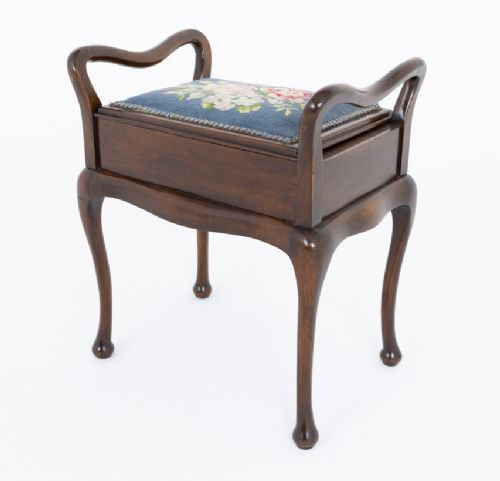
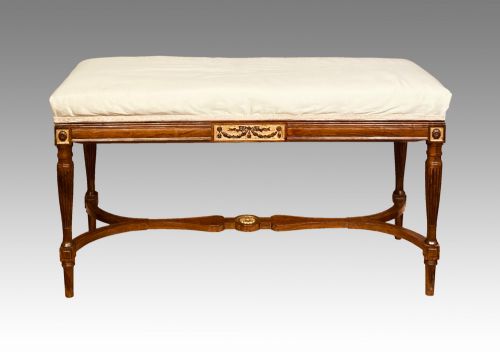
An upholstered music seat spans piano stools, revolving chairs, and duet benches built to accommodate musicians at keyboards and harps. These pieces emerge primarily from Victorian, Edwardian, and nineteenth-century workshops, ranging from compact single-person seats to wider duet configurations.
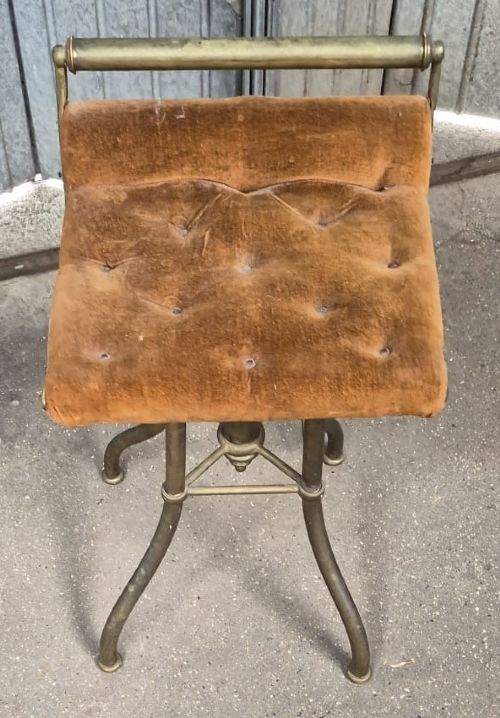
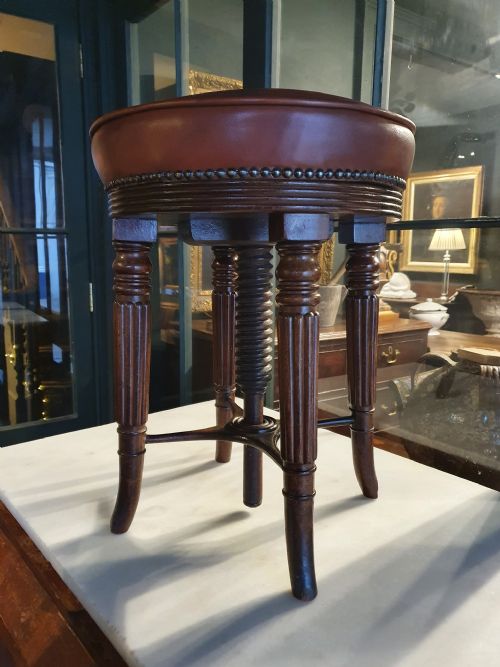
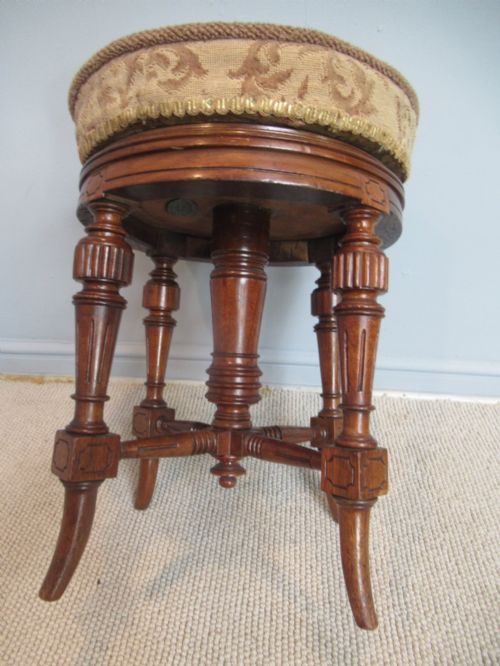
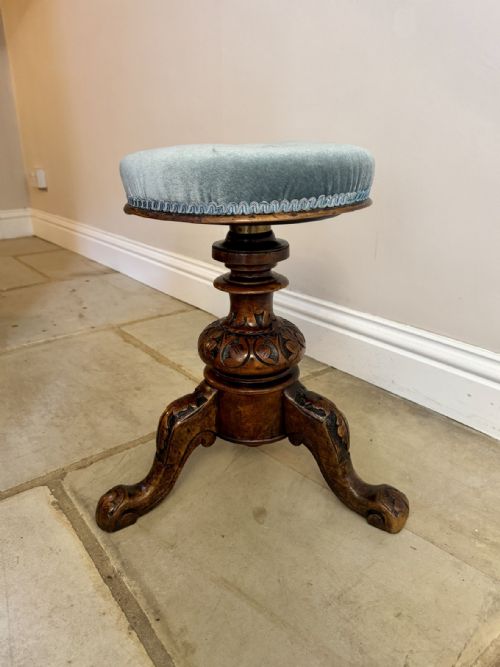
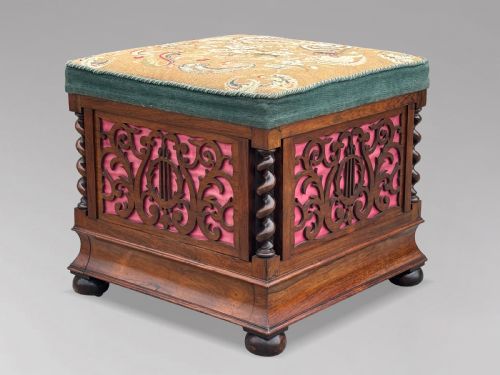
The most common examples encountered on this page date from the Victorian and Edwardian eras, executed in mahogany, walnut, or rosewood. They appear in forms such as revolving screw-adjusted stools, hinged storage benches, and specialised harpists chairs with brass or wood frames.
Materials and Construction
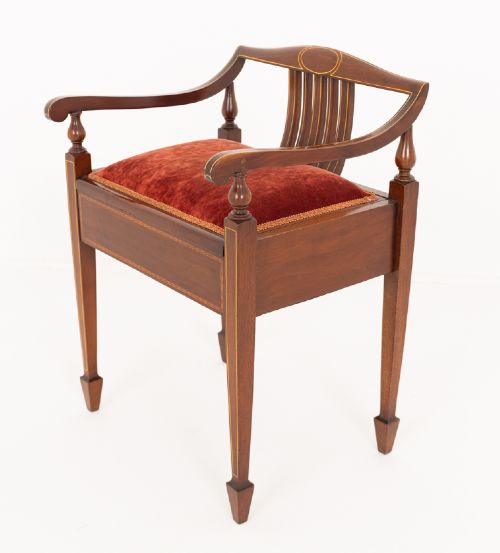
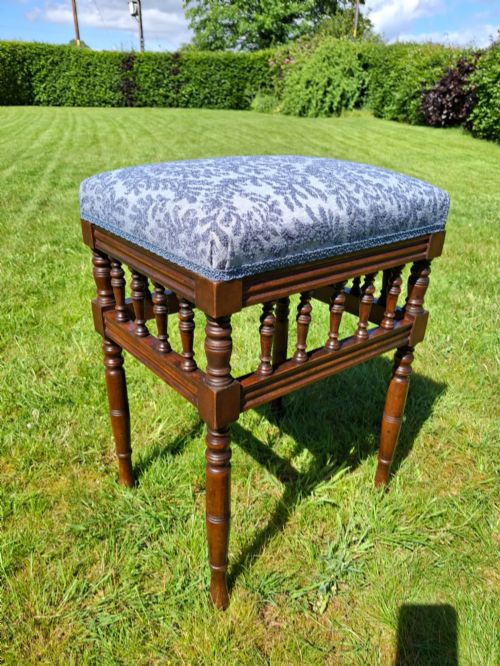
Cabinetmakers constructed these seats using dense timbers like mahogany, walnut, and rosewood, frequently incorporating brass mechanisms for height adjustment or swivel movement. Turnings, carvings, and delicate inlay work defined the aesthetic of the frame.
Upholstery involved traditional stuffing techniques paired with durable textile coverings including velvet, fabric, and leather. Hinged lids and fall fronts concealed internal storage compartments for sheet music within sturdy timber boxes.
Listings feature mahogany, walnut, and rosewood frames paired with velvet, leather, and fabric upholstery across Victorian and Edwardian periods.
Judging Quality and Execution
Quality rests in the precision of the timber carving and the mechanical integrity of the adjustable screw mechanism or swivel joint. Finer examples display crisp detail in mahogany or rosewood alongside smooth, reliable height adjustment.
The caliber of the upholstery finish and the retention of original brass fittings distinguish superior pieces from standard workshop output. Robust joinery in the frame and well-fitted internal storage compartments mark the better specimens.
Charles Nosotti·James Shoolbred
The Upholstered Music Seat Glossary
- Duet Piano Stool
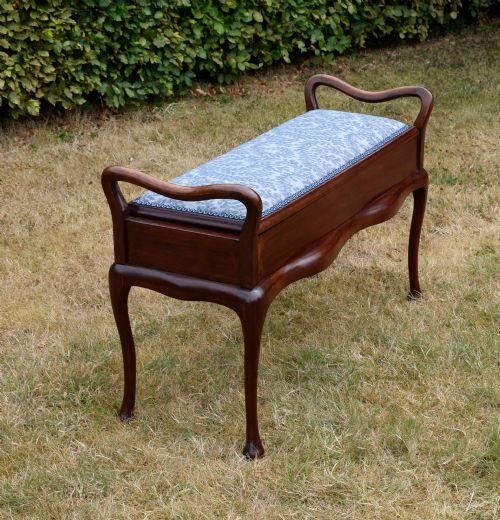
- A wider seat designed to accommodate two players simultaneously during piano practice. These benches often feature hinged lids opening to reveal storage space for sheet music inside.
- Revolving Piano Stool
- A seat fitted with a central screw mechanism allowing the top to spin and adjust in height. Players twist the upholstered top to achieve their preferred sitting position.
- Rise and Fall
- A mechanical system utilising a threaded screw or rack to alter the height of the seat. This mechanism allows precise adjustment for different musicians.
- Canterbury
- A partitioned rack fitted beneath or beside a seat for holding sheet music and folios. It combines upright dividers with a low stool or cabinet form.
- Chinoiserie
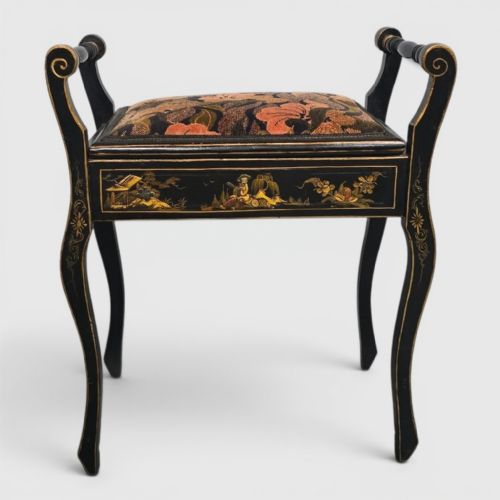
- A decorative style employing motifs inspired by Chinese art and design. These surfaces feature painted or lacquered ornamentation on the wood frame.
Upholstered Music Seat: Frequently Asked Questions
What is an upholstered music seat?
An upholstered music seat is a specialised chair or bench designed for musicians, featuring a padded top for comfort during long practice sessions.
These pieces range from single revolving stools to double duet benches with built-in music storage.
How do adjustable piano stools work?
Adjustable piano stools utilise a central wooden or metal screw mechanism hidden beneath the seat top.
Turning the upholstered surface rotates it up or down along the threaded screw to alter the seating height.
What is a duet piano stool?
A duet piano stool is an elongated bench built to seat two people side by side for piano duets.
Many examples include a hinged seat that lifts to reveal a compartment for storing sheet music collections.
How do I date a music seat?
Dating relies on timber choices, leg styles, and mechanical hardware characteristic of specific periods like the Victorian or Edwardian eras.
Heavier rosewood and carved walnut typically point to mid-nineteenth-century production, while lighter mahogany and inlaid details often indicate later Edwardian work.
Were these seats only used for pianos?
While primarily designed for keyboard players, specialised variants served harpists and other instrumentalists.
Specialist forms included revolving music chairs and angled seats tailored to the posture required by specific instruments.