


Victorian Mahogany Music Stool
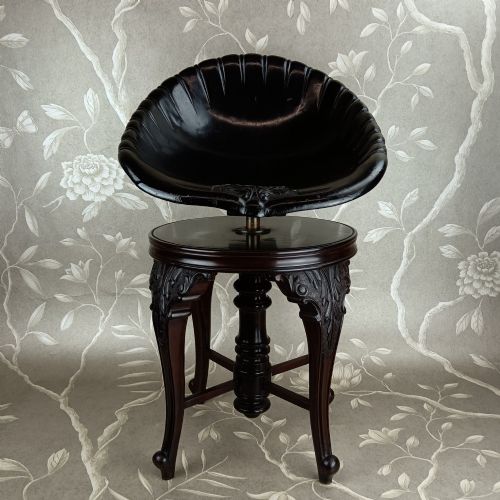
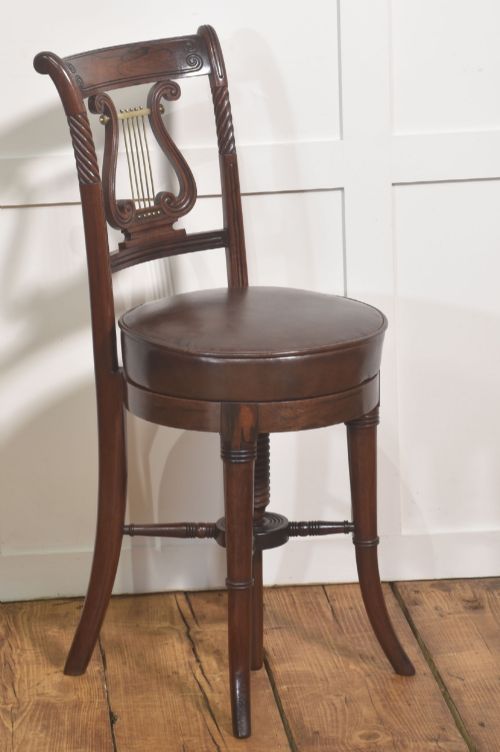
A victorian mahogany music stool is a functional seat designed for the piano or harp, prized for adjustable mechanism and rich timber.
Victorian Mahogany Music Stool
When you search for a victorian mahogany music stool, you encounter seating built primarily for nineteenth-century parlours and drawing rooms. The pieces recorded here span the Victorian era, alongside related examples from the Regency, William IV, and Edwardian periods.
The form appears most frequently as a revolving piano stool with a circular or square top, alongside duet stools with hinged seats or drawers. Makers also constructed dressing chairs, footstools, and music chairs from the same dense timber.
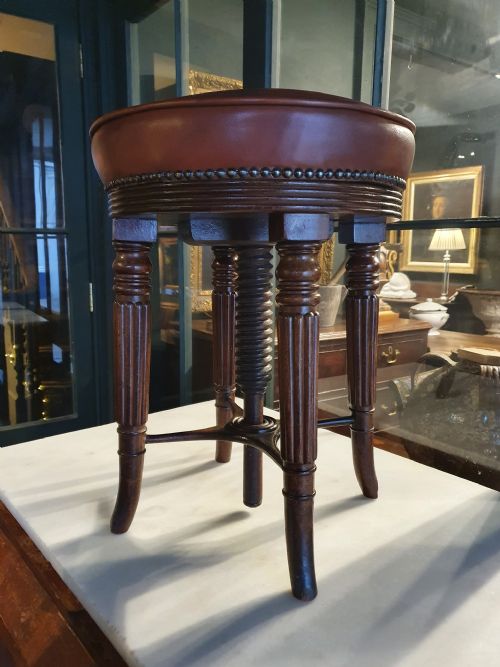
Most items rely on a mechanical screw action beneath the seat to alter height for the musician. You will find single-seat revolving designs and broader duet formats designed to accommodate two players at the keyboard.
How they were made
Cabinet makers utilised solid mahogany for the frames, turned columns, and cabriole or straight legs. Brass components frequently form part of the internal adjustable screw mechanism or cover the feet.
Seats are upholstered in various textiles, including fabric, velvet, and occasionally papier-mâché panels integrated into the woodwork. Joinery relies on traditional techniques to support the torque of the revolving tops and the weight of the sitter.
Listings feature mahogany, brass, velvet, and papier-mâché across periods from the Regency era through to the early twentieth century.
What varies in quality
The standard of carving and the sophistication of the turning on the central column separate standard examples from finer works. Superior pieces exhibit crisp detail in the Rococo or Neoclassical styling of the timber and mounts.
The smoothness and stability of the revolving mechanism dictate everyday utility. Heavier, well-engineered brass screws and solid mahogany bases offer better balance than lighter, looser frames.
Jennens and Bettridge·Gillows·Jas Shoolbred·James Shoolbred·H Brooks and Co
The Victorian Mahogany Music Stool Glossary
- Revolving piano stool
- A seat with a top that turns on a central screw to raise or lower the sitting height. This mechanism allowed musicians to adjust their position relative to the keyboard.
- Duet stool
- A wider bench designed for two people to sit together at a piano. These often feature hinged lids or drawers for sheet music storage.
- Papier-mâché
- A composite material made from paper pulp or layers of paper mixed with glue, pressed and dried into decorative panels. Makers such as Jennens and Bettridge incorporated this technique into specific music stool designs.
- Rococo style
- A decorative approach characterised by asymmetrical scrollwork, C-scrolls, and naturalistic floral motifs. This aesthetic appears frequently on nineteenth-century upholstered music stools.
- Adjustable dressing table chair
- A versatile seat with a mechanical height adjustment suitable for both musical performance and grooming. The framing and timber closely mirror dedicated piano stools.
Victorian Mahogany Music Stool: Frequently Asked Questions
How do you adjust the height?
You simply rotate the seat top clockwise or anticlockwise to move the internal wooden or metal screw thread upward or downward.
This mechanism allows the player to find a comfortable height for the piano keyboard without needing loose cushions.
What is a duet stool used for?
A duet stool provides seating for two musicians playing a piano duet on the same instrument.
Many examples include a hinged seat or built-in drawers underneath to store sheet music and scores.
How do I spot a William IV piece?
William IV furniture often displays robust, heavy proportions with bold scrollwork and substantial turned legs.
These pieces sit temporally between late Regency and early Victorian designs, utilising dark mahogany timber.
Can I use these as regular chairs?
Music stools function well as occasional seats, dressing table chairs, or footstools in modern living spaces.
The revolving top requires careful placement on uneven floors to ensure stability.