


Antique Revolve Seat
An antique revolve seat brings movement and traditional craftsmanship to a study, music room or workspace through clever swivelling and height-adjusting mechanisms.
Antique Revolve Seat
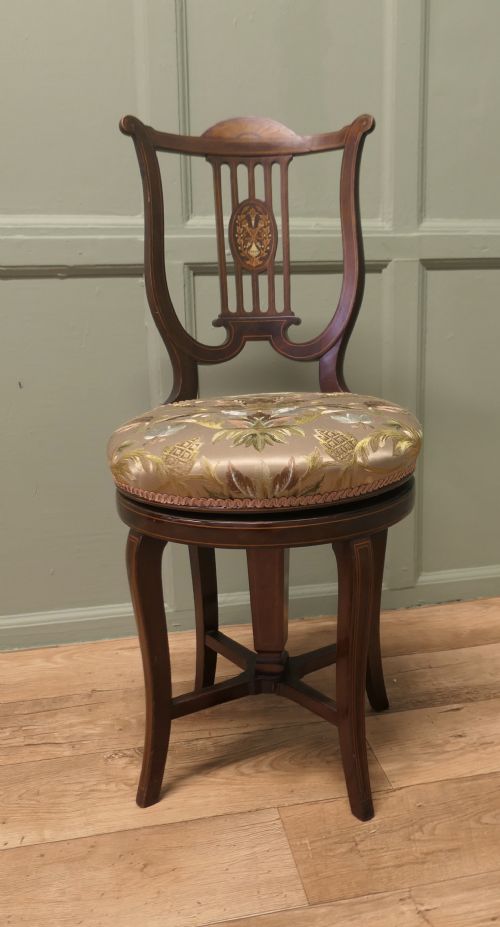
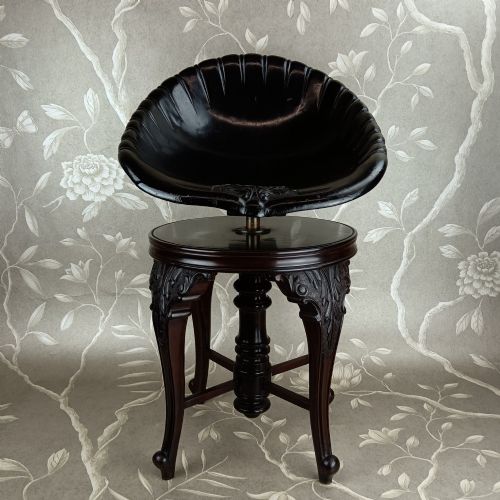
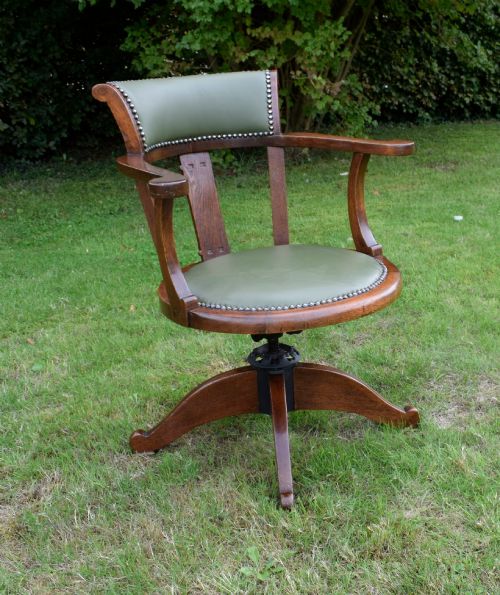
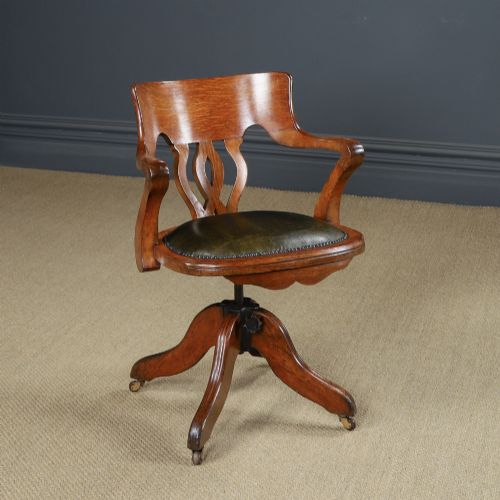
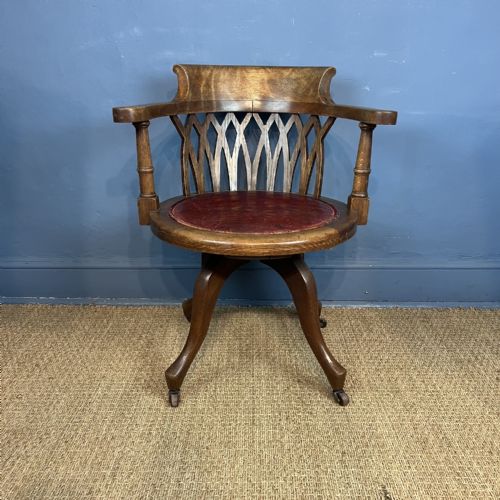
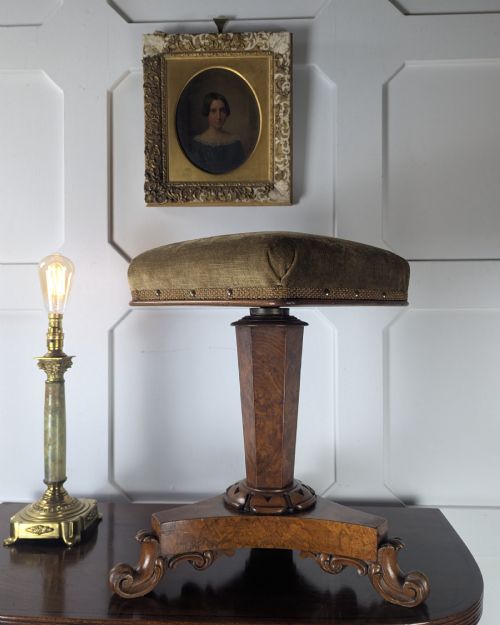
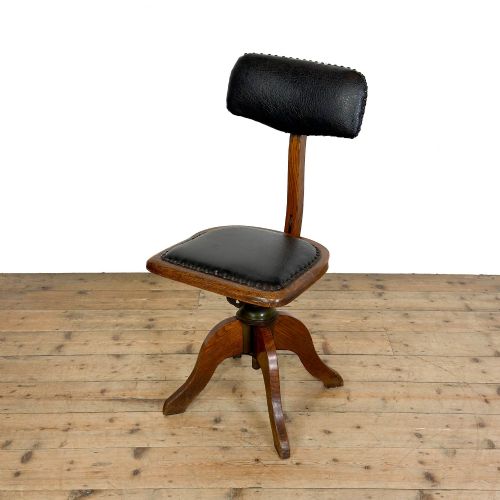
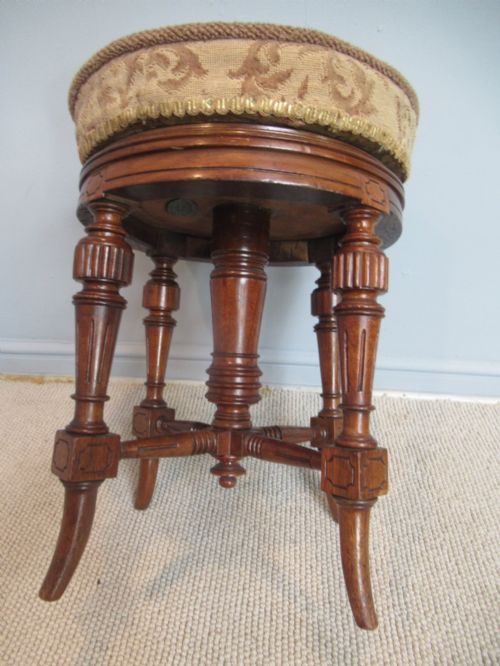
An antique revolve seat encompasses swivelling desk chairs, adjustable piano stools, and music chairs originating from periods such as the Victorian era, the Edwardian period, and the nineteenth century. These pieces serve practical functions in studies and drawing rooms, allowing the user to rotate or alter height with mechanical precision.
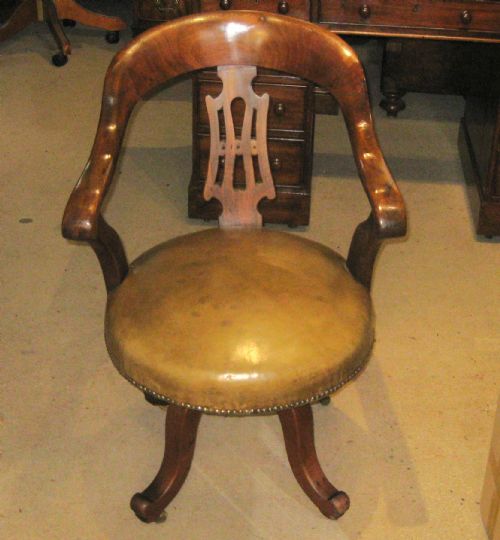
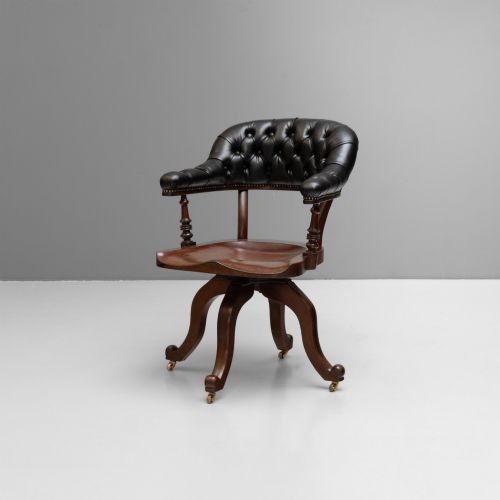
The most common examples on this page are mahogany and walnut desk chairs and music stools from the Victorian period, frequently fitted with revolving or rise-and-fall mechanisms. These range from office seating in oak to piano stools in rosewood and ebonised timber.
Makers and designers applied these rotating and adjustable designs to various forms, including dressing chairs, ship's chairs, and organist's stools. Each type reflects the domestic and commercial requirements of its specific period.
Materials and construction methods
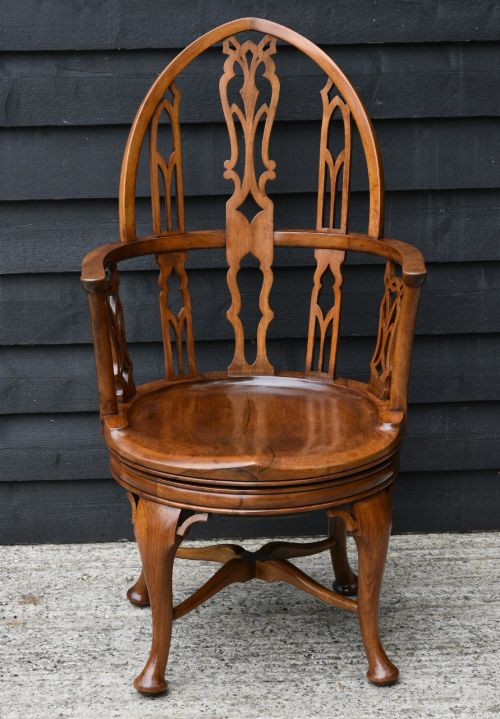
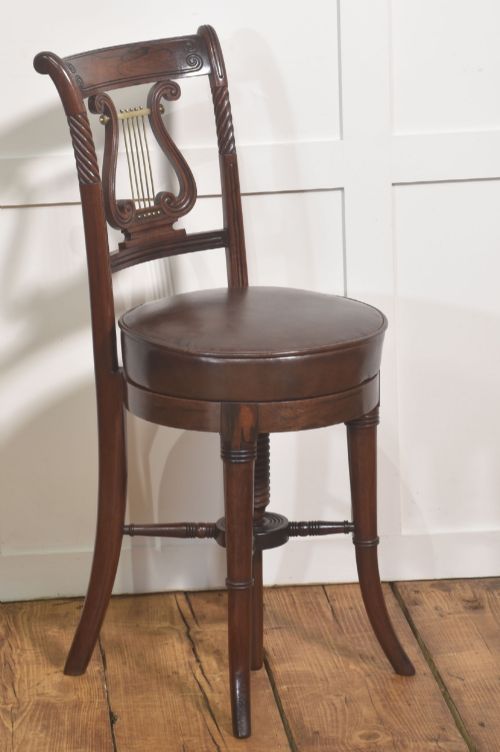
Cabinet makers utilised dense hardwoods like mahogany, walnut, oak, and rosewood to construct the frames, often incorporating carved details, lyre backs, or Gothic Revival motifs. Brass components frequently form part of the internal swivel and screw-adjustment mechanisms that raise and lower the seats.
Upholstered elements rely on materials such as leather, velvet, and fabric to cover the pads and seats, sometimes complemented by brass nail trim. Papier-mâché and cast iron also appear in specific industrial and decorative variants, demonstrating the diverse manufacturing techniques of the nineteenth and early twentieth centuries.
Listings feature woods such as mahogany, walnut, oak, and rosewood, paired with leather and brass mechanisms across Victorian and Edwardian periods.
Assessing quality and craftsmanship
The sophistication of the revolving or rise-and-fall mechanism dictates much of the quality, where smooth rotation and sturdy height adjustment demonstrate superior engineering. Heavier carving, figured wood veneers, and secondary timbers of high grade separate standard utilitarian seating from finer parlour and desk chairs.
The integrity of the frame construction and the original condition of materials such as leather or carved walnut influence the standing of a piece. Finer examples retain their original mechanical components and exhibit balanced proportions alongside skilled cabinet work.
Jennens & Bettridge·Gillows
The Antique Revolve Seat Glossary
- Revolving
- Describing a seat fitted with a mechanism that allows the upper portion to turn in a complete circle. This movement relies on a central spindle or bearing system concealed beneath the upholstery or wood.
- Rise and fall
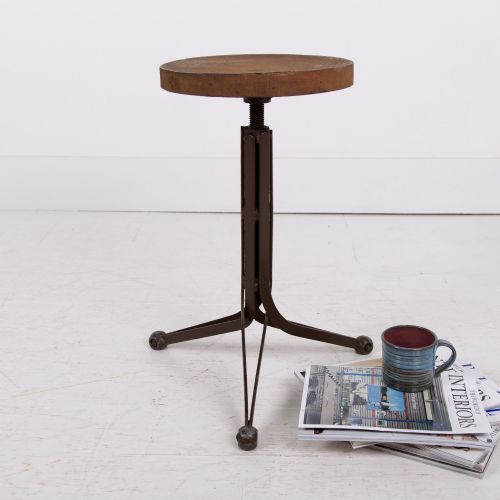
- A mechanism enabling the height of a seat to be adjusted upwards or downwards, commonly operated by a threaded screw shaft or a ratchet lever.
- Lyre back
- A chair back shaped in the outline of a classical musical instrument, frequently seen on music stools and chairs intended for parlours.
- Papier-mâché
- A composite material made from paper pulp or layers of paper mixed with glue, moulded and hardened to form decorative structural elements on furniture.
- Bergere
- A type of upholstered armchair or seat featuring exposed wooden framing and woven cane panels on the back or sides.
Antique Revolve Seat: Frequently Asked Questions
How do I adjust the height on an antique piano stool?
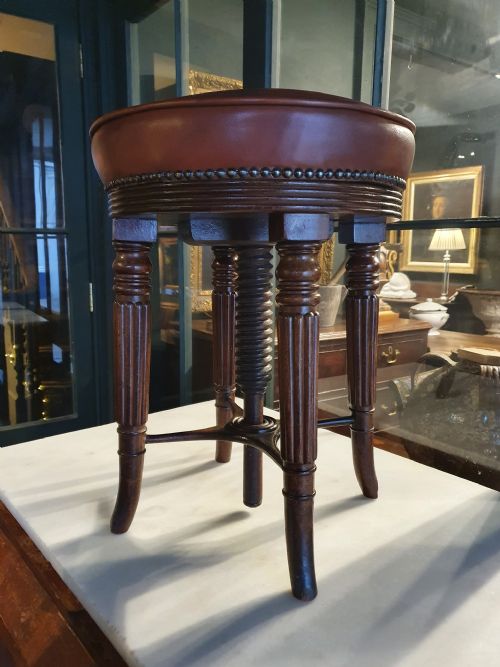
Most adjustable piano stools operate via a central wooden or metal screw mechanism hidden beneath the seat top. Turning the upholstered top clockwise or anticlockwise raises or lowers the sitting surface along the threaded spindle.
Care should be taken not to force the mechanism beyond its natural limits, as antique threads can wear over time. Periodic light lubrication of the moving parts helps maintain smooth operation.
What is the difference between a music chair and a desk chair?
Music chairs and stools are typically designed for pianists, cellists, or harpists, featuring revolving tops or rise-and-fall mechanisms to suit musicians of varying heights. They often incorporate decorative backs, such as lyre designs, or lack arms entirely to allow freedom of movement while playing.
Desk chairs, by contrast, are constructed for prolonged office or study use, frequently including armrests, robust swivelling bases, and ergonomic tilt functions. Materials like heavy oak or mahogany with leather inserts are common in these workspace seats.
How can I date an antique swivel chair?
Dating relies on examining the timber species, joinery techniques, and the style of the carving or frame. Victorian and Edwardian examples often feature specific revival motifs like Gothic or Sheraton influences, alongside patent brass screws or cast-iron underpinnings.
Makers' marks stamped into the wood or metal components can also provide precise chronological reference points. Comparing the turning style of the legs to known period furniture helps narrow the manufacturing decade.
Are these chairs suitable for daily office use?
Many antique swivel and desk chairs were built for commercial offices or domestic studies and remain robust enough for daily seating. Solid timber construction and durable leather upholstery often ensure lasting structural integrity.
However, buyers should consider that antique seat heights and lumbar supports reflect nineteenth or early twentieth-century ergonomics rather than modern standards. Regular maintenance of the swivel spindle helps preserve the antique mechanism under daily use.