



Adjustable Music Stool
An adjustable music stool is a mechanical seat engineered for pianists, cellists, and harpists to find the exact playing height.
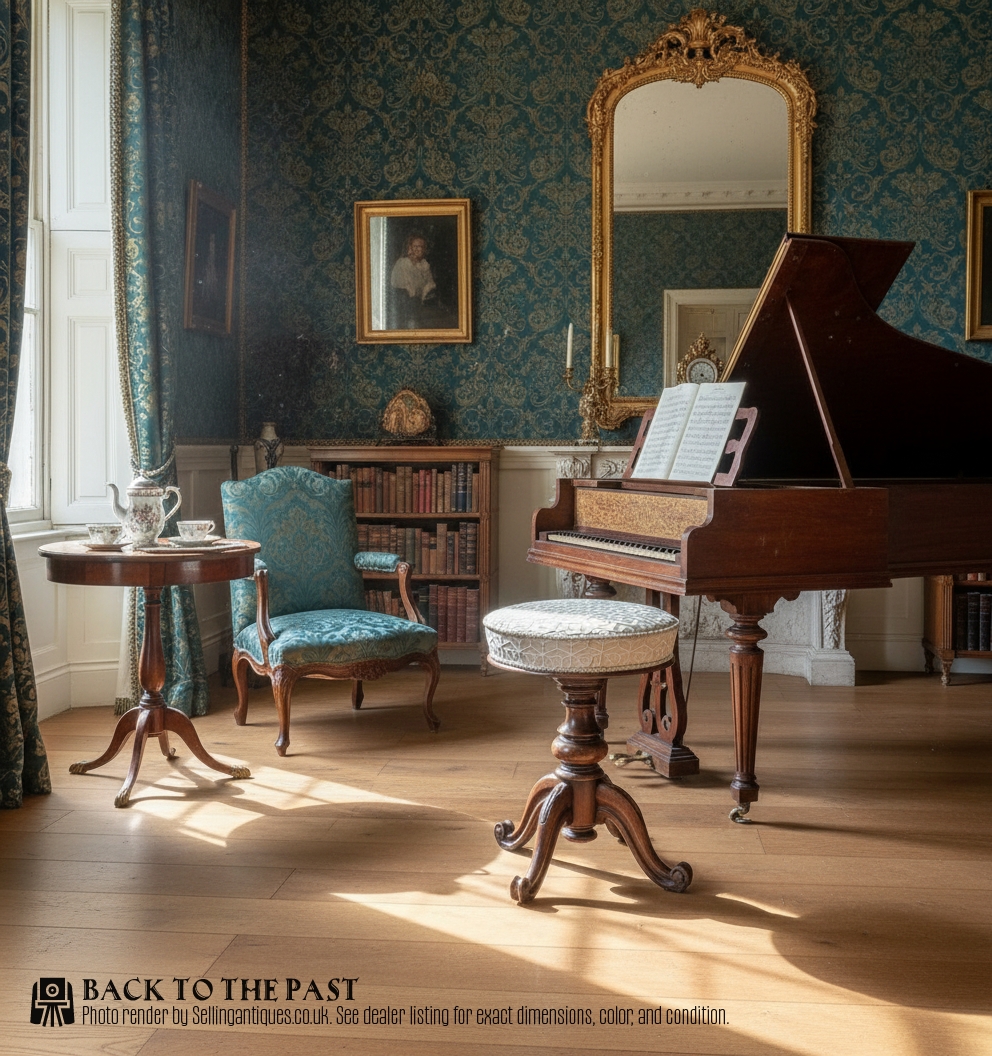
Adjustable Music Stool
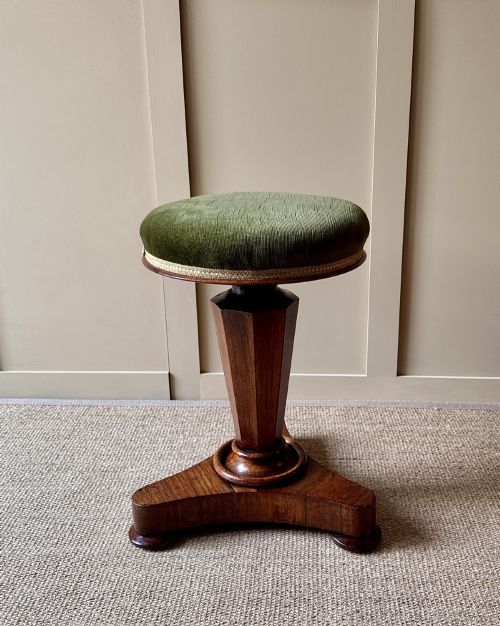
An adjustable music stool serves players of keyboards and stringed instruments by allowing precise height modification for posture. The most common examples met in these listings date from the Victorian and Regency periods, rendered in dense timbers such as mahogany, walnut, and rosewood.
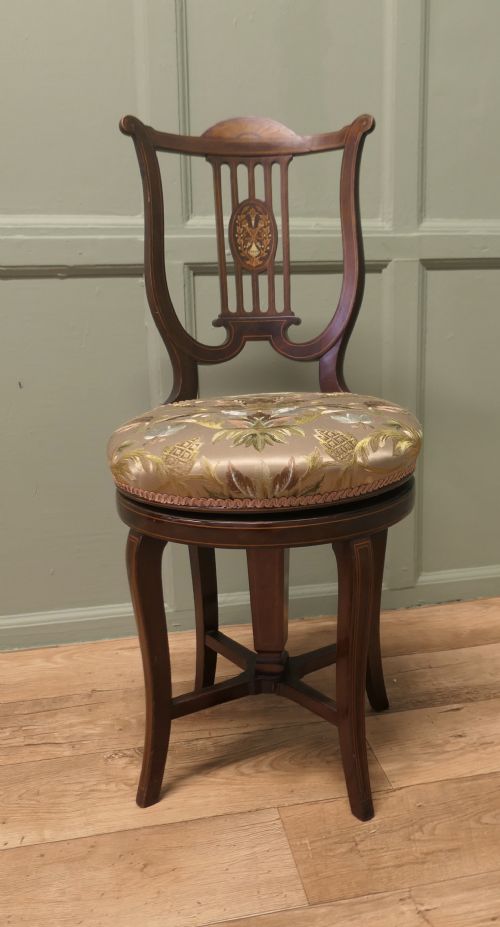
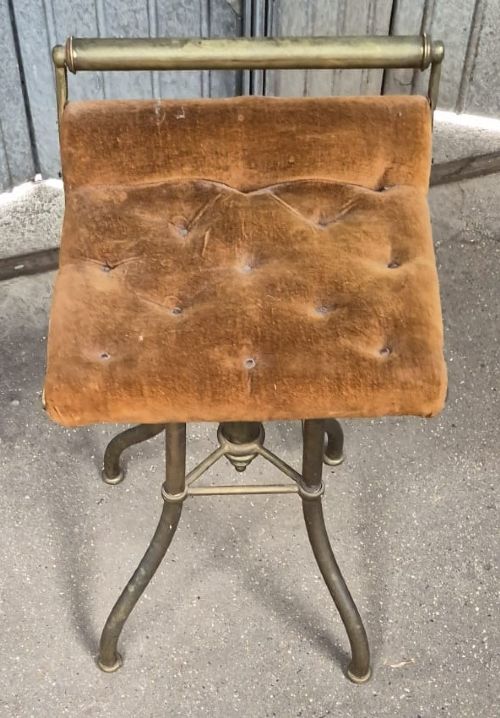
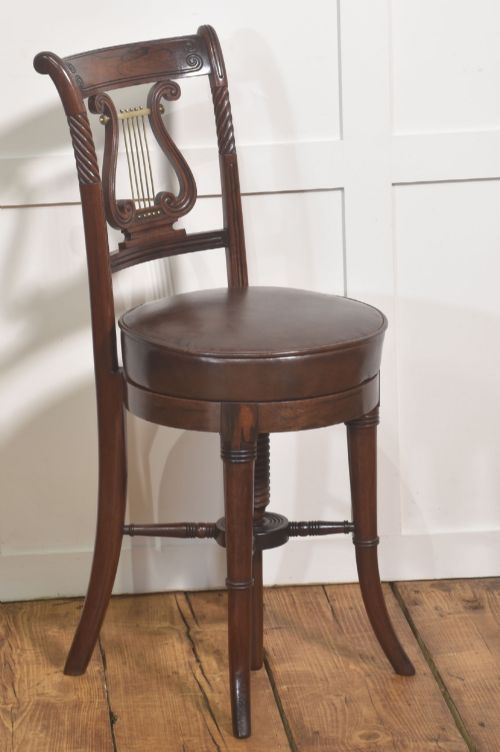
Forms vary from revolving swivel tops to rise-and-fall screw mechanisms and specialised harpist chairs with supporting backs. These pieces double as dressing table chairs and domestic stools, reflecting their versatile utility in nineteenth-century parlours.
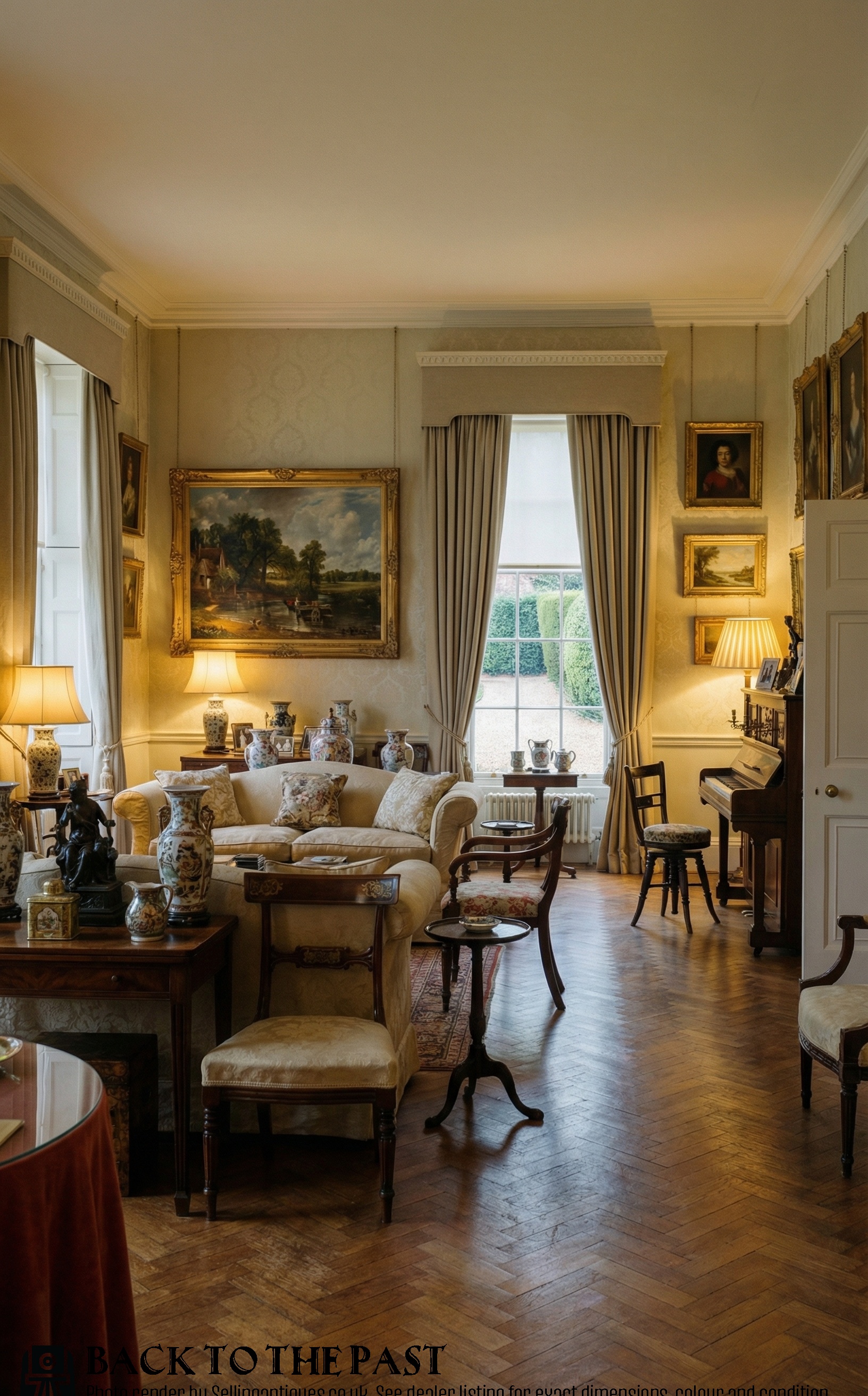
How They Were Made
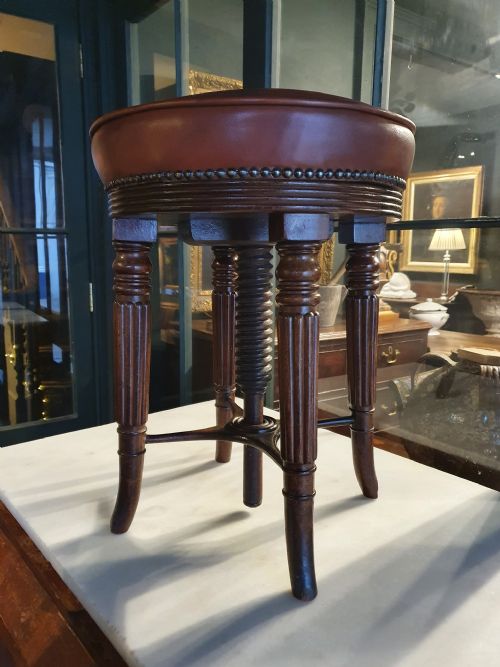
Cabinetmakers utilised solid timbers like mahogany, walnut, and rosewood, often shaped with carved details, brass inlays, or papier-mâché finishes. Mechanical components relied on robust brass screw threads and iron swivels hidden beneath the seat frames to facilitate smooth height adjustment.
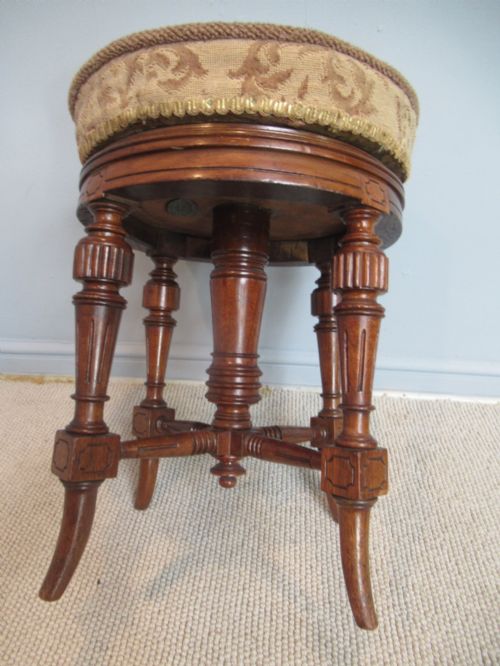
Seats were padded with traditional stuffing and covered in durable textiles including leather, velvet, fabric, and needlepoint. Frames incorporated structural stability through turned legs, X-frames, and robust corner block construction to withstand regular adjustment.
Adjustable Music Stool Retail Price Guide 2026
Typical asking prices for adjustable music stool among the pieces listed under this phrase on Sellingantiques today, from the lower quarter to the upper quarter. They describe what is for sale here now, not the wider market.
Musicians historically required custom seating heights long before ergonomic office chairs existed.
What Varies in Quality
Quality rests in the precision of the mechanical movement and the integrity of the timber framing. Superior pieces exhibit fluid, stable rotation or smooth screw rises without excessive play in the column.
Material selection and secondary wood choices distinguish workshop standards, alongside the crispness of hand-carved ornamentation. Original upholstery materials and branded cabinetmaker hardware elevate the standing of a piece.
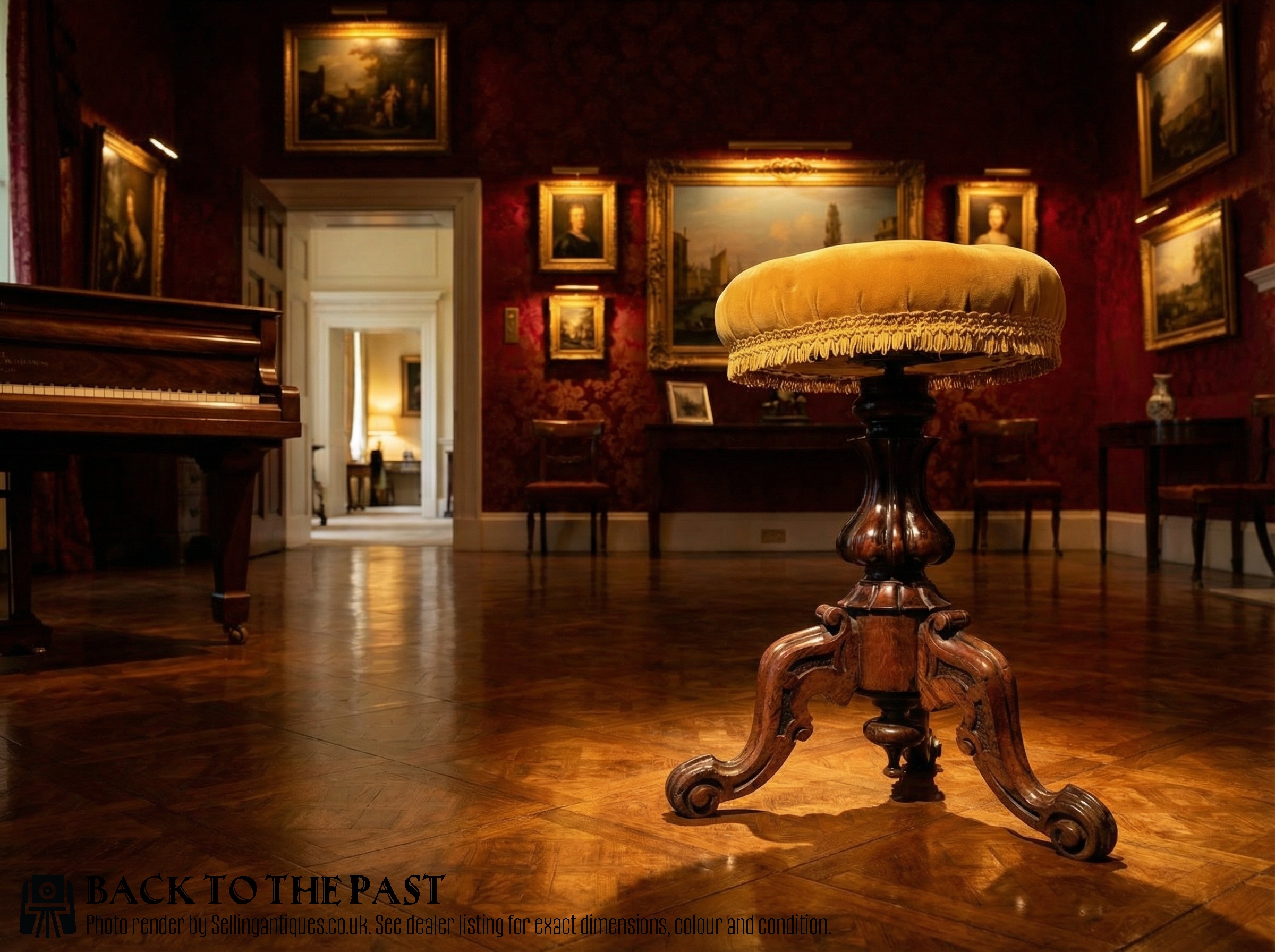
Jennens and Bettridge·Gillows·James Shoolbred·Brooks
The Adjustable Music Stool Glossary
- Revolving
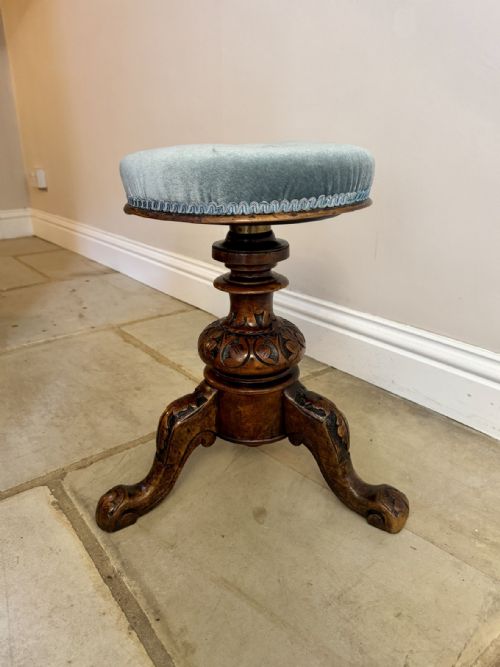
- A seat design featuring a central pivot that allows the top to spin freely for rotational movement.
- Rise and fall
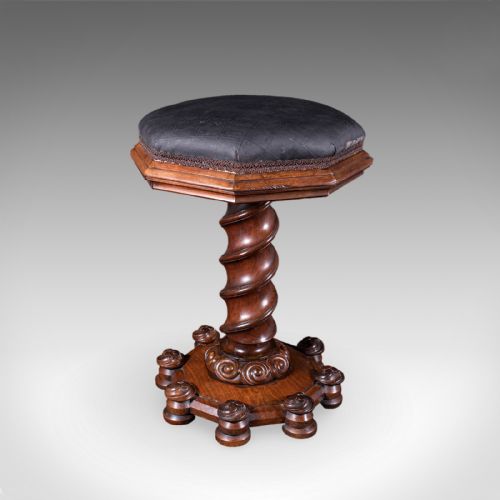
- A mechanical mechanism operated by a winding screw to alter the vertical seating position.
- Lyre back
- A chair backrest shaped to resemble the ancient Greek stringed instrument, common in music room seating.
- Aesthetic Movement
- A late nineteenth-century design style emphasising artistic simplicity, ebonised finishes, and Japanese-influenced motifs.
- Papier-mâché
- A composite material made from paper pulp and binding agents, pressed into moulds and lacquered for decorative surfaces.
Adjustable Music Stool: Frequently Asked Questions
How do adjustable music stools work?
These seats use either a central threaded screw mechanism operated by turning the top cushion or an iron swivel pivot. This allows the player to raise or lower their seating position to suit their instrument and height.
Internal wooden or metal box structures house these moving parts beneath the upholstery. The engineering ensures the seat remains stable while supporting shifting weight during recitals.
Can I use a music stool at a dressing table?
Many period examples function equally well as dressing table chairs due to their compact footprints and adjustable heights. The pivoting or screw mechanisms provide practical utility for personal grooming.
Their decorative carved wood frames and upholstered tops complement bedroom interiors just as well as music rooms.
How do I identify a Regency music stool?
Regency pieces often display classical influences such as rosewood veneers, brass inlay, sabre legs, and turned supports. The proportions typically reflect earlier nineteenth-century cabinetmaking traditions.
They frequently employ heavy rosewood or mahogany timbers with precise, restrained carving compared to later Victorian ornamentation.
What is the difference between a piano stool and a harpist chair?
Harpist and cello chairs often feature supportive backs, sometimes shaped like a lyre, to accommodate the physical posture required by string players. Piano stools are traditionally backless round or square swivel seats designed for keyboard access.
Both utilise height adjustment, but the chair variants provide upper body support tailored to distinct instruments.