
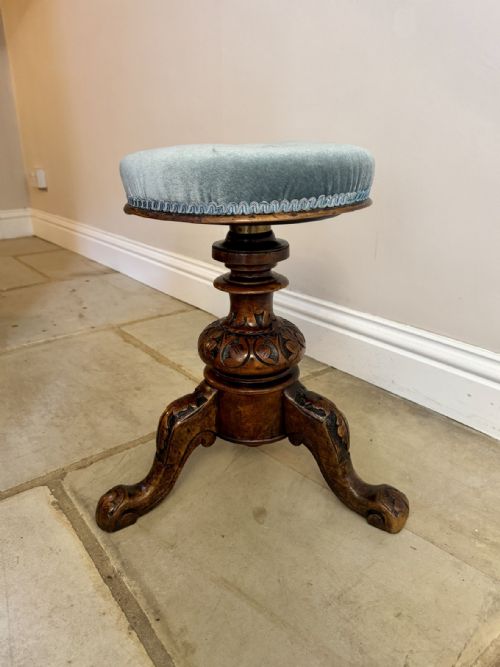


Tripod Piano Stool
These tripod piano stool examples combine Victorian engineering with domestic comfort, offering adjustable seating for the home music room.
What they are
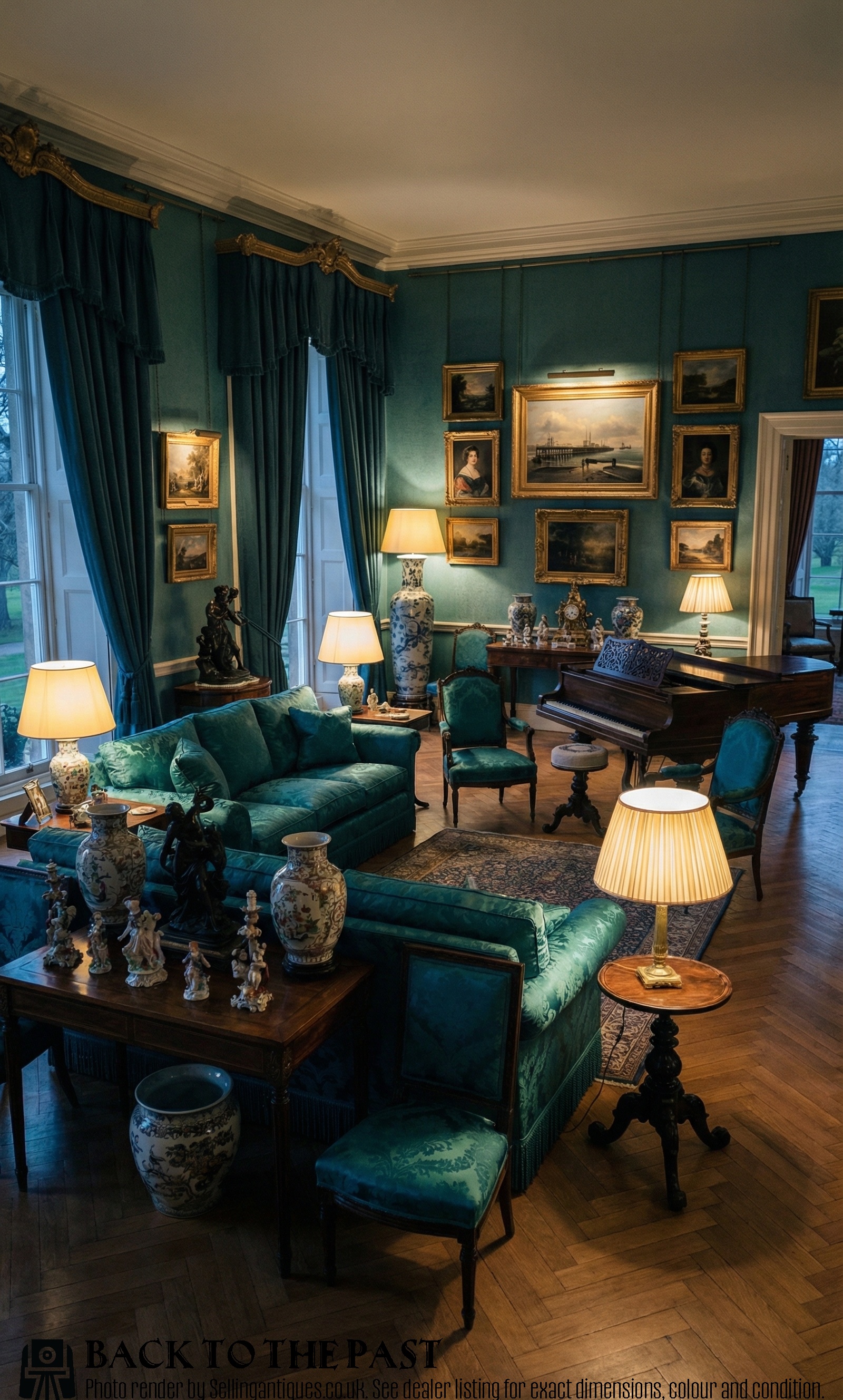
A tripod piano stool provides adjustable seating for musicians, typically featuring a central screw mechanism or swivel action supported by three legs. When you search for a tripod piano stool, you meet nineteenth-century forms originating from the Victorian period.
The pieces listed on this page span the mid to late nineteenth century, predominantly dating from the eighteen-fifties to the eighteen-eighties. Walnut and mahogany form the primary timber choices for these domestic items.
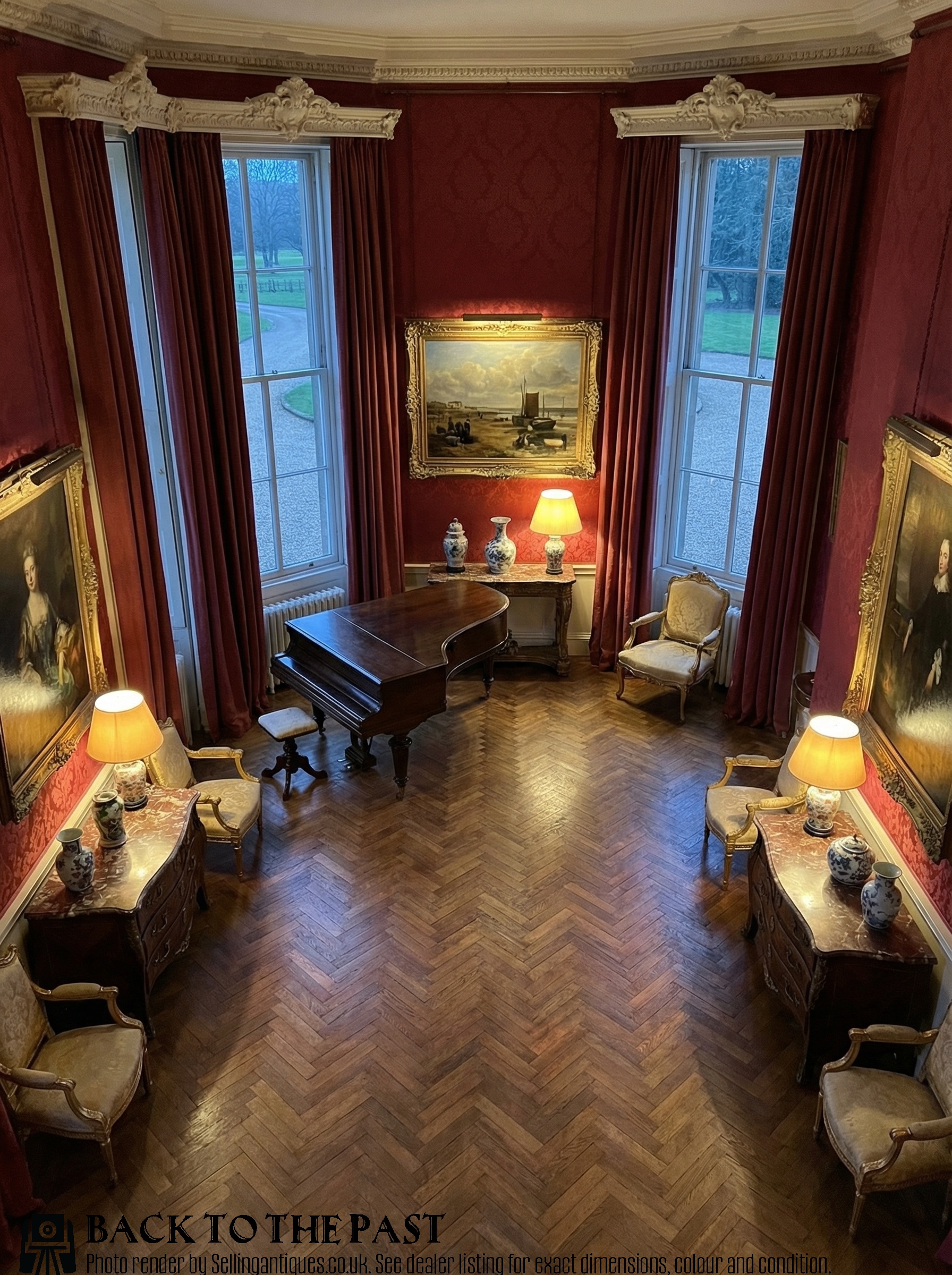
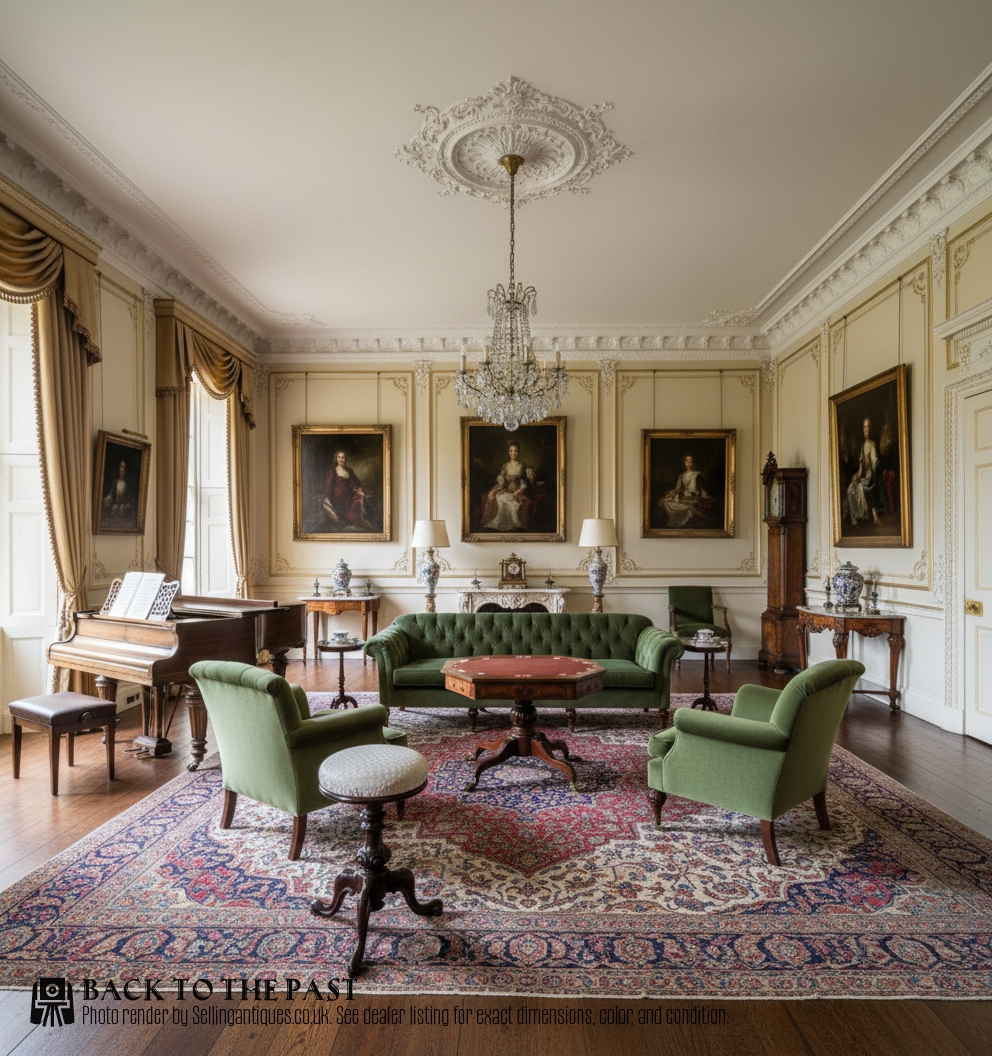
Makers designed these stools to accompany keyboard instruments in Victorian parlours and drawing rooms. The three-legged format ensures stability on uneven carpets while allowing the sitter to rotate or alter the height.
How they were made
Cabinet makers utilised dense hardwoods such as walnut and mahogany, shaping them through carving and turning techniques. These timbers provided the structural strength needed to support the twisting and adjusting mechanisms.
Upholstery completed the seats, using original fabrics, leather or modern replacement textiles over padded foundations. Metal components integrated into the wooden frames facilitated the rise-and-fall action.
Retail Price Guide 2026
Typical UK retail prices for tripod piano stool, calculated from the Sellingantiques database of over a million retail prices indexed since 2003. This retail price guide relies exclusively on Sellingantiques data; no external sources or auction records are used, so the figures do not describe the wider market.
What varies in quality
The finesse of the hand-carved decoration on the legs and central column distinguishes finer examples from simpler workshop output. Deeply undercut foliage and crisp mouldings indicate a higher standard of craftsmanship.
The precision and smoothness of the revolving or adjustable screw mechanism separate superior pieces from standard production. A robust, well-engineered metal screw ensures the seat functions reliably without excessive wobble.
The Tripod Piano Stool Glossary
- Tripod
- A three-legged support structure. This configuration prevents rocking on uneven Victorian floorboards.
- Rise and fall
- A mechanical height adjustment system operated by turning the seat. It allowed different players to reach the keyboard at their preferred elevation.
- Revolving
- A seat that rotates freely on its central axis. This movement aided pianists in turning toward sheet music cabinets.
- Mahogany
- A durable, reddish-brown tropical hardwood favoured by nineteenth-century cabinet makers. Its stability suited turned columns and carved legs.
Frequently Asked Questions
How do I adjust the height?
Most models feature a central wooden screw column that raises or lowers when you rotate the upholstered top.
Turning the seat clockwise lowers the height, while anti-clockwise rotation extends the screw upward.
Can I use these at a desk?
These seats adapt well as dressing table chairs or small occasional seating in compact study spaces.
The adjustable height mechanism makes them practical for various modern desk configurations.
Are the swivel mechanisms robust?
Victorian engineering employed heavy iron and brass internal components designed for daily domestic use. Regular gentle waxing of the wooden threads keeps the movement smooth.
What is the difference between walnut and mahogany?
Walnut displays a rich brown tone with darker grain figuring, popular in mid-Victorian parlours. Mahogany offers a denser, deeper red-brown material often selected for earlier nineteenth-century furniture.