

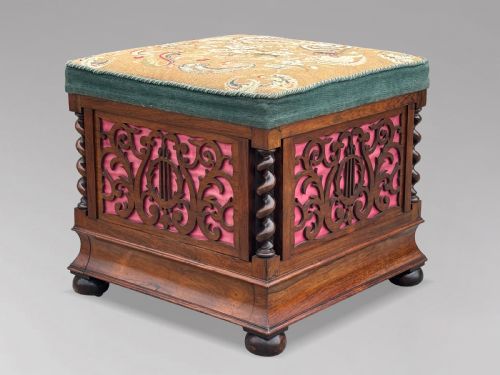


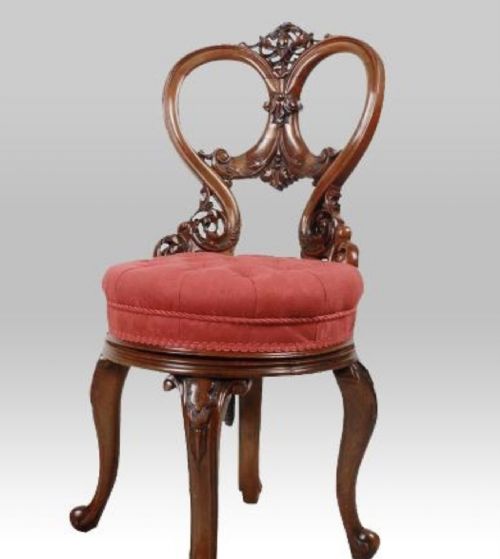
Victorian Rosewood Music Stool
A victorian rosewood music stool offers a sturdy seat designed for the drawing room, combining rich timber with practical height adjustment.
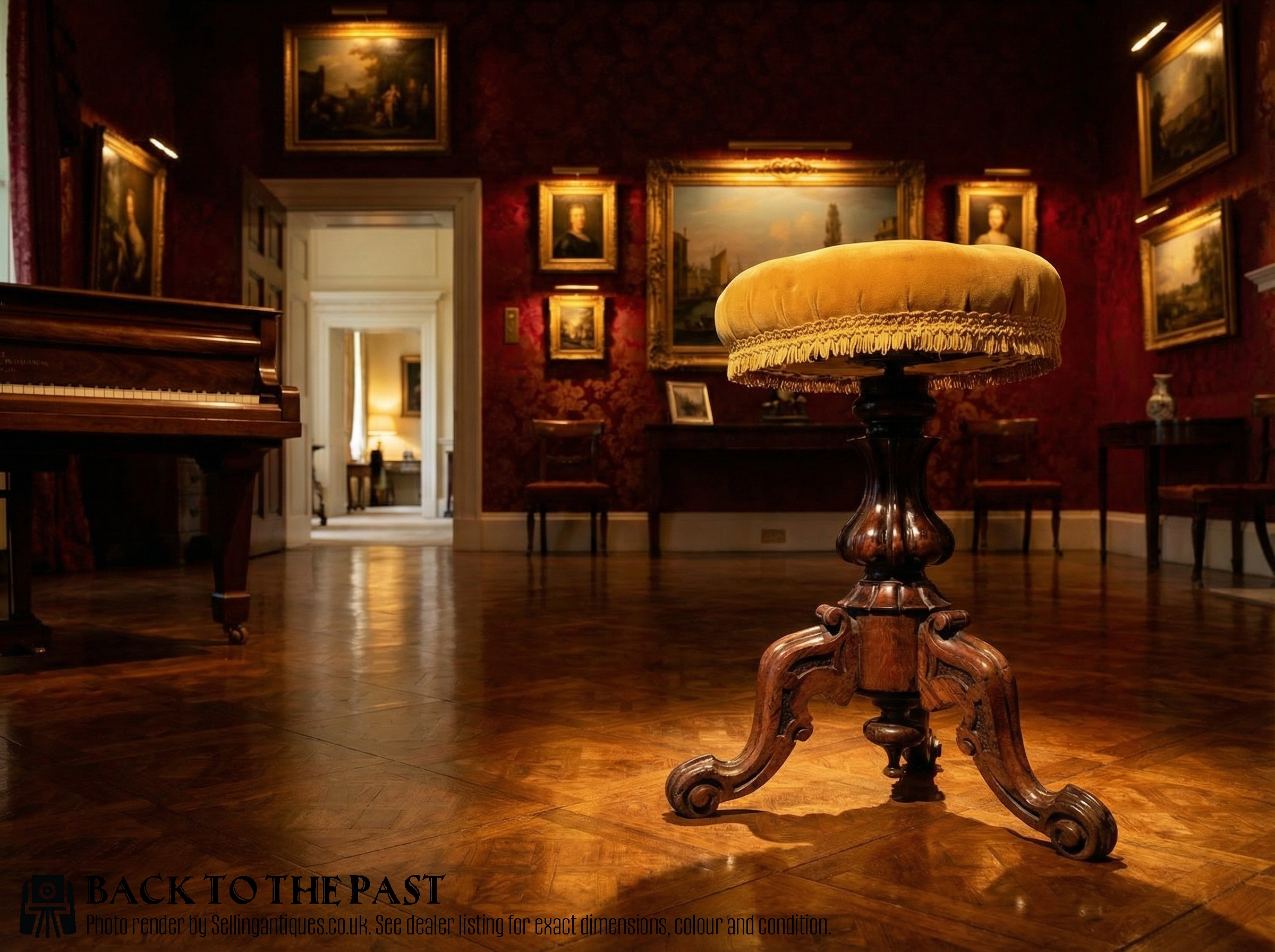
Victorian Rosewood Music Stool
A victorian rosewood music stool is typically found in forms designed for the piano or the harp, spanning the nineteenth century from the eighteen-fifties through to eighteen-ninety. These seating pieces appear as adjustable revolving stools, rising seats, and specialised harpist chairs with supporting backs.
The evidence shows examples from the victorian period, including specific dates such as eighteen-fifty, eighteen-sixty, eighteen-seventy, and eighteen-ninety, alongside arts and crafts and neoclassical revival styles. Alongside standard piano stools, the listings include music chairs, dressing table stools, and benches.
Most pieces on this page originate from the nineteenth century, utilising dense tropical timber and various upholstery textiles. Buyers encounter both revolving mechanisms and rise-and-fall screw actions designed for musicians.
How they were made
Construction relies heavily upon solid rosewood and boxwood inlay, often paired with satinwood details to create contrasting borders along the seat rims or bases. Turned pillars and carved legs provide the structural support necessary for mechanical height adjustment.
Upholstery forms a vital component of the construction, utilising fabrics such as velvet, textile, and tapestry stretched over padded tops. Brass hardware frequently secures the internal revolving screws and foot caps.
Victorian Rosewood Music Stool Retail Price Guide 2026
Typical asking prices for victorian rosewood music stool among the pieces listed under this phrase on Sellingantiques today, from the lower quarter to the upper quarter. They describe what is for sale here now, not the wider market.
What varies in quality
The distinction between standard and finer examples rests upon the execution of the woodwork, particularly where boxwood inlay or delicate turning is present. Superior pieces display crisp carving on the legs and a smooth, reliable action in the revolving or rising mechanism.
The choice of covering material and the preservation of the original fabric or tapestry influence the character of each piece. Heavier frames with substantial rosewood timber generally indicate higher workshop standards.
Charles Nosotti
The Victorian Rosewood Music Stool Glossary
- Rosewood
- A dense, dark timber prized for its rich grain and purplish-brown coloration. It provides the primary structural material for these nineteenth-century seats.
- Revolving
- A turning seat mechanism allowing the top to spin freely on a central screw thread. This function enabled musicians to adjust their seating position easily.
- Boxwood Inlay
- Contrasting light wood pieces set flush into the darker rosewood surface to form geometric patterns. This decorative technique highlights the borders and friezes of the stool.
- Rise and Fall
- An adjustable mechanical system operated by turning the seat or a side handle to alter the height. It uses internal threading to raise or lower the platform.
- Tapestry
- A heavy woven textile featuring pictorial or floral patterns used for upholstery. Surviving examples retain their original hand-worked needlepoint designs.
Victorian Rosewood Music Stool: Frequently Asked Questions
How do I adjust the height?
Many examples use a revolving mechanism where the top spins around a central wooden or metal screw to move up and down. Others employ a rise-and-fall action controlled by turning the seat itself.
This functional design allowed nineteenth-century musicians to set their exact playing height at the piano or harp.
Are these seats comfortable?
The comfort depends on the original padding and the type of upholstery fabric retained on the top. Most feature padded surfaces covered in velvet, textile, or tapestry.
While designed primarily for upright posture during musical practice, they offer firm support suitable for daily use.
How do I date a piece?
Dating relies on stylistic clues and construction methods recorded across the nineteenth century, ranging from eighteen-fifty to eighteen-ninety. Arts and crafts influences and specific inlay details often point towards the later decades.
Makers' marks, where present, help narrow the chronology to specific workshops of the period.