
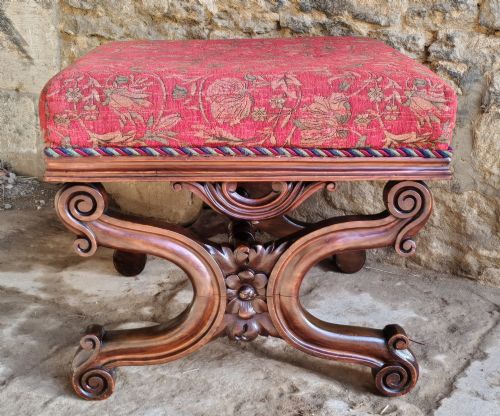
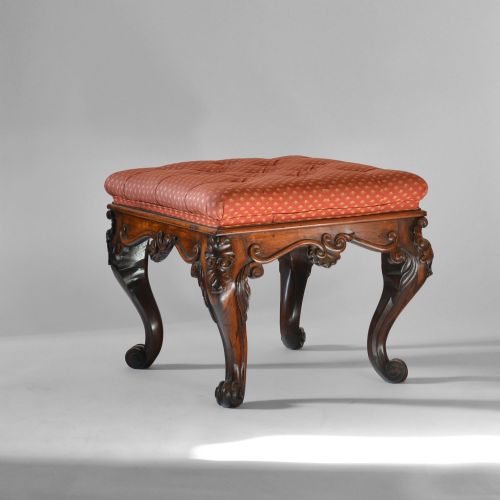
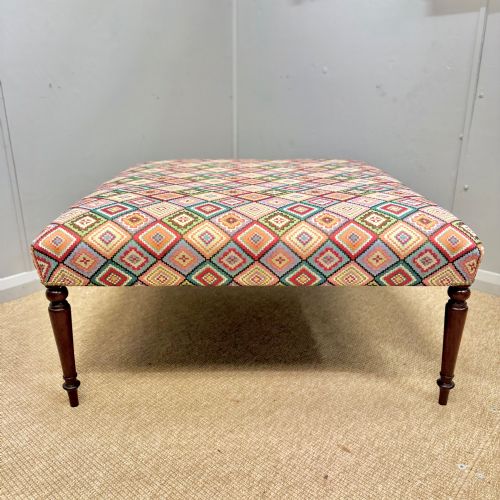
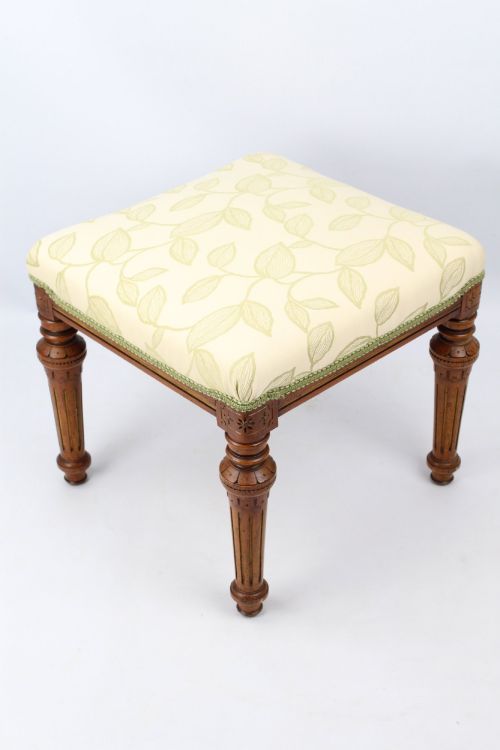
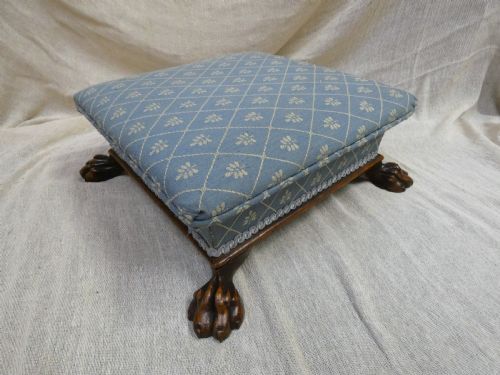
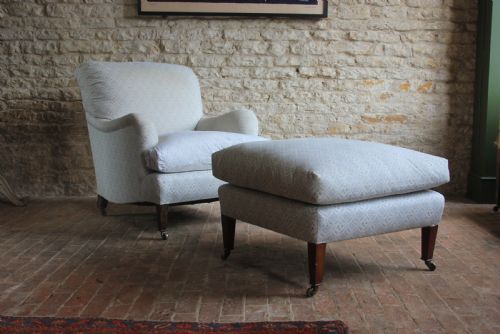


Patterned Upholstered Stool
These patterned upholstered stool designs offer practical seating and footrests, combining period timber frames with decorative textiles from the nineteenth and early twentieth centuries.
Patterned Upholstered Stool
A patterned upholstered stool serves as a versatile seat or footrest, appearing across nineteenth-century and early twentieth-century periods in forms such as footstools, piano stools, and large ottomans.
The most common versions on this page are Victorian and Edwardian footstools and ottomans, frequently upholstered in decorative fabrics, kilims, or Liberty textiles.
Makers and designers referenced in these listings include Liberty & Co and Howard & Sons, alongside stylistic revivals ranging from Jacobean to Art Deco.
How they were made
Frames are constructed from solid timbers including mahogany, rosewood, oak, walnut, and general wood, often shaped with carving, x-frames, or turned legs.
Upholstery relies on textiles such as cotton, fabric, and kilim coverings applied over padded seat structures, occasionally complemented by brass mounts or adjustable mechanisms.
Some nineteenth-century ottomans double as work boxes, hiding sewing supplies beneath seats.
What varies in quality
Quality differences emerge in the selection and density of timber used for the frame, distinguishing dense hardwoods like rosewood and mahogany from lighter woods.
The standard of upholstery work, the choice of fabric or kilim, and the intricacy of frame carving further separate standard utility pieces from fine workshop productions.
Howard & Sons·Liberty & Co
The Patterned Upholstered Stool Glossary
- Ottoman
- A low, upholstered seat or footstool without arms or a back, frequently built in large proportions during the nineteenth century.
- Piano stool
- A seat designed for keyboard players, often featuring a mechanism to adjust the seating height.
- Kilim
- A flatwoven textile originating from the Near East and Central Asia, frequently utilised as durable upholstery on nineteenth-century footstools.
- X-frame
- A structural furniture base formed by intersecting diagonal members resembling the letter X, seen on mid-nineteenth-century stools.
- Prie Dieu
- A devotional chair or low seat designed for kneeling and prayer, typically constructed in Victorian rosewood with upholstered upper elements.
Patterned Upholstered Stool: Frequently Asked Questions
How do I date a patterned upholstered stool?
Dating relies on identifying the underlying timber species, frame style, and turning techniques characteristic of periods like the Victorian era or the early twentieth century.
Changes in upholstery materials, such as the presence of period kilims or Liberty cotton fabrics, also provide clues to the decade of manufacture.
Were these stools used in bedrooms or drawing rooms?
Many smaller footstools and dressing table stools were placed in bedrooms, whilst large ottomans and piano stools belonged in drawing rooms and music rooms.
Their placement depended entirely on the specific form, whether an adjustable piano seat or a large country house footstool.
Can I use an antique ottoman as a coffee table?
Large nineteenth-century ottomans and square footstools provide a stable surface that functions well alongside sofas for casual daily use.
Placing a rigid tray on top of the upholstered surface protects the fabric whilst allowing drinks and books to rest steadily.
What is the difference between a footstool and an ottoman?
Footstools generally measure smaller and sit lower to the ground for supporting feet, whereas ottomans often provide larger, boxier proportions and occasionally internal storage.
Both types share timber frames and patterned upholstery but served different practical functions within nineteenth-century interiors.