




Regency Piano Stool
A regency piano stool is a 19th-century seating form designed for musicians, combining mahogany or rosewood with height adjustment mechanisms.

Identifying a regency piano stool
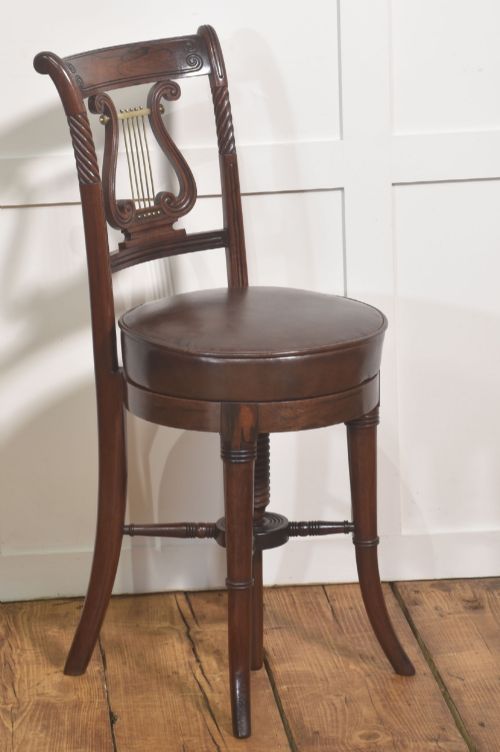
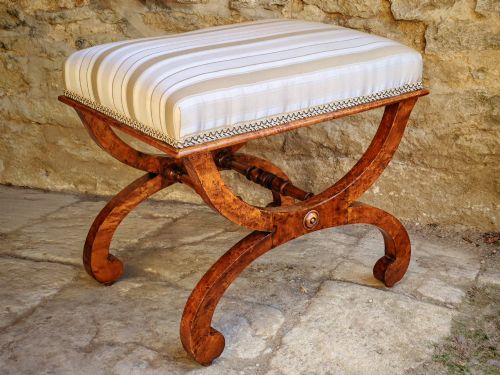
A regency piano stool is a 19th-century seat primarily encountered in mahogany or rosewood, spanning the Regency and William IV periods. These pieces appear as square-top piano stools, revolving music stools, and swivel-top variants designed for the keyboard player. Many examples incorporate adjustable heights to suit individual performers at the instrument.
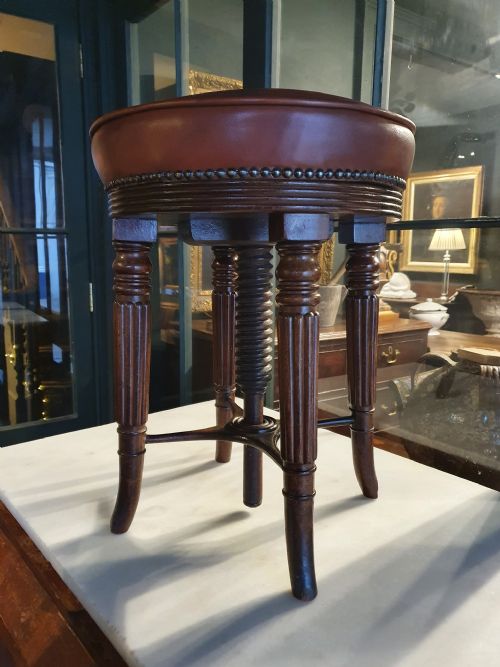
The archive and current listings show that these piano stools often double as dressing table stools or desk chairs, particularly the rosewood and simulated rosewood versions. Stools from this era frequently feature turning mechanisms or screw threads concealed within the central column to alter the seat level. The prevailing styles encompass Grand Regency and William IV aesthetics across the nineteenth century.
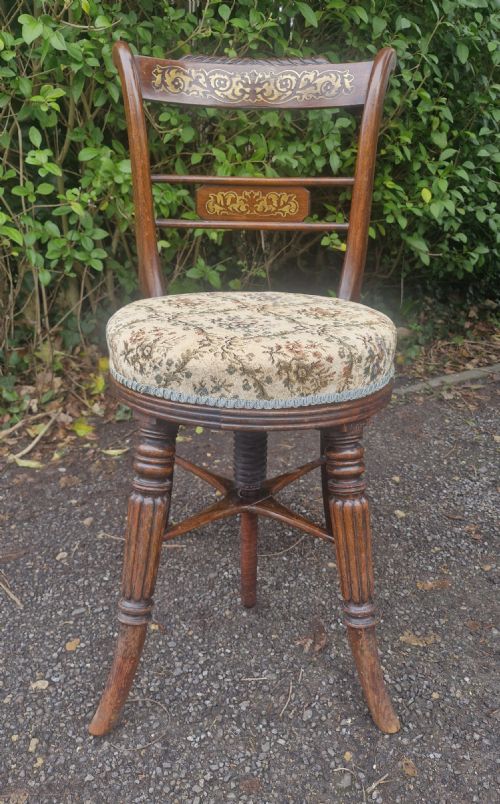
Buyers searching for a regency piano stool will discover square top forms alongside round revolving versions mounted on pillar supports. The primary timbers recorded are mahogany, rosewood, simulated rosewood, walnut, beech, and oak. Utopian or standard domestic music rooms of the nineteenth century utilised these diverse configurations for daily practice and performance.
Materials and construction
Makers constructed these piano stools using solid hardwoods, predominantly mahogany and rosewood, alongside simulated rosewood finishes applied to secondary timbers like beech. The structural framing supports central screw mechanisms or swivel joints that permit height adjustment for the seated player.
Upholstery materials recorded on these seats include velvet, tapestry, fabric, textile, leather, and needlepoint. These coverings are fixed over square or revolving wooden tops, frequently secured with traditional tacks above the timber frame.
Retail Price Guide 2026
Typical UK retail prices for regency piano stool, calculated from the Sellingantiques database of over a million retail prices indexed since 2003. This retail price guide relies exclusively on Sellingantiques data; no external sources or auction records are used, so the figures do not describe the wider market.
Musicians historically required spinning seats because practicing Bach without a height-adjustable stool often led to severe posture fatigue.
Distinctions in quality
Quality in a regency piano stool rests upon the selection of timber, such as solid rosewood or finely figured mahogany, compared against painted simulated rosewood on lesser woods. The engineering of the revolving or screw-adjusting mechanism dictates the mechanical success of the piece.
The choice of top covering further separates examples, ranging from basic textiles and fabrics to needlepoint, tapestry, velvet, and leather. Attributions to named workshops like Gillows elevate certain pieces above standard anonymous production.
Gillows
The Regency Piano Stool Glossary
- Regency
- A period spanning the early 19th century, characterised by classical revival motifs and refined cabinet-making. This era produced the primary styles found in these music seats.
- William IV
- A transitional 19th-century design style succeeding the strict Regency period, often featuring heavier proportions and robust mahogany or rosewood frames.
- Simulated rosewood
- A painted or grained finish applied to a lighter timber such as beech to imitate the appearance of expensive rosewood. This technique provided a fashionable look at a reduced cost.
- Needlepoint
- A form of counted thread embroidery traditionally worked on canvas, frequently used for the upholstered tops of music and piano stools.
Frequently Asked Questions
What is a regency piano stool?
A regency piano stool is a 19th-century seat designed for keyboard players, featuring adjustable height mechanisms and timber frames.
These pieces utilise mahogany, rosewood, and oak, often topped with velvet, leather, or needlepoint upholstery.
How do adjustable piano stools work?
Adjustable piano stools operate via a central screw thread or swivel mechanism concealed beneath the seat top. Turning the seat adjusts the height to suit the musician.
This mechanical system allows the player to alter their seating position easily during keyboard practice.
What materials were used?
Makers built these stools using solid mahogany and rosewood, alongside simulated rosewood finishes on beech and oak frames. Upholstery choices included velvet, leather, tapestry, and needlepoint.
These varied materials reflect both standard domestic production and higher-end cabinet-making.
Are all these stools from the Regency period?
While the primary style is Regency, the listings include pieces from the broader 19th century and the subsequent William IV period. Design characteristics evolved slightly into the later decades.
Both Grand Regency aesthetics and William IV proportions appear across the surviving examples.