
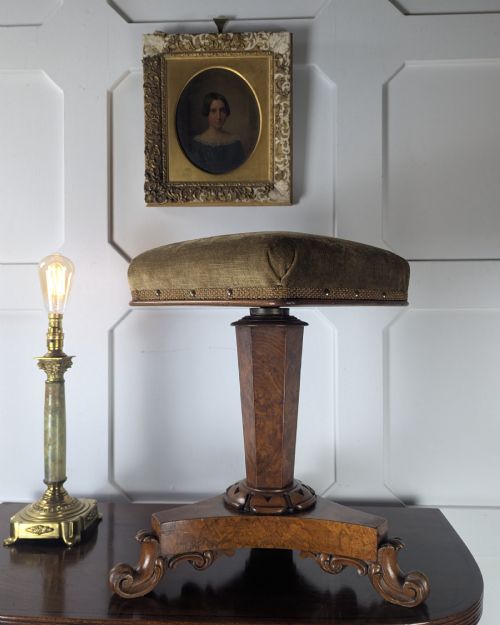
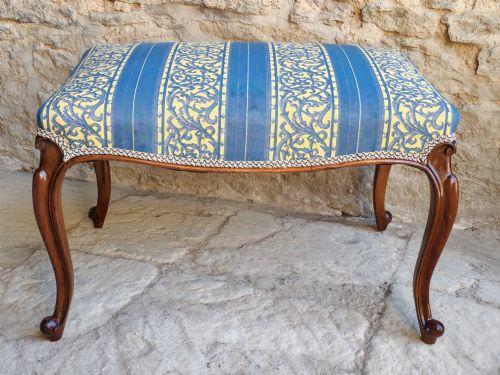
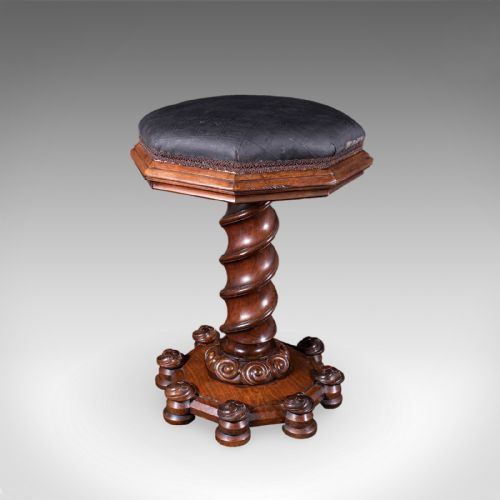


William IV Piano Stool
A William IV piano stool brings steady 19th-century timber and rising seats into the modern music room or parlour.
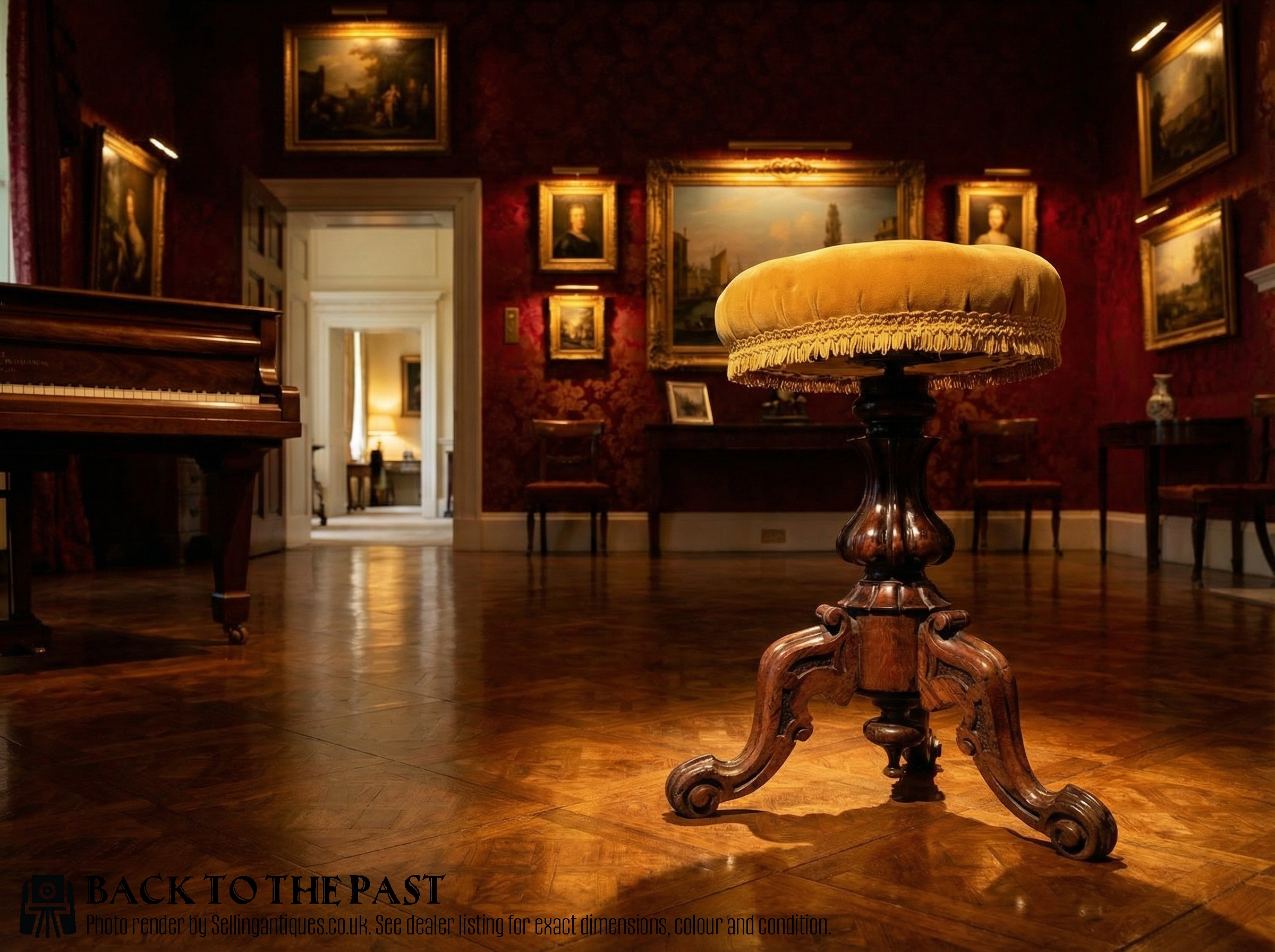
William IV Piano Stool
A william iv piano stool is a sturdy seat designed for keyboard players during the early nineteenth century. Most examples on this page date from the regency and early Victorian eras, spanning mahogany and rosewood timbers.
Duet variants appear occasionally, offering wider proportions for two players sharing a bench. These seating pieces survive from domestic parlours, estate chapels, and music rooms of the period.
Materials and Construction
Cabinet makers utilised dense hardwoods like mahogany and figured walnut, alongside rich rosewood veneers. These timbers were turned, carved, and polished to a deep lustre.
Adjustable mechanisms rely on robust brass screws and iron threads concealed within the central column. Seats are padded and upholstered in leather, velvet, or contemporary fabric.
William IV Piano Stool Retail Price Guide 2026
Typical asking prices for william iv piano stool among the pieces listed under this phrase on Sellingantiques today, from the lower quarter to the upper quarter. They describe what is for sale here now, not the wider market.
Listings for a william iv piano stool show rosewood and mahogany as the dominant timbers, accompanied by velvet, leather, and traditional upholstery.
Judging the Standard
The calibre of a william iv piano stool rests on the crispness of its turned woodwork and the stability of its rising screw mechanism. Superior pieces maintain a smooth elevation without lateral wobble in the central column.
Timber selection separates standard items from finer workshop output, with heavily figured rosewood or burr walnut indicating superior ambition. Original brass mounts and intact upholstery webbing further distinguish the better examples.
The William IV Piano Stool Glossary
- William IV
- A stylistic period spanning roughly from 1830 to 1837, characterised by robust classical revival forms and heavy timber construction. It sits between the Regency and Victorian eras.
- Regency
- An English design period lasting from the early nineteenth century until the accession of Queen Victoria, drawing heavily on Greek, Roman, and Egyptian motifs.
- Revolving
- A seat construction allowing the top to spin freely on a threaded spindle or iron pivot without altering the overall sitting height.
- X-framed
- A base geometry formed by intersecting diagonal timbers resembling the letter X, often providing rigid support for music stools and small benches.
William IV Piano Stool: Frequently Asked Questions
How do I adjust the height on these stools?
Most models feature a revolving top that winds upward on a threaded metal screw concealed inside the central pillar. Turning the seat clockwise or anti-clockwise alters the height for the player.
Older mechanisms require gentle handling to avoid straining the internal wooden box or brass thread after decades of use.
Were these stools only used for pianos?
While designed primarily for keyboard practice, makers also produced variants for organists in chapels and general musicians in parlours. The adjustable height suited various string and wind players who performed seated.
Their compact proportions mean they function well today as occasional seats or dressing table stools in domestic rooms.
How do I spot a replacement top?
Examine the underside of the seat frame and the top of the central pillar for mismatched screw housings or plugged screw holes. Replacements often show modern fixings or timber that contrasts sharply with the base.
Original mechanisms display appropriate patination and wear consistent with the age of the lower frame.
Can I use a piano stool daily?
These timber frames handle normal sitting weight well, provided the joints remain tight and glued securely. Avoid leaning heavily on the fully extended screw mechanism, which places lateral strain on the central column.
Regular polishing with appropriate wax preserves the polished mahogany or rosewood surfaces from drying out.