




Round Piano Stool
A round piano stool brings adjustable seating and carved timber into a room, offering practical height control alongside period charm.
Round Piano Stool
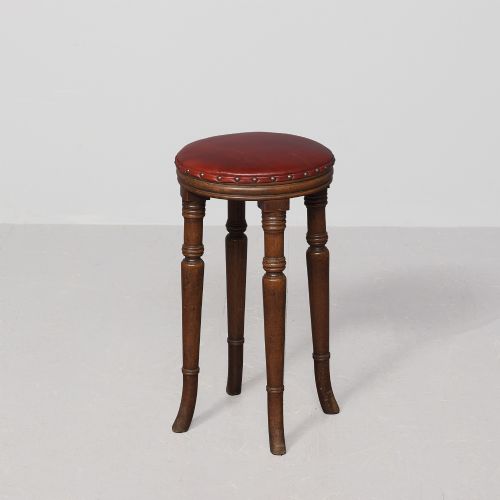
A round piano stool is a circular seat designed for musicians, and on this page you are most likely to meet Victorian and Regency examples. These pieces typically feature timber frames and rotating or rising mechanisms to adjust the seating height.
How they were made
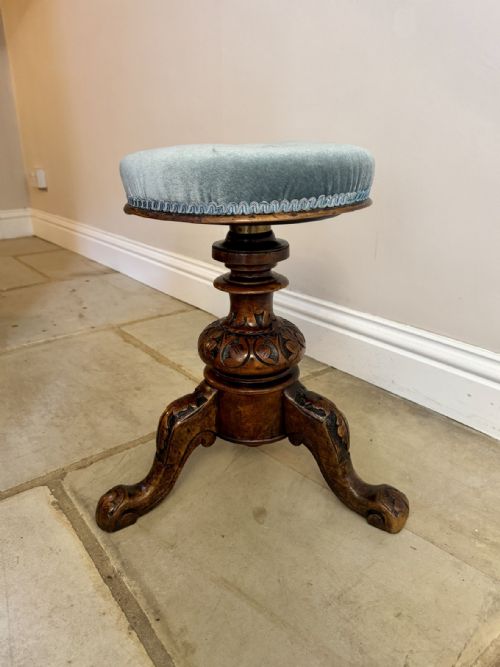
Cabinetmakers utilised dense hardwoods such as mahogany, walnut, and rosewood to construct the circular frames and supportive legs. Carving was applied by hand to the timber components, creating detailed embellishments on the pillars and bases.
Internal mechanical components often incorporated brass to facilitate smooth height adjustment through revolving screws or rising seat mechanisms. Upholstered tops were finished with materials like velvet, tapestry, fabric, or leather stretched over padding.
The site listings feature Victorian and Regency periods, utilising mahogany, walnut, and rosewood.
What varies in quality
The sophistication of the timber carving and the choice of primary wood distinguish standard examples from finer pieces. Richer grain patterns in rosewood and walnut, paired with crisp hand-carved details, mark out superior production.
The precision and smoothness of the mechanical height adjustment reveal the standard of original engineering. Robust brass fittings and well-engineered revolving actions demonstrate higher workshop proficiency.
Gillows·H Brooks and Co.
The Round Piano Stool Glossary
- Revolving
- Turning round on an axis. This action allows the seat to spin freely for height adjustment.
- Rising seat
- A mechanism that elevates the platform. It permits the user to alter the vertical position by operating a screw action.
- Hardwood
- Timber from broad-leaved trees. These dense woods provide the structural strength needed for seating.
- Tapestry
- A form of textile art used for covering furniture. It adds decorative pattern and texture to the top of the seat.
Round Piano Stool: Frequently Asked Questions
How do you adjust the height?
Many of these pieces utilise a revolving mechanism where turning the seat winds it up or down on a central screw.
Other variants use a rising seat system that lifts vertically to suit the pianist.
What woods were used?
Cabinetmakers primarily worked with dense timbers such as mahogany, walnut, and rosewood for their durability and appearance.
Some pieces also employ alternative hardwoods shaped to mimic specific historic styles.
Are the seats upholstered?
Most examples feature padded tops covered in materials like velvet, fabric, tapestry, or leather.
These coverings were chosen to match the interior aesthetics of period drawing rooms and music salons.
How can I date a stool?
Dating relies on observing the timber choice, carved ornamentation, and mechanical construction methods.
Victorian and Regency characteristics appear through specific turning styles and the complexity of the internal brass hardware.