



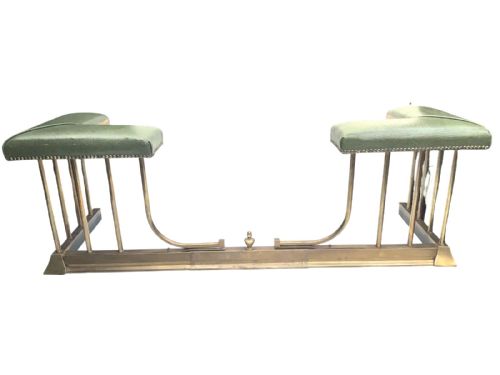
Antique Adjustable Seat
An antique adjustable seat provides functional height control and rotation, bringing mechanical ingenuity into domestic music rooms and studies.
Antique Adjustable Seat
When searching for an antique adjustable seat, buyers encounter a diverse selection of revolving piano stools, music chairs, and club fenders spanning the nineteenth and early twentieth centuries.
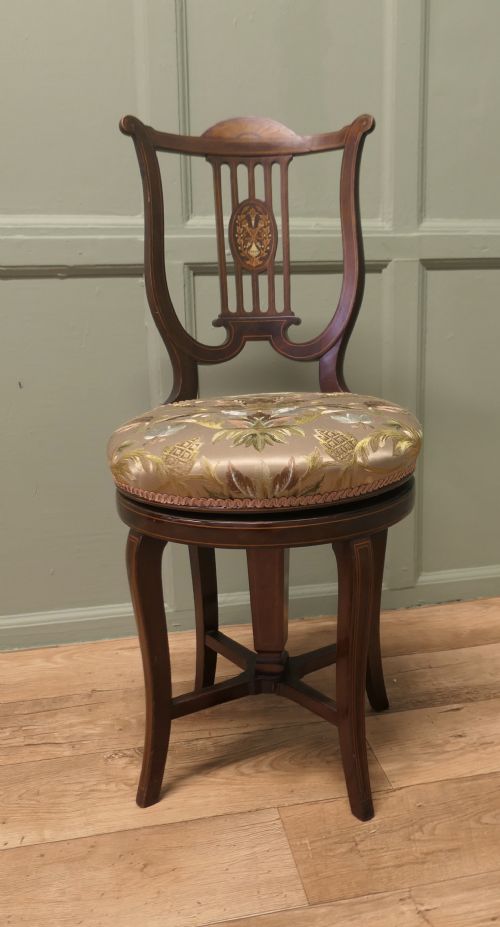
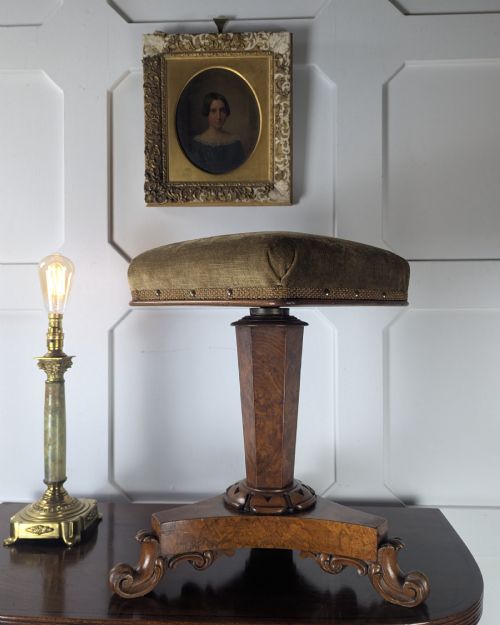
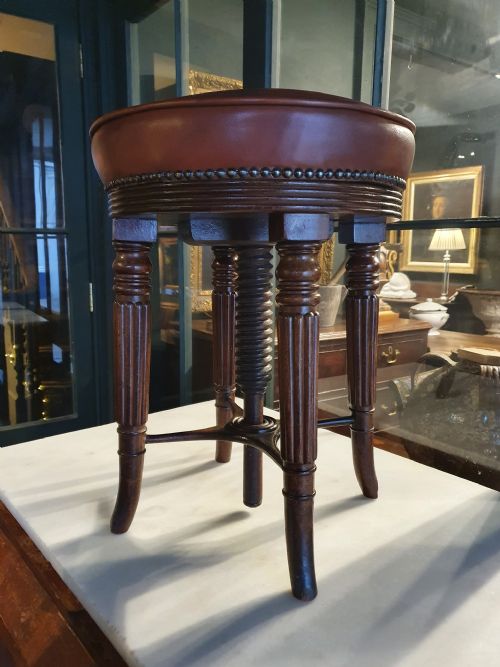
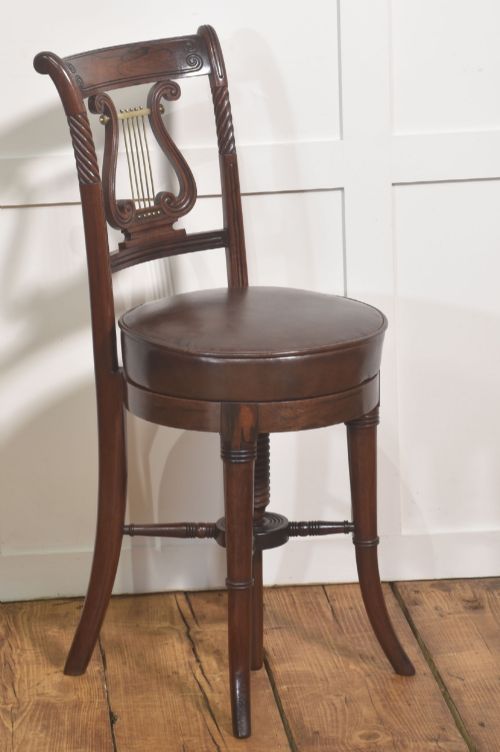
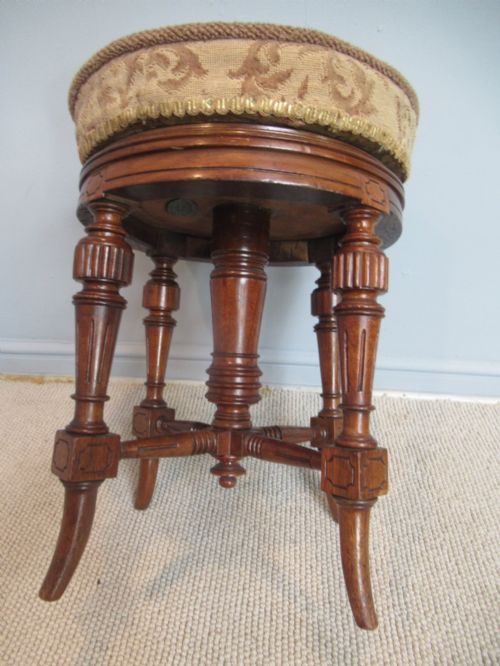
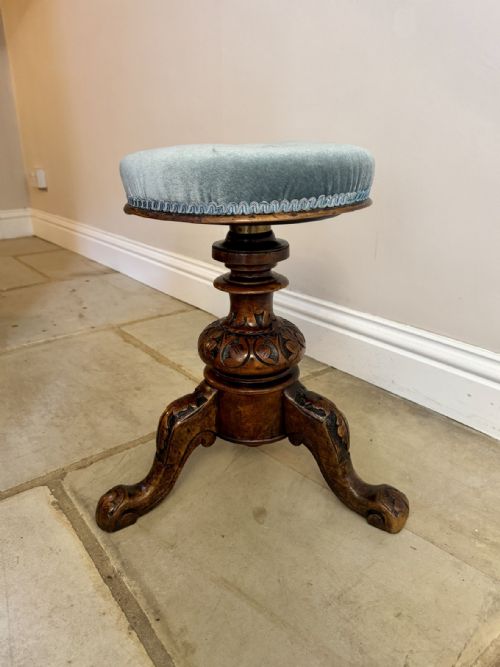
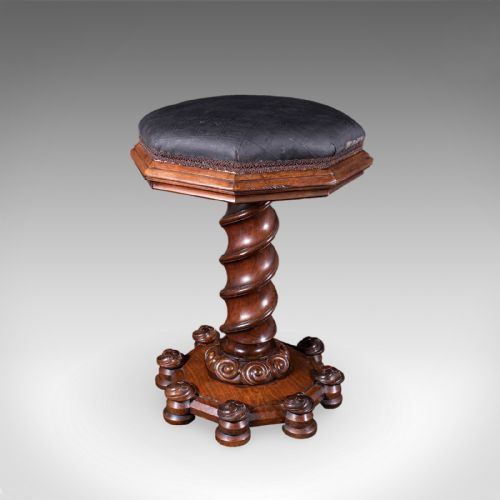
Piano stools and revolving music seats dominate the selection, often utilising threaded central screw mechanisms or rise-and-fall actions housed within mahogany, walnut, or rosewood frames.
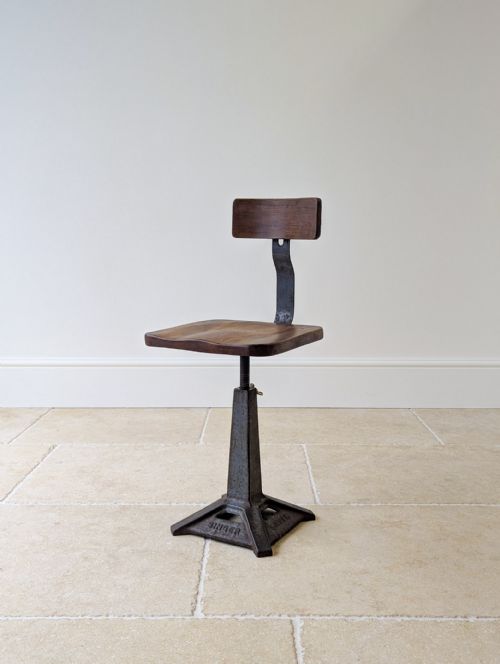
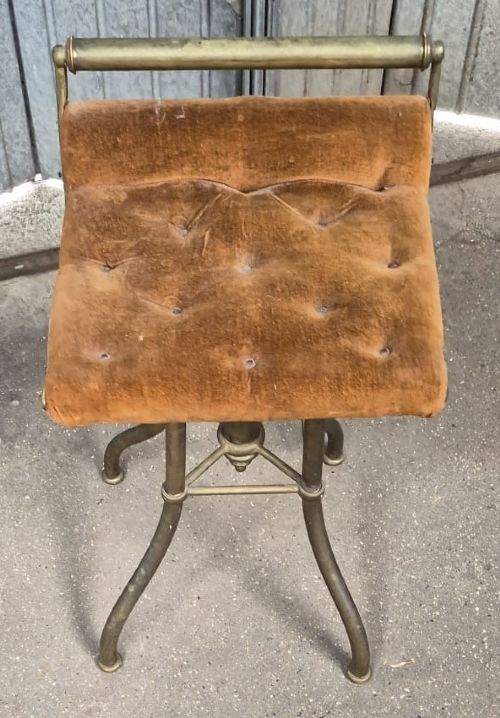
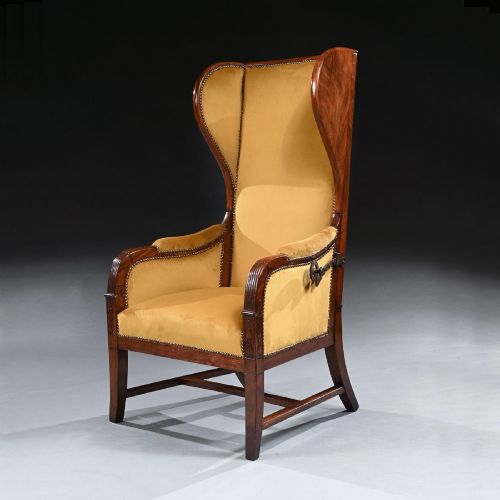
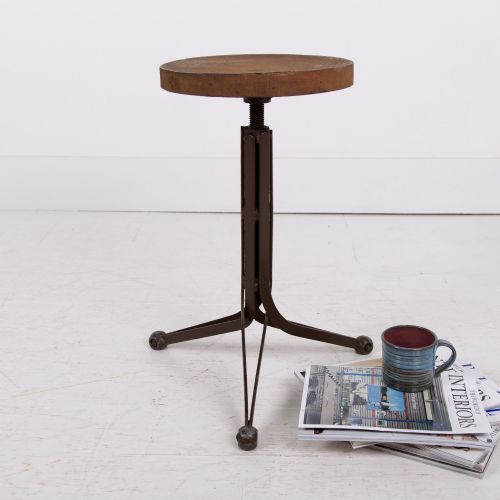
Alternative forms include industrial workshop chairs from the early twentieth century, brass-framed club fenders with leather seats, and reclining armchairs originating from Victorian and Edwardian periods.
Materials and Construction
Cabinetmakers utilised dense timbers such as mahogany, walnut, rosewood, and oak to construct sturdy revolving tops and supporting tripod or pillar bases.
Functional metal components, including brass screws, iron castors, and cast iron frames, provide the mechanical strength required for smooth height adjustment and rotation.
Upholstery techniques involve traditional stuffing finished with leather, velvet, or woven fabric, sometimes featuring buttoned details on piano and dressing table stools.
Musicians spent hours practising on these revolving seats, meaning many survive with generations of secret squeaks built right into the woodwork.
Craftsmanship and Mechanism
The distinction between ordinary production and superior pieces lies in the precision of the turning mechanism and the smoothness of the rise-and-fall action.
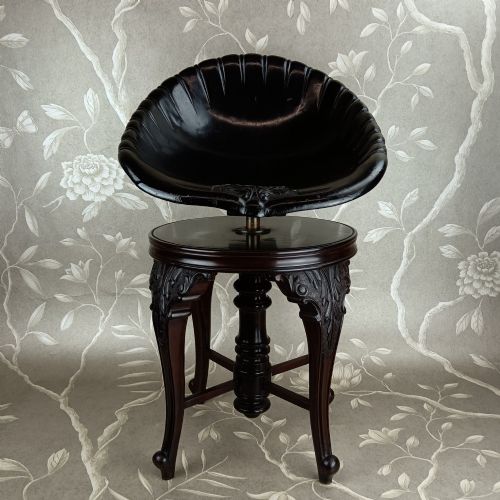
Finer examples display careful timber selection with figured walnut or rosewood veneers, alongside hand-carved details on the legs and revolving seats.
Makers integrated mechanical innovation with refined aesthetic styles, ensuring that the structural iron or brass components operate reliably within traditional furniture designs.
Jennens and Bettridge·Gillows·Singer·Evertaut
The Antique Adjustable Seat Glossary
- Revolving
- Turning through a full circle on a central axis. This mechanism allows musicians to adjust their orientation easily.
- Rise and fall
- An action that alters the height of a seat through a threaded screw or mechanical ratchet. It offers precise vertical positioning.
- Club fender
- A low-padded seat surrounding a fireplace, constructed with a metal frame. These often incorporate extendable brass sections.
- Campaign chair
- Portable furniture designed for easy folding and transport during the nineteenth century. These pieces utilise robust hinges and durable timbers.
- Ebonised
- Wood treated with a dark finish to imitate ebony. This technique was popular in Victorian and Aesthetic period seating.
Antique Adjustable Seat: Frequently Asked Questions
How do adjustable piano stools work?
Most antique piano stools operate via a central wooden or metal screw mechanism hidden beneath the upholstery. Turning the seat clockwise or counter-clockwise raises or lowers the height.
Other examples use a rise-and-fall ratchet action that allows the user to pull the top upward to set positions.
Where were club fenders placed?
Club fenders were designed to fit around the hearth of a fireplace in large reception rooms. The padded top provided extra seating close to the fire.
Many incorporate brass rails and leather upholstery, combining comfort with protection from stray embers.
What is an industrial workshop chair?
Industrial workshop chairs emerged in the early twentieth century for use in factories, offices, and studios. They prioritise utilitarian metal and wood construction over decorative appearance.
These chairs frequently feature cast iron bases and adjustable elm seats designed for heavy daily use.
How do I identify a Victorian music stool?
Victorian music stools often feature walnut, mahogany, or rosewood frames with turned central pedestals and tripod legs. They frequently incorporate revolving mechanisms tailored for pianists and harpists.
Stylistic markers range from heavy carved cabriole legs to Aesthetic period ebonised finishes.