
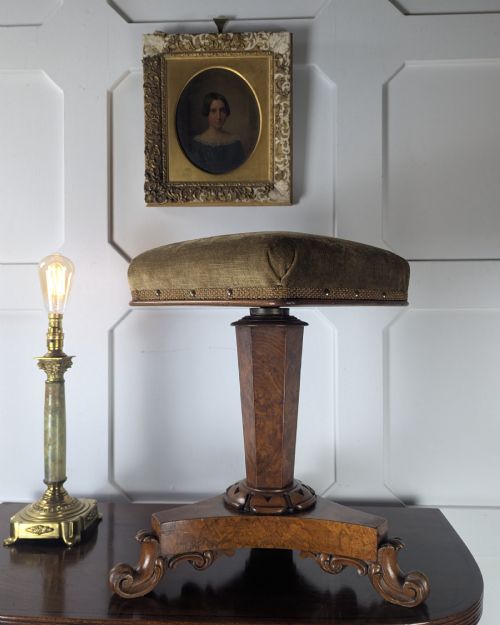
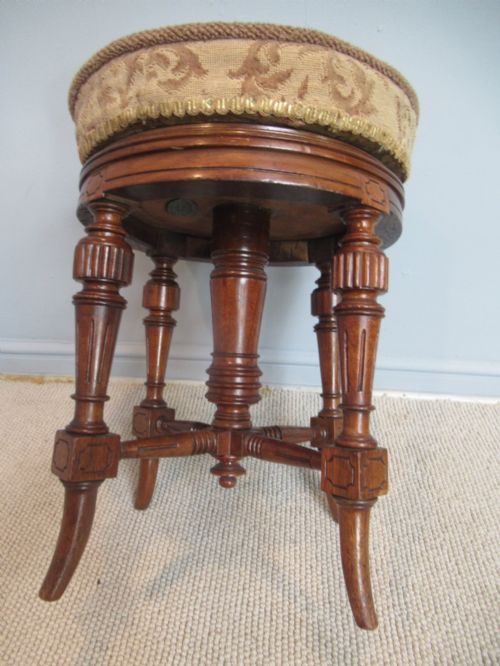
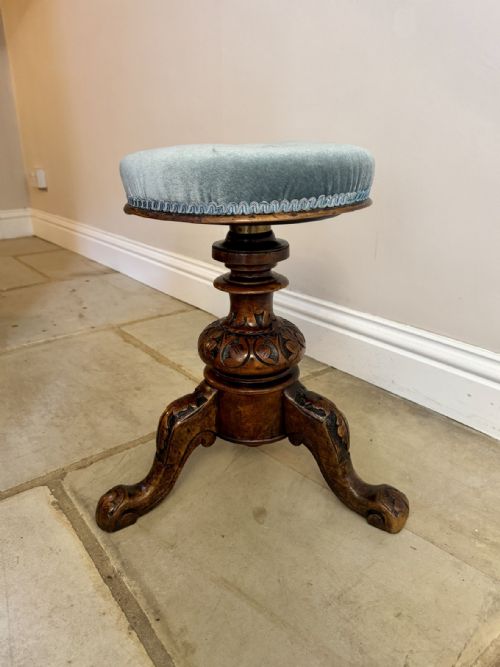

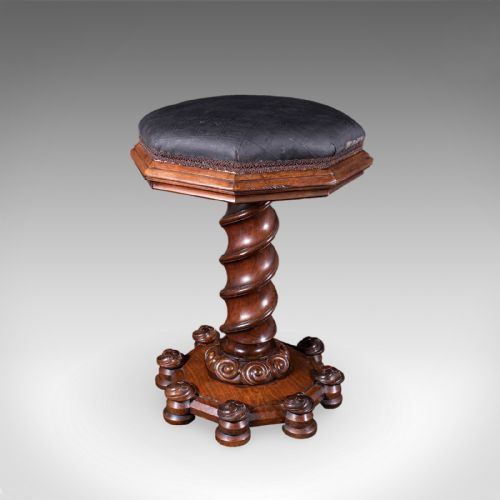


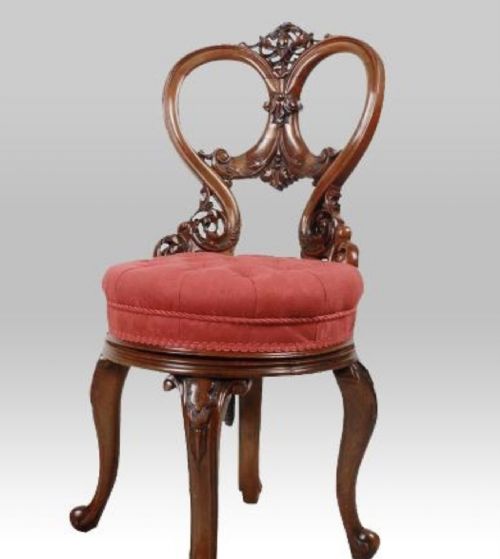

Walnut Adjustable Stool
A walnut adjustable stool offers a practical mechanical seat for the piano or dressing table, combining timber warmth with movement.
Walnut Adjustable Stool
A walnut adjustable stool serves primarily as a piano or music seat, though examples also function at a dressing table. The pieces found here span the Victorian era, William IV period, and Regency styles, appearing as revolving, swivel, or rise and fall models.
Most examples date from the nineteenth century, utilising figured or burr walnut for the circular or upholstered seats. Makers mounted these seats on central columns, pedestals, or tripod bases with mechanical height adjustment.
Buyers encounter variations including harpist chairs, music risers, and X-frame stools alongside standard piano stools. The core function remains a raised, rotating, or height-shifting seat designed for keyboard players and recitalists.
Materials and construction
Cabinet makers built these frames using solid walnut and burr or figured veneers, frequently incorporating carved details along the pedestals and tripod legs. Metal, brass, and iron components formed the internal rise and fall mechanisms or screw threads that allowed the seats to move.
Upholstery completed the tops, with workshops employing leather, velvet, fabric, and tapestry needlepoint over padding. Some pieces included satin inlays or patent mechanical assemblies patented by makers like Brooks or Wadman Brothers.
Harpist chairs gave musicians a specialised perch so they could lean back without tangling their instrument.
Distinctions in quality
Quality rests upon the smoothness and stability of the adjustment mechanism, as well as the crispness of the carved woodwork on the pedestal or tripod base. Pieces featuring figured burr walnut or complex swivel actions stand apart from simpler domestic versions.
The choice of original upholstery materials, such as textured leather or detailed needlepoint tapestry, signals higher grade production. Maker attribution through stamps or patent marks further separates standard commercial seating from workshop-produced examples.
Brooks·Trollope And Sons·Wadman Brothers Of Bath
The Walnut Adjustable Stool Glossary
- Rise and fall
- A mechanical seat height adjustment system operated by rotating the top or using a screw mechanism. This allowed the player to alter their seating elevation quickly.
- Revolving stool
- A seat designed to spin on a central vertical axis. These swivel models gave musicians freedom of movement during practice or performance.
- Burr walnut
- A prized timber harvested from tree growths that produced swirling, intricate grain patterns. Cabinet makers used veneers of this wood on high-status table tops and seat frames.
- Tripod base
- A three-legged support structure commonly found beneath nineteenth century pedestals. It provided stable footing on uneven floors.
- Needlepoint
- A form of counted thread embroidery used historically for durable seat covers. Needlepoint tapestry surfaces often featured floral or geometric motifs.
Walnut Adjustable Stool: Frequently Asked Questions
How do walnut adjustable stools work?
The seats operate through a central threaded screw column or mechanical rise and fall lever. Twisting the top surface raises or lowers the platform to suit the player.
Internal iron and brass components support this movement while keeping the seat stable during use.
Where were these stools used?
Musicians placed them beside pianos, organs, and harps for adjustable seating during recitals and practice sessions. Some variations also served at dressing tables.
Their compact footprints suited nineteenth century parlours and music rooms.
How do I date a Victorian walnut stool?
Dating relies on stylistic clues like carved tripod legs, Victorian patent stamps, and the complexity of the walnut woodwork. Mid nineteenth century pieces often feature heavier carved pedestals.
Later Victorian and Edwardian examples show subtle shifts in turning and upholstery techniques.
Can I use these stools daily?
These pieces function well in modern homes if the internal adjustment mechanism remains structurally sound. Regular seating puts weight on the central screw, so gentle operation preserves the timber threads.
Leather and velvet upholstery requires standard care appropriate for antique fabrics.