


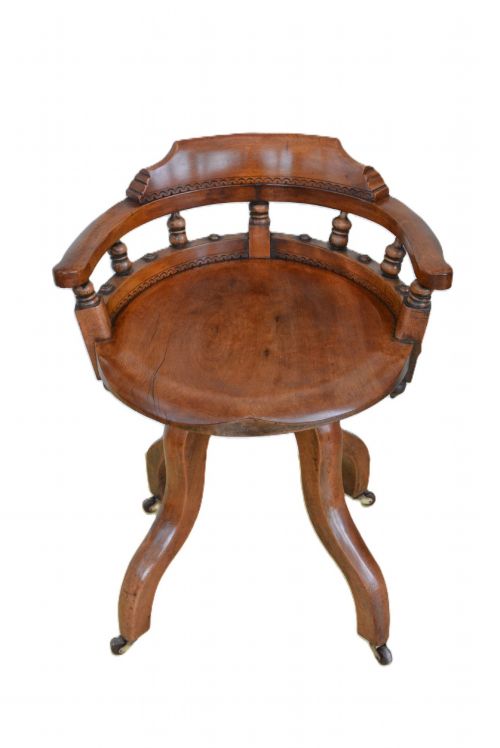
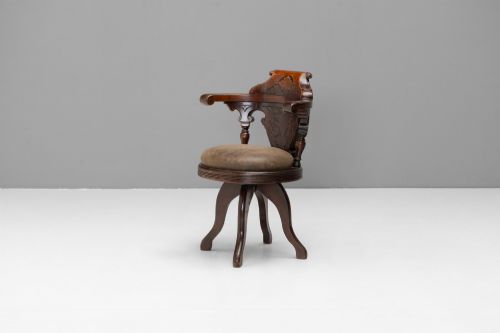
Victorian Revolving Seat
A victorian revolving seat offers the mechanical ingenuity and solid timber construction that collectors seek for studies and music rooms.
Victorian Revolving Seat
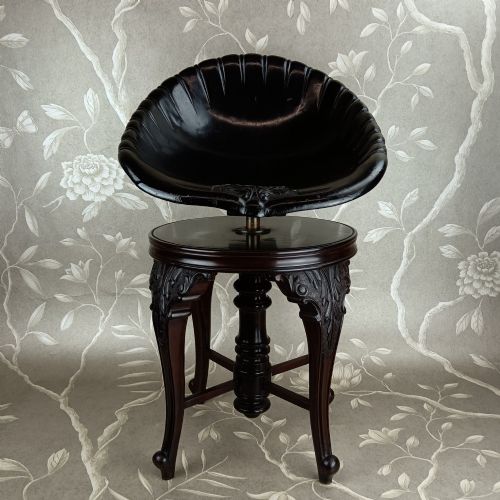
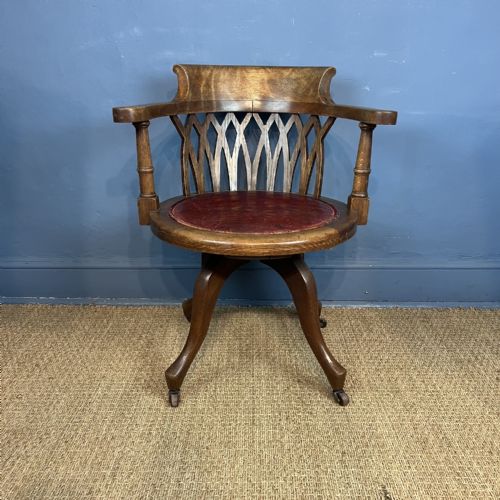
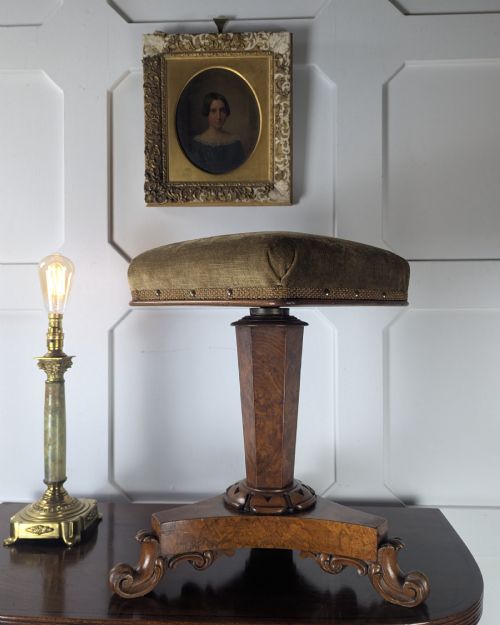
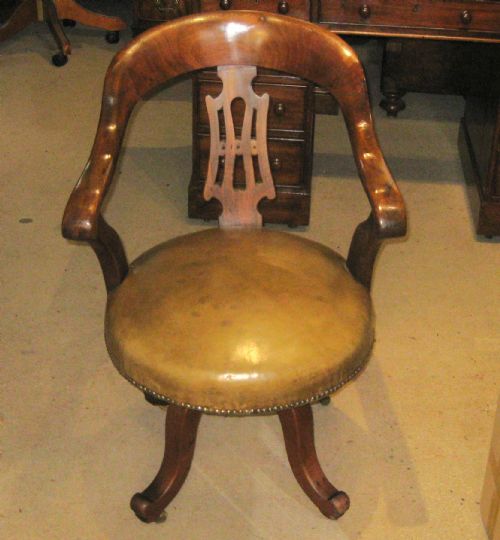
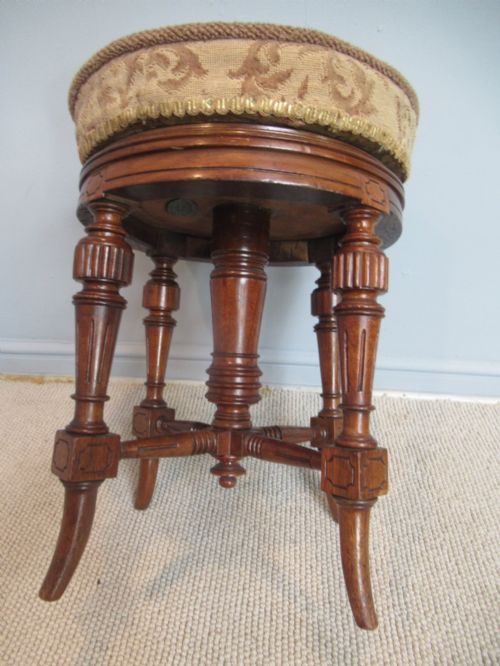
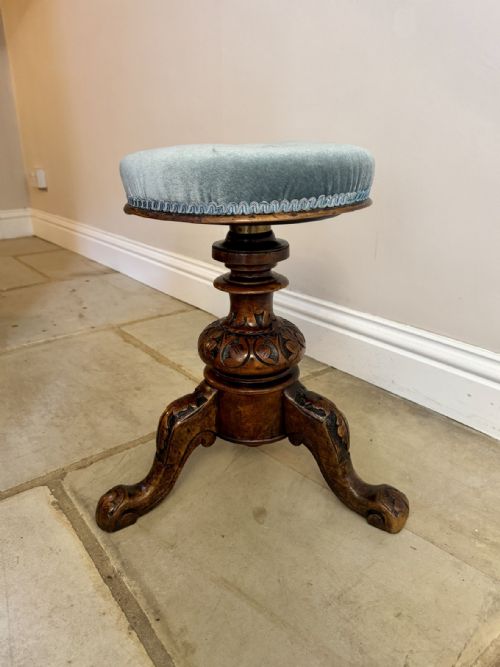
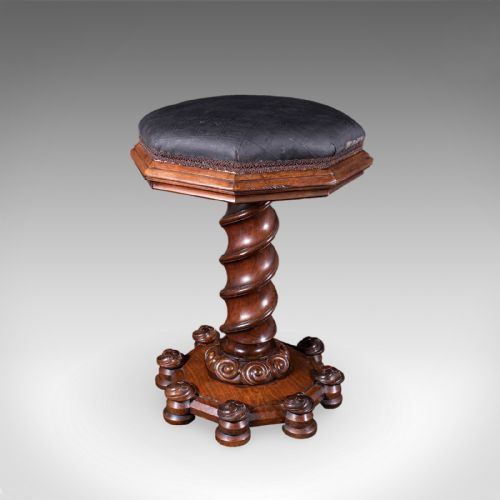
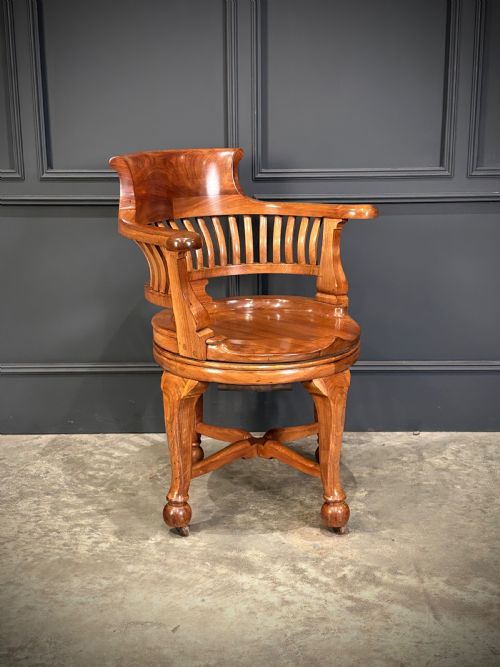
A victorian revolving seat combines practical height adjustment with sturdy timber frames, originating primarily from the nineteenth century. Buyers searching this phrase encounter piano stools, music stools, and desk chairs designed for regular movement and posture support.
The most common examples on this page are mahogany and walnut desk chairs or piano stools featuring central swivel mechanisms. These pieces bridge domestic comfort and functional workspace utility.
Origins range across the Victorian period alongside earlier Regency influences and later Edwardian adaptations. This variety reflects changing domestic requirements for adjustable seating in studies, drawing rooms, and music rooms.
Materials and construction
Cabinet makers utilised dense hardwoods such as mahogany, walnut, oak, and rosewood to construct the frames and central screw threads. These timbers provide the structural integrity required to support repetitive twisting and height adjustments.
Metal components, including brass and cast iron, form the internal swivel mechanisms and screw threads that permit rotation. Upholstery materials like leather, fabric, velvet, and cane complete the seating surfaces.
Current listings feature pieces spanning the Victorian, Regency, and Edwardian periods in mahogany, walnut, oak, and cast iron.
Assessing quality
Quality rests upon the smoothness of the mechanical action and the rigidity of the central column. Superior pieces maintain a stable posture at any height without excessive wobble in the swivel joint.
Carving detail and timber selection define the upper tier of examples. Well-figured walnut and mahogany paired with crisp, hand-carved ornamentation separate standard workshop output from exceptional commissions.
Jennens & Bettridge·Gillows
The Victorian Revolving Seat Glossary
- Revolving seat
- A chair or stool fitted with a central pivot or screw mechanism that allows the top to turn. This design allowed musicians and clerks to shift direction easily without moving the base.
- Rise and fall
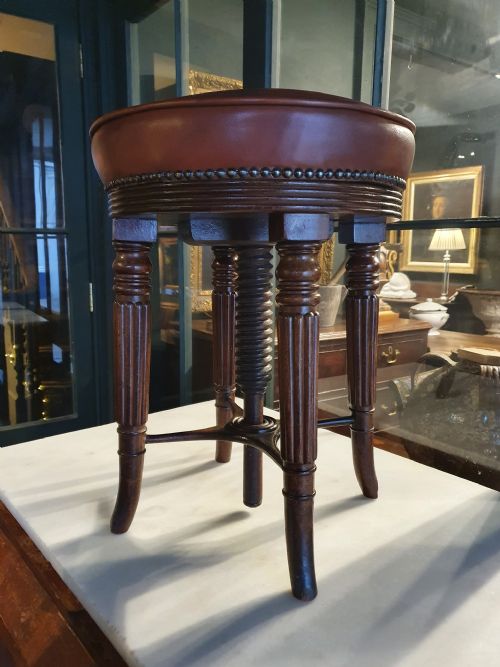
- An alternative description for an adjustable height mechanism. It relies on a threaded screw column operated by turning the seat itself.
- Piano stool
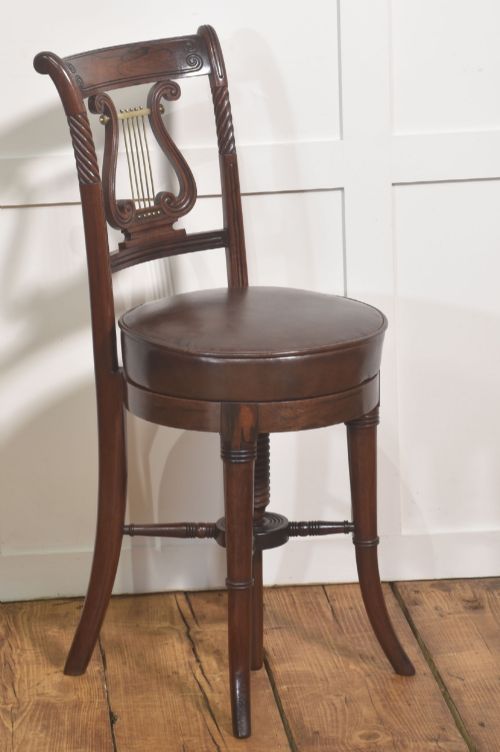
- A seat designed specifically for keyboard players, often featuring a circular or square top that adjusts in height. Many incorporate storage or specialised swiveling frames.
- Desk chair
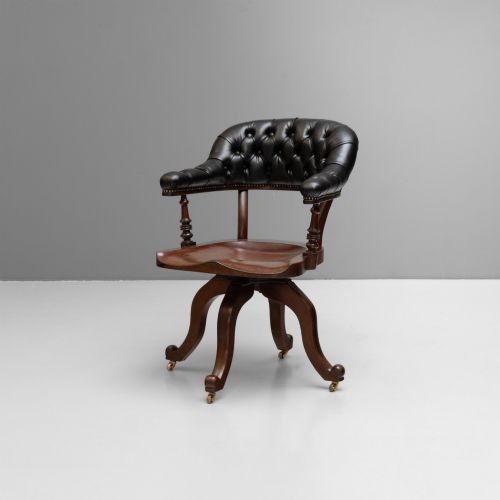
- A robust seating form equipped with a swivel base and sometimes arms, intended for office or library use. These pieces often feature leather inserts on the seat or backrest.
- Gothic Revival
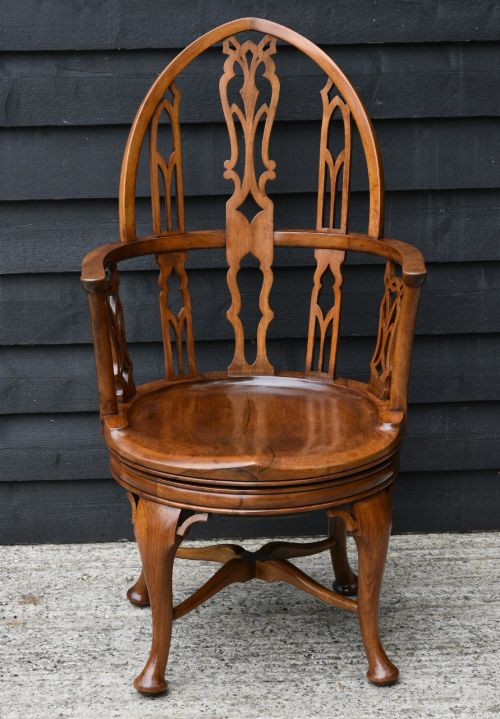
- A nineteenth-century design style drawing inspiration from medieval architecture. Pieces in this style display pointed arches, heavy carving, and structural vigor.
Victorian Revolving Seat: Frequently Asked Questions
How do I adjust the height?
Most seats adjust by manually spinning the top in a circle. This action operates an internal wooden or metal screw thread that raises or lowers the platform.
Users should support the weight of the top while turning to prevent undue strain on the central column.
Were these used at pianos or desks?
Both forms appear frequently in the inventory. Piano and music stools focused on adjustable height for musicians, while desk chairs prioritized back support and mobility for writing.
Distinguishing between them depends primarily on the presence of armrests and the depth of the seat construction.
How do I identify a Victorian piece?
Look for dense hardwoods like mahogany and walnut, alongside traditional joinery techniques. The presence of hand-cut screws and nineteenth-century upholstery foundations helps confirm the era.
Construction methods typically transition from Regency influence into heavier Victorian revival styles over the course of the century.
Can I use a swivel desk chair daily?
These pieces were built for active daily service using solid timbers and robust iron mechanisms. Regular use requires checking the stability of the central screw thread.
Applying appropriate lubricant to the moving metal parts keeps the mechanism operating smoothly over time.