





Carved Walnut Music Chair
These carved walnut music chair examples offer solid timber construction and adjustable height mechanisms designed for players at the keyboard.
Carved Walnut Music Chair
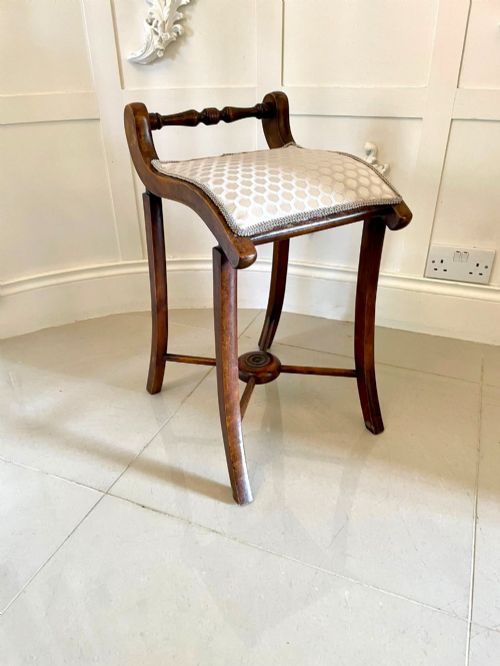
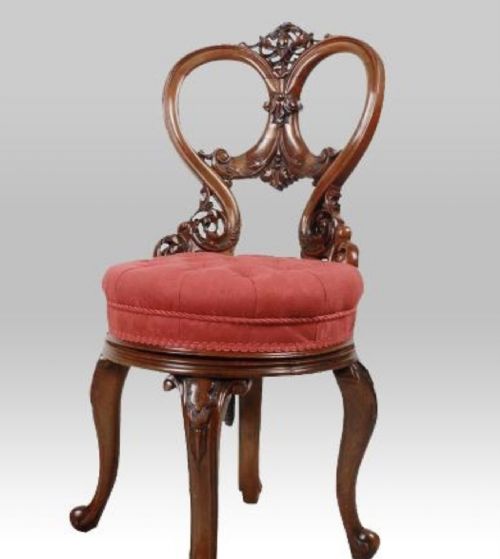
A carved walnut music chair serves musicians and pianists at the keyboard, appearing in forms such as adjustable piano stools, revolving music chairs, and music risers. Most examples on this page date from the nineteenth century, including Victorian and William IV periods, alongside specific regional pieces like Scottish or Swiss items.
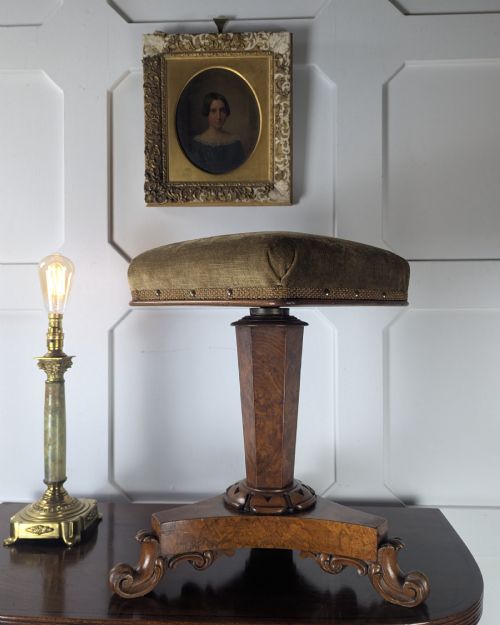
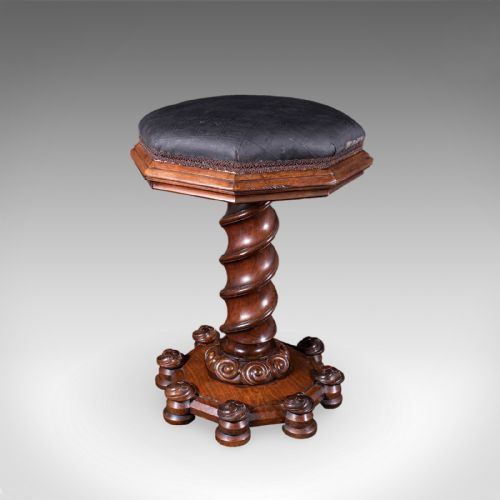
The primary forms include swivel seats, tripod bases, and rise and fall dressing table or piano stools which allow the player to alter their seating height. Stylistic variations span from French Chateau influences to Swiss decorative marquetry and heavy Victorian carving.
Buyers seeking a carved walnut music chair will find pieces ranging from simple hardwood adjustable stools to elaborate revolving music chairs with harpist designs and intricate wood inlay. These functional seats combine period craftsmanship with mechanical adjustment for the home music room.
How they were made
Cabinet makers utilised solid walnut and hardwood timbers, often selecting figured veneers to create the decorative surfaces seen on nineteenth century music stools and chairs. Skilled hands shaped the wood through traditional carving techniques, producing intricate details on pedestal bases, tripod legs, and chair backs.
Functional metal and brass internal mechanisms were integrated into the wooden frames to provide the adjustable height and revolving swivel actions required by musicians. Upholstery materials such as velvet, leather, and various fabrics were then fitted to the seats using metal tacks and iron supports.
Several music chairs include hidden musical boxes inside their frames to serenade players between practice sessions.
What varies in quality
The sophistication of the carving and the intricacy of the wood selection set finer pieces apart from standard workshop production. Superior examples feature deeply carved walnut frames, elaborate marquetry inlay, and robust timber that display rich natural grain patterns.
Mechanical execution distinguishes better music chairs, where the rise and fall screw action or revolving swivel mechanism operates smoothly and securely within the wooden pedestal. The original upholstery materials and stable tripod or four-legged base construction also contribute to the overall integrity of the piece.
The Carved Walnut Music Chair Glossary
- Walnut
- A dense hardwood prized for its rich dark colour and strong grain, frequently utilised in nineteenth century cabinet making and chair frames.
- Marquetry
- The art of applying small pieces of veneer to a wooden structure to form decorative patterns, seen on Swiss musical chairs.
- Revolving
- A mechanical property allowing the seat top to turn through a full circle on a central pivot, commonly found on music chairs.
- Rise and fall
- An adjustable height mechanism operated by a central screw thread that raises or lowers the seat when turned.
- Tripod
- A three-legged base construction providing stability on uneven nineteenth century floors, often carved at the feet.
Carved Walnut Music Chair: Frequently Asked Questions
How do I adjust the seat height?
Many of these pieces utilise a central screw mechanism that allows the seat to rise and fall when you rotate it by hand. This functional design helped musicians set their exact preferred height at the piano or harp.
Other examples feature simpler revolving actions or fixed heights depending on the specific period and intended musical use.
What is the difference between a music chair and a piano stool?
Music chairs typically feature a backrest to support the player during long practice sessions, whereas piano stools more commonly offer an open swivel seat without a back. Both forms were built to allow easy movement and height adjustment for keyboard players.
Makers adapted these seating designs across the Victorian and William IV periods to suit different instruments including organs, harps, and pianos.
How can I tell the period of my music chair?
Dating relies on examining the combination of timber, carving style, and the engineering of the mechanical parts. Pieces from the William IV and early Victorian eras often display robust proportions and specific classical or scroll carving motifs.
Later Victorian examples from the end of the nineteenth century introduce different decorative details and varied pedestal or tripod base configurations.
Were these chairs only used for music?
While primarily designed for pianists, organists, and harpists, these adjustable swivel seats also served double duty at dressing tables. Their versatile rise and fall height mechanisms made them practical for various household tasks where seating height needed modification.
The inclusion of velvet, leather, and fabric upholstery ensured they matched the formal decor of nineteenth century sitting rooms and parlours.