




Early Victorian Stool
An early victorian stool brings nineteenth-century craftsmanship into a room, offering practical seating or support crafted from rich hardwoods and traditional textiles.
Early Victorian Stool
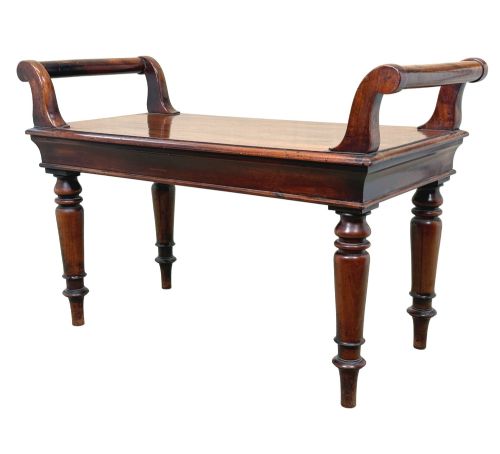
An early victorian stool encompasses a varied group of nineteenth-century seating forms, including low fireside footstools, piano stools, and larger dressing table seats. These pieces range from simple country models in elm and beech to formal rosewood and mahogany forms designed for the parlour or drawing room.
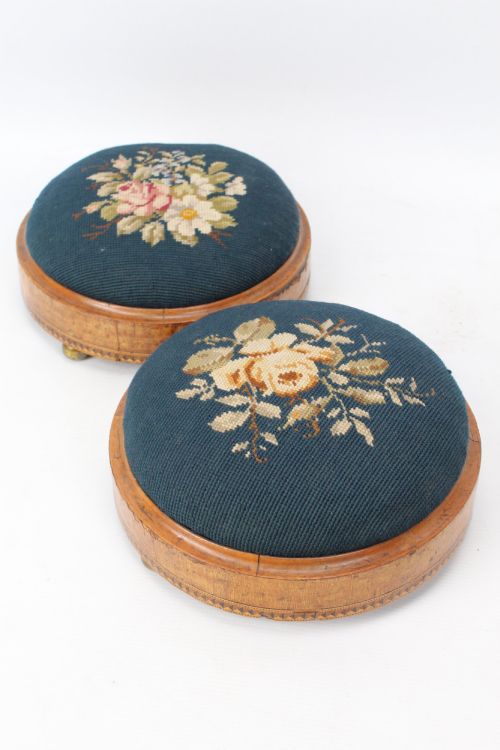
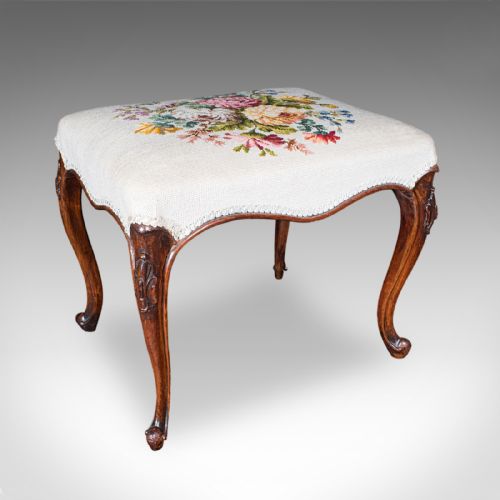
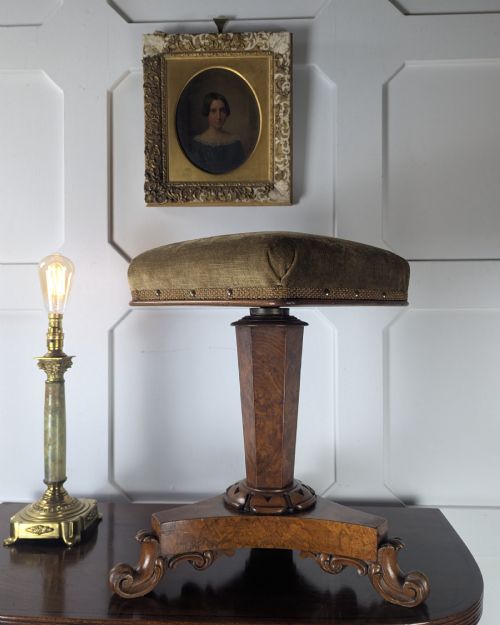
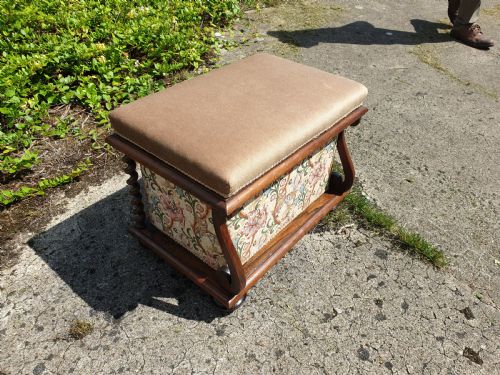
The version most commonly met on this page is the rosewood or mahogany footstool, often featuring turned or cabriole legs and upholstered tops. Buyers also encounter revolving piano stools and box seat ottomans that double as concealed storage.
How they were made
Cabinetmakers constructed these frames using dense timbers such as mahogany, walnut, and rosewood, sometimes employing elm or beech for simpler country pieces. Joints were typically doweled or tenoned to withstand daily weight and movement.
Upholstery relied on traditional stuffing materials secured beneath woven fabric, needlepoint tapestry, silk, or velvet, often finished with brass tacks. Rotating mechanisms on piano and dressing stools utilised iron screw threads and wooden pivots.
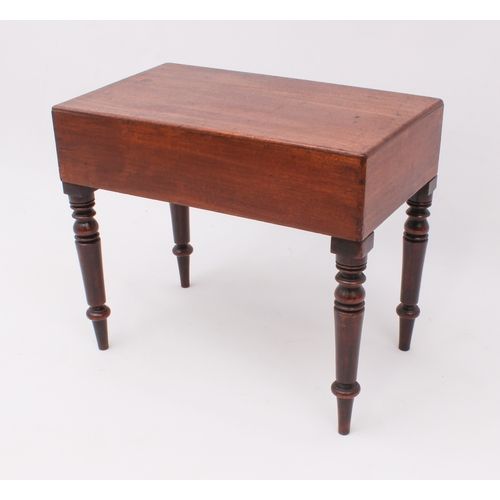
Several Victorian households repurposed hidden washing furniture into unassuming upholstered seats.
What varies in quality
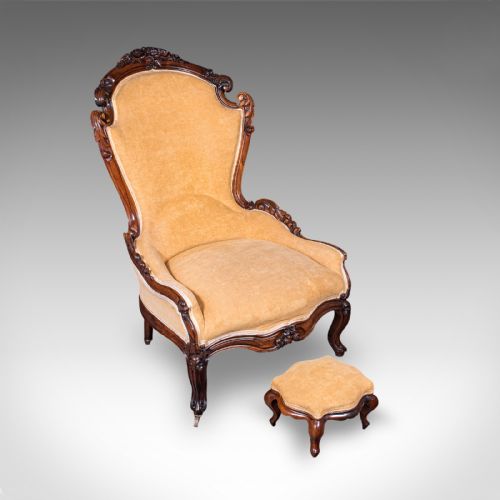
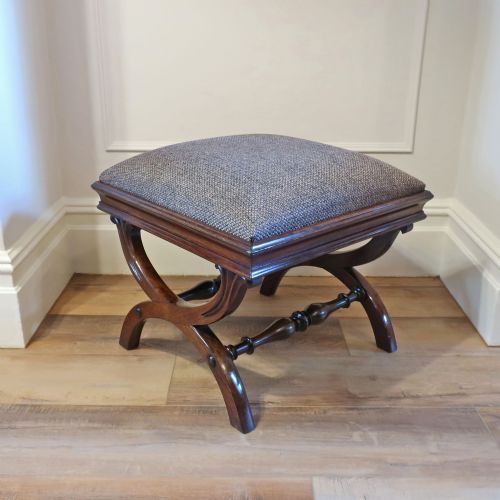
The grade of timber and the depth of carving separate standard examples from finer commissions. Solid rosewood and figured walnut frames with well-defined cabriole legs or pierced X-frames sit at the upper end of the range.
Originality of the mechanism and upholstery ground determines distinction. Stools retaining their period needlepoint, functioning screw height adjusters, or original box compartments command greater interest than later replacements.
The Early Victorian Stool Glossary
- Cabriole leg
- A furniture leg that curves outward and then tapers inward, resembling an animal's curving leg. This form appears frequently on finer mahogany and rosewood seating.
- Needlepoint
- Hand-stitched embroidery worked on canvas mesh, commonly utilised for historical footstool and ottoman upholstery. It provides durable decorative surface detail.
- X-frame
- A structural base formed by two intersecting members shaped like the letter X. This geometric arrangement supports piano stools and double benches.
- Bidet
- A basin-form furniture piece enclosed within a wooden stool frame during the nineteenth century. These items utilised hinged lids to conceal ceramic liners.
- Box seat
- A recessed compartment built beneath a hinged upholstery lid. This cavity allowed nineteenth-century households to store textiles and small accessories.
Early Victorian Stool: Frequently Asked Questions
How do I use an early victorian stool today?
These pieces fit easily into modern rooms as low fireside seats, dressing table benches, or subtle footrests beside armchairs. Their compact proportions allow them to sit neatly beneath tables or beside larger upholstery.
Larger box-seat ottomans and long double stools also provide discreet surface space or storage for blankets in living areas and bedrooms.
Were all piano stools adjustable?
Many keyboard seats from the period incorporated a revolving top or screw mechanism to alter the height for the player. Fixed-height variants also exist across the archive.
Turning the seat circular top raised or lowered the platform via an internal wooden or iron thread housed within the central column.
How do I distinguish mahogany from rosewood?
Mahogany displays a warm reddish-brown tone with straight or ribbon-like grain patterns that deepen with age and polish. It forms the structure for many standard parlour and library pieces.
Rosewood presents a darker, heavily figured brown surface marked by contrasting dark streaks and an oily lustre. This denser timber appears more frequently on formal drawing-room seating.
Did these stools have different uses in the nineteenth century?
Different forms served specific domestic rooms, from low fireside footrests designed to keep feet off cold floors to tall piano benches. Dressing table variants provided seated comfort during grooming.
Specialist forms like bed steps assisted with climbing into high nineteenth-century mattresses, while enclosed bidet stools served private hygiene functions.