
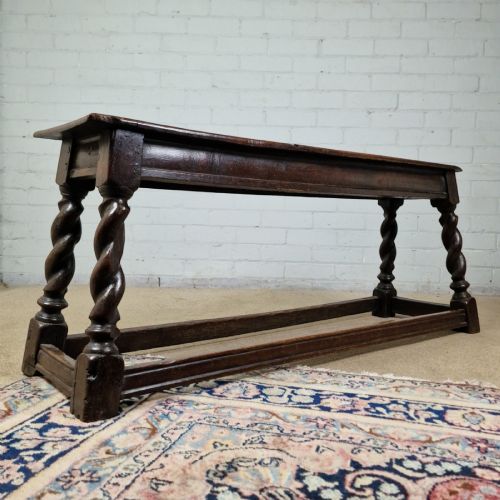
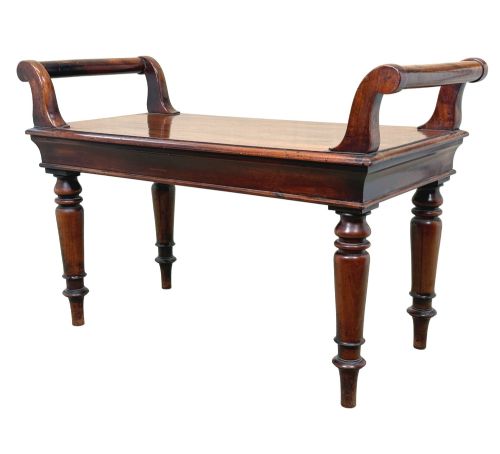

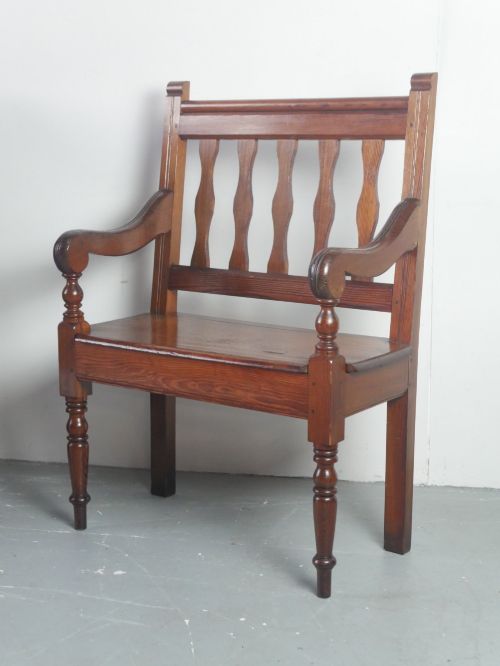
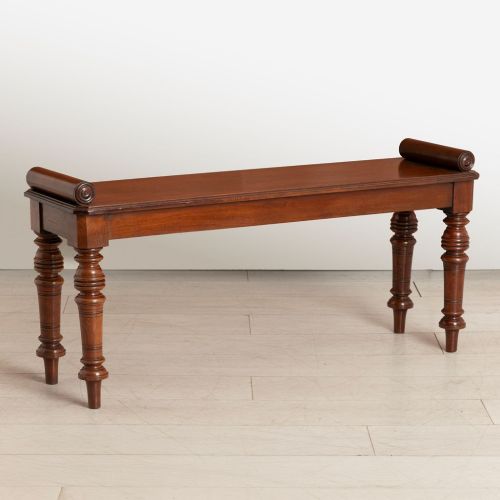
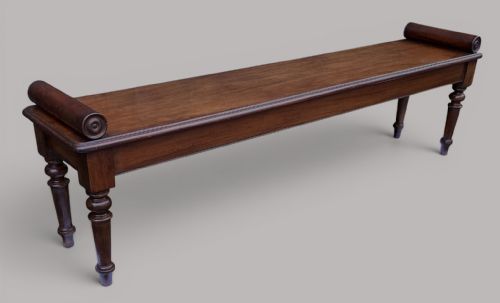
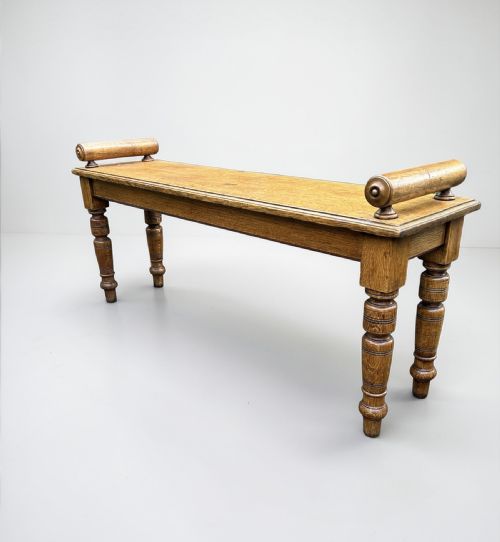


Turned Leg Hall Bench
A turned leg hall bench offers functional seating with refined timber framing, making it a practical and striking addition to any entryway.
Turned Leg Hall Bench
A turned leg hall bench provides a traditional seating solution for corridors and entrance spaces, combining structural support with decorative woodwork. Buyers searching for a turned leg hall bench will find examples spanning multiple periods from the eighteenth century to the end of the nineteenth century.
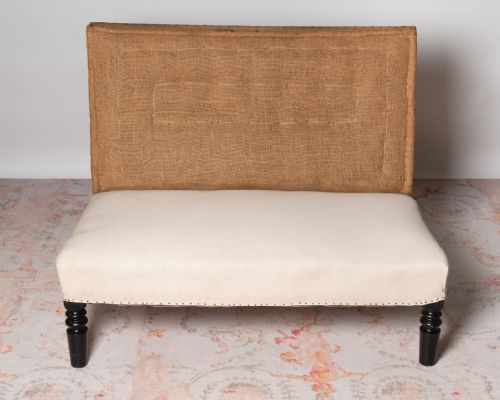
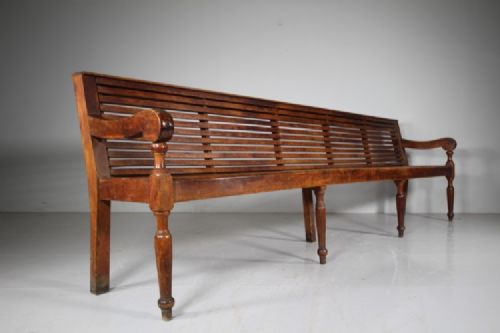
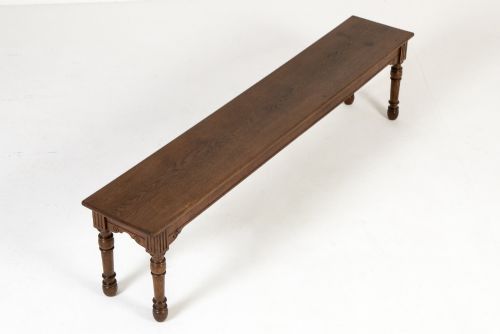
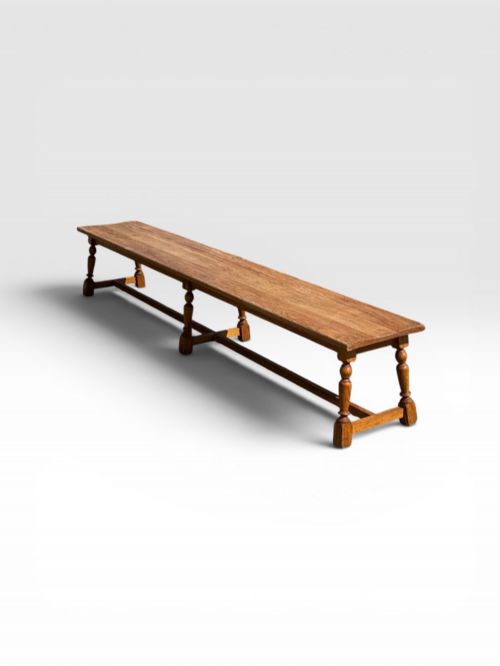
The most common forms on this page include mahogany and oak window seats and hall benches featuring distinct turned or fluted legs. These pieces draw on Regency, Victorian, and rustic country styles, often incorporating upholstered linen tops or slatted timber seats.
Origins vary across English, French, and American workshops, alongside occasional regional pieces such as South African stinkwood examples. The forms range from neat, compact seats to grand six-foot or eight-foot lengths suited for larger spaces.
Materials and construction
Makers utilised dense hardwoods including mahogany, oak, walnut, and chestnut to construct the frames and legs of these benches. Timber selection dictated the weight and durability of the piece, with mahogany and oak dominating the surviving examples.
Woodworking techniques involved precise lathe turning for the legs, complemented by mortise and tenon joinery for the structural frames. Secondary materials such as brass fittings, fabric, and linen upholstery frequently appear on window seats and cushioned hall benches.
Listings feature pieces spanning the eighteenth century, the Regency era, and the Victorian period, constructed primarily from mahogany, oak, and walnut.
Quality factors
The distinction between standard examples and the finest pieces lies in the crispness of the timber turning and the selection of figured wood. Superior items display well-proportioned legs and harmonious grain patterns across the seat and frame.
Originality of surface finish and the integrity of the structural joinery also determine the standing of a piece. Benches that retain their early patination or original upholstery materials command greater interest from discerning collectors.
The Turned Leg Hall Bench Glossary
- Turned leg
- A wooden support shaped on a lathe to create cylindrical, spiral, or bulbous decorative profiles. This technique adds visual interest to the vertical supports of chairs and benches.
- Window seat
- A long, narrow bench specifically designed to fit within the recess of a window. These pieces frequently share the same proportions and leg styles as hall benches.
- Settle
- A wooden bench with a high back and solid arms, designed to block draughts in hallways. They often include integrated storage beneath the seat.
- Banquette
- A long upholstered bench or seat originating from French interior traditions. They provide comfortable seating while maintaining a compact footprint.
- Patina
- The surface sheen and colour developed by timber over decades of handling and exposure to light. A desirable patination reflects the genuine age of the wood.
Turned Leg Hall Bench: Frequently Asked Questions
Where should I place a hall bench?
These benches fit naturally in narrow hallways, entrance lobbies, or along wide corridors where a practical seat is required without obstructing passage. They also suit placement at the foot of a bed or beneath a window.
Ensure you measure the available floor space carefully, particularly regarding length, as these pieces range from compact single-seat forms to eight-foot lengths.
How do I care for antique timber?
Maintain the wood by dusting regularly with a soft, dry cloth and avoiding placement near direct heat sources or strong sunlight, which can dry out the timber.
Apply a traditional beeswax polish sparingly when the surface appears dull, buffing gently to preserve the natural lustre and protective finish of the wood.
Are these benches comfortable for daily use?
Many examples feature upholstered pads in materials like linen or fabric, offering a softer seat for pulling on shoes or waiting in an entrance hall. Wooden slatted or solid timber versions provide firm support suited for short-term seating.
If daily comfort is a priority, consider models designed with upholstered tops or add a loose cushion that complements the period style.
How can I tell the period of a bench?
Dating relies on observing the combination of timber species, leg turning style, and overall construction methods characteristic of specific eras like the Regency or Victorian periods. Finer details such as tool marks and fastening types offer further clues to age.
Compare the proportions and decorative motifs against documented examples from the same era to establish an accurate timeframe for manufacture.