

Traditional Wood Bench
A traditional wood bench brings solid timber character and history straight into a hallway, kitchen or garden.
Traditional Wood Bench
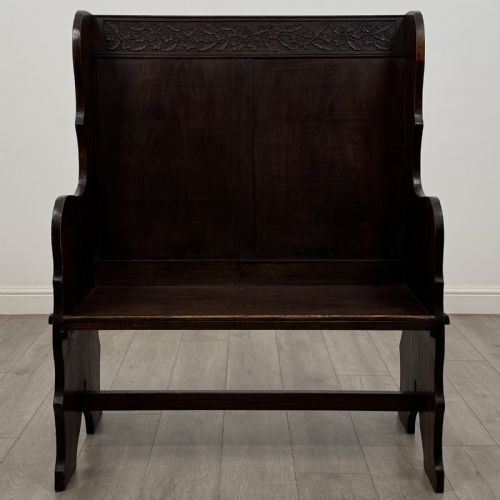
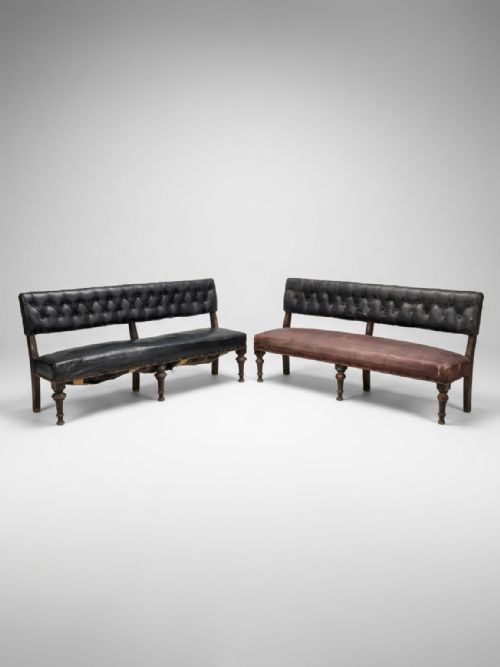
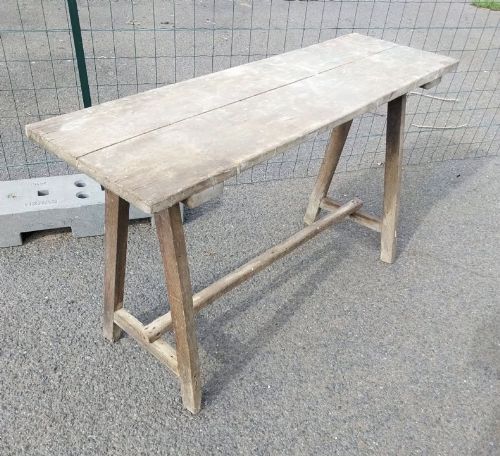
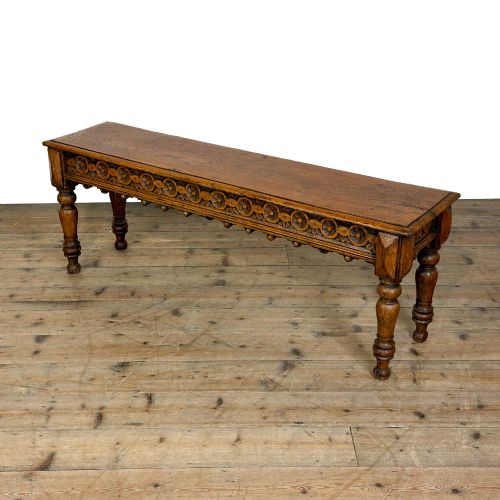
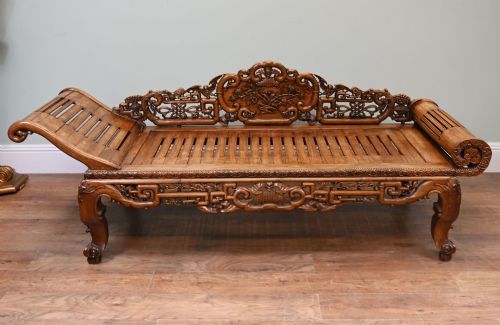
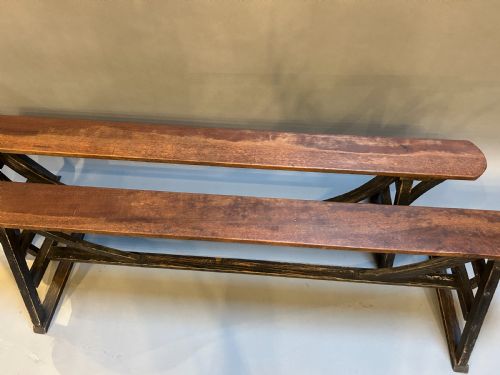
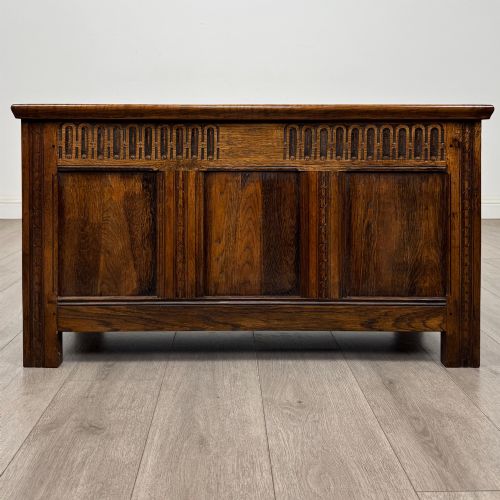
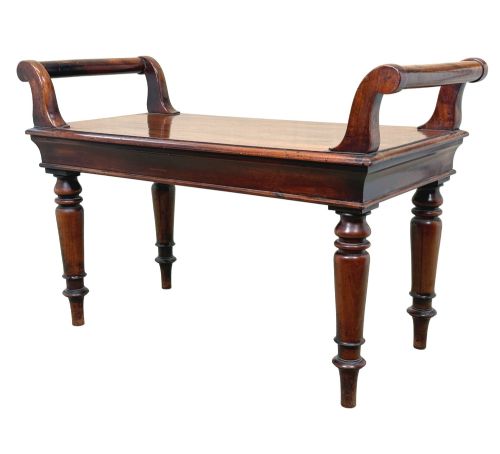
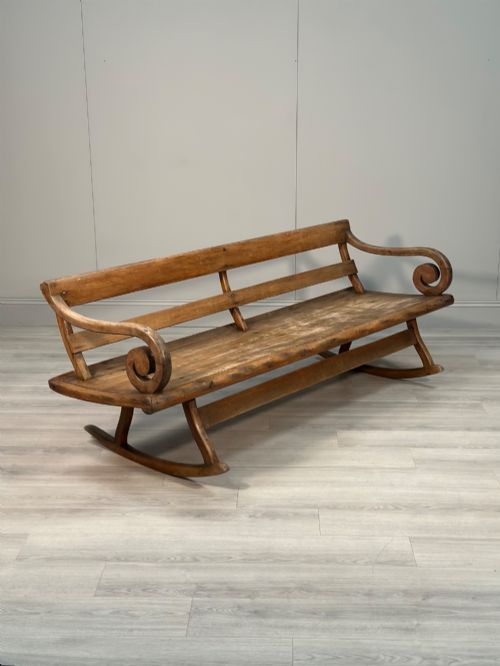
A traditional wood bench encompasses a wide variety of seating forms, ranging from high-back settles and window seats to plank benches and chapel pews. These pieces emerge from periods spanning the eighteenth century through to the early twentieth century, reflecting both formal domestic interiors and vernacular country settings.
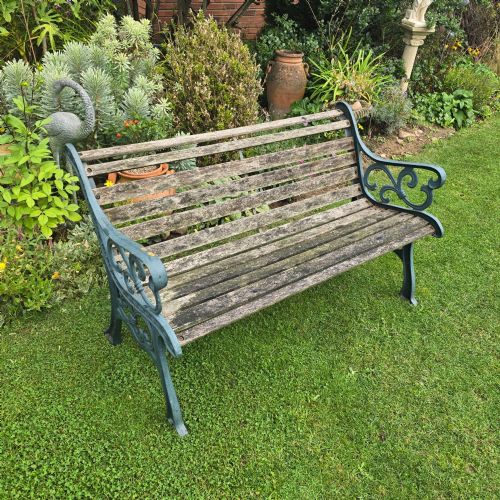
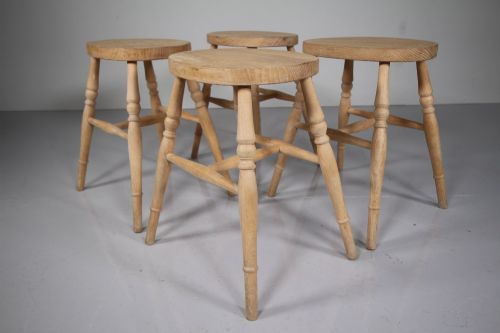
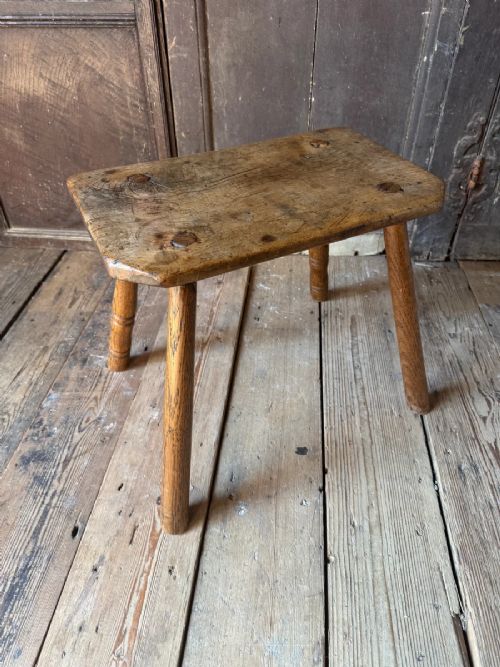
The most common examples encountered on this page are oak, pine, and mahogany pieces built for utilitarian hallway or fireside use. Settles, window seats, and long stools dominate the inventory, accompanied by garden benches incorporating cast iron and wood.
Makers utilised native hardwoods alongside imported timbers, producing items intended for heavy daily use in homes, pubs, and chapels. Regional styles vary from rustic farmhouse and country vernacular to Regency and Jacobean Revival.
Construction and materials
Construction relies heavily on solid timbers such as oak, mahogany, elm, pine, and sycamore, joined using traditional pegged or panelled methods. Many early examples utilise heavy planking secured by wooden pegs rather than metal fixings.
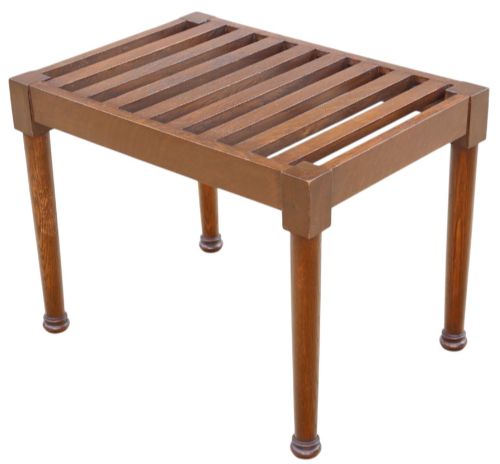
Surface finishes range from scrubbed natural elm and bleached oak to polished mahogany and ebonised treatments. Metal elements appear primarily as cast iron frames on garden seating or brass details on luggage stands and benches.
Listings span periods from the 18th century through to the Edwardian era, incorporating oak, mahogany, pine, elm, and cast iron.
Quality variations
Quality reveals itself through the selection of timber, the integrity of the joinery, and the degree of original surface patination. Dense, well-figured hardwoods and robust pegged construction distinguish finer cabinet-made pieces from simpler utilitarian items.
Proportion and decorative restraint also separate the range, where crisp carving and balanced architectural lines indicate superior craftsmanship. Pieces retaining their original surface finish and structural integrity hold greater integrity than heavily altered examples.
The Traditional Wood Bench Glossary
- Settle
- A wooden bench with a high back, solid arms, and often a storage box beneath the seat. This form was designed to keep out draughts in domestic halls and fireside settings.
- Joint bench
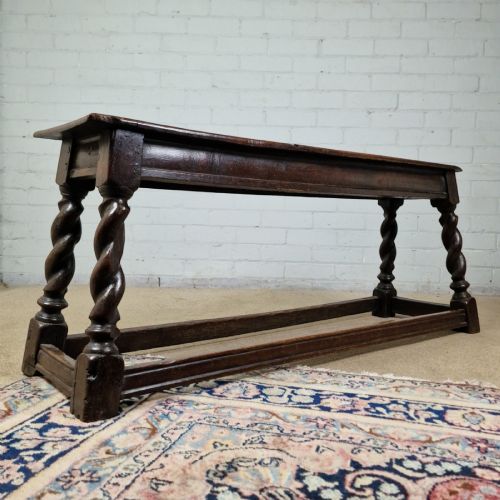
- A piece of seating constructed using traditional mortise and tenon joinery secured with wooden pegs. This method provides robust structural rigidity without metal nails.
- Window seat
- An upholstered or wooden bench specifically proportioned in length and height to fit within a window recess. These items frequently date from the Regency and Victorian periods.
- Chapel pew
- A long wooden bench originally utilised for communal seating in religious buildings. They typically feature simple panelled backs and sturdy plank construction.
Traditional Wood Bench: Frequently Asked Questions
Where should I place a wooden settle?
A wooden settle suits a spacious hallway, a boot room, or beside a large fireplace. The high back functions well to block household draughts in open living areas.
Ensure you measure the depth and height of the piece before placement, as high backs require adequate wall clearance to sit properly.
How do I care for antique timber?
Maintain antique timber benches by keeping them away from direct heat sources and sudden temperature fluctuations. Regular dusting with a dry lint-free cloth preserves the surface.
Apply a traditional beeswax polish sparingly to nourish bare hardwood surfaces and maintain a natural lustre.
What is the difference between a bench and a settle?
A standard bench generally consists of a flat seat supported by legs or trestles, sometimes featuring a low back. A settle incorporates a solid high back and enclosed sides designed to retain heat.
Settles were historically positioned near firesides to shield occupants from cold air circulating through older rooms.
Are these benches suitable for daily use?
Most traditional wood benches were built for heavy utilitarian service and remain sturdy enough for everyday seating. Solid construction in oak, elm, or mahogany ensures long-term durability.
Check the stability of the legs and joints periodically, especially on antique plank benches subject to constant movement.