
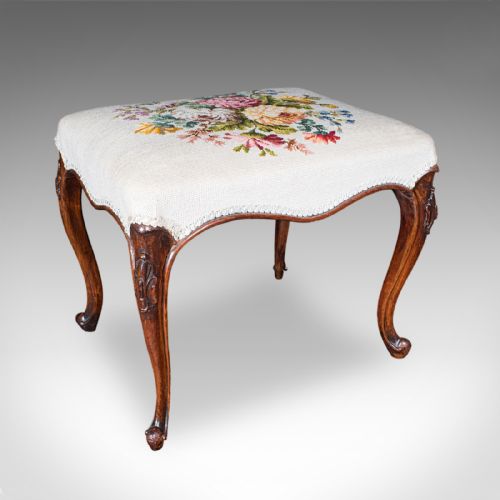
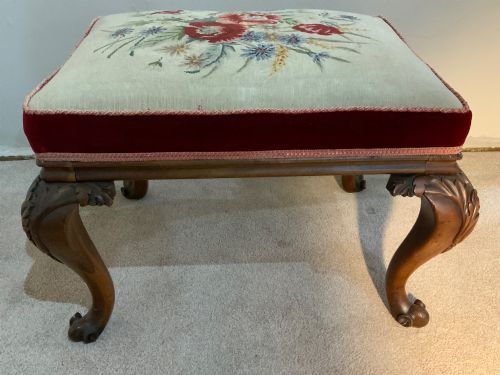
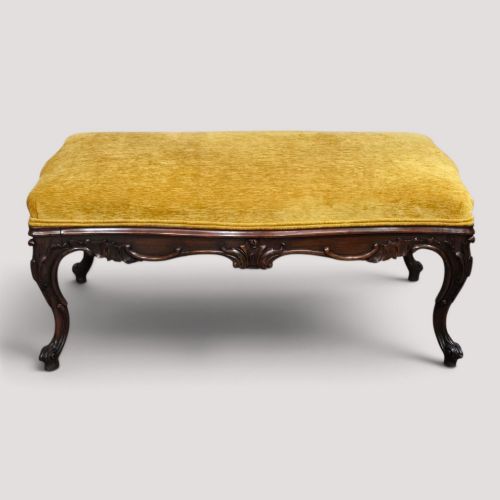
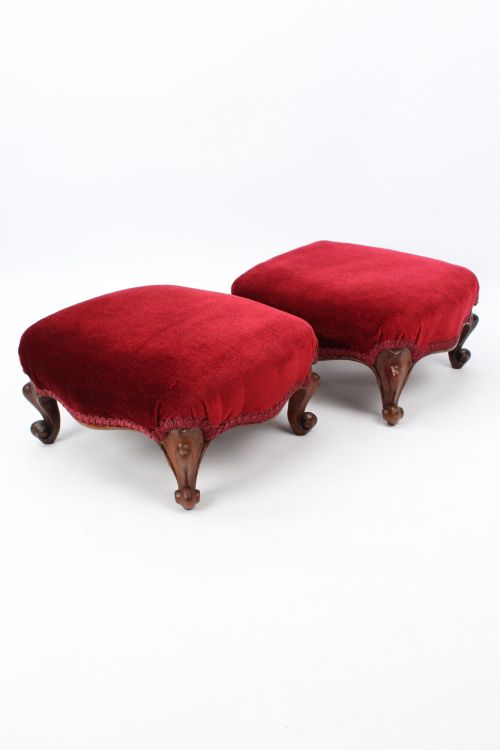
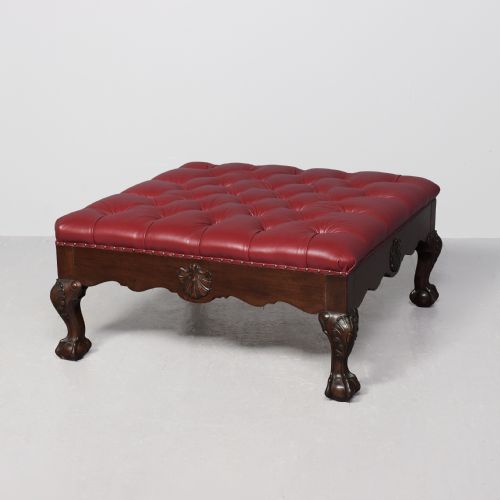
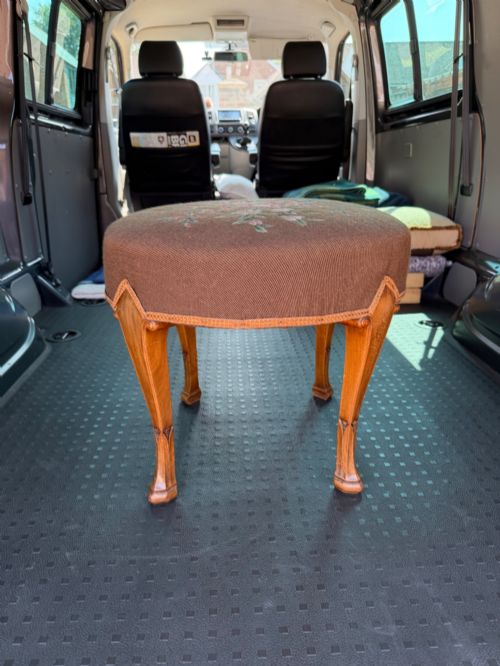
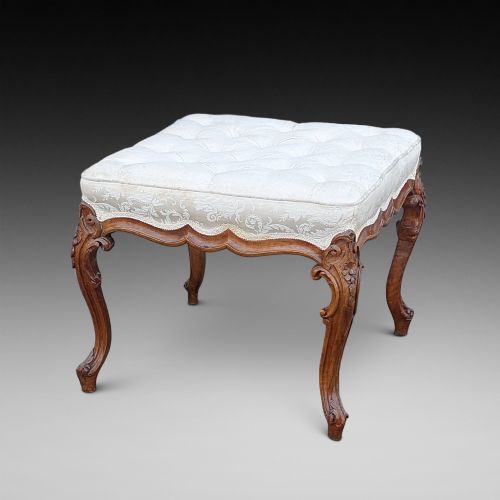
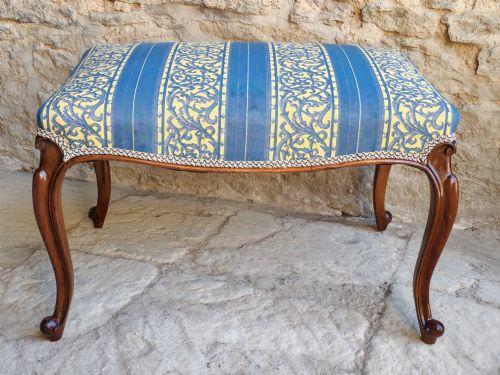
Carved Cabriole Footstool
These carved cabriole footstools bring period woodwork and traditional upholstery into a room.
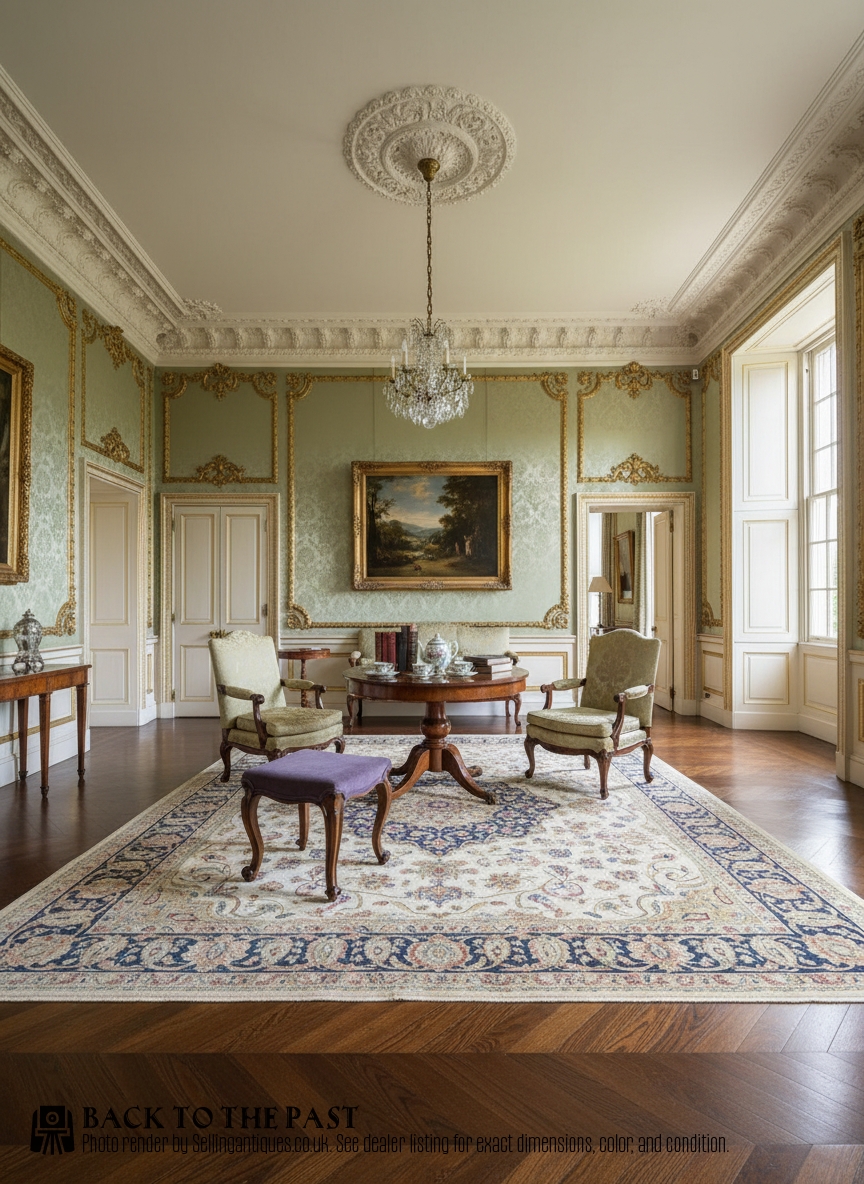
What a carved cabriole footstool is
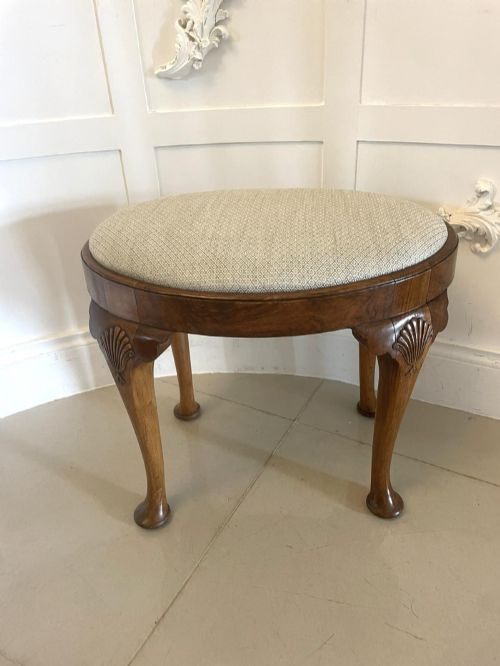
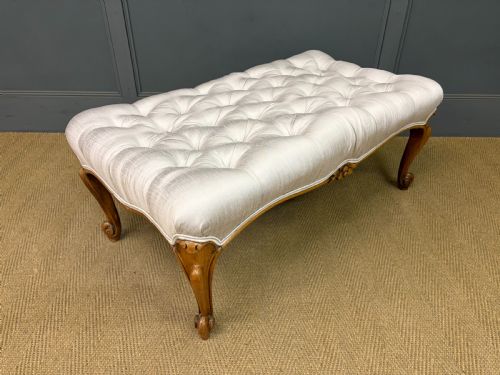
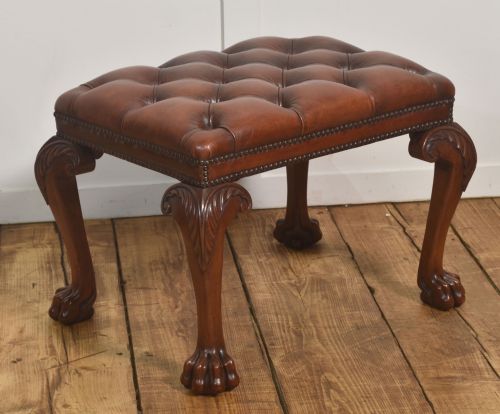
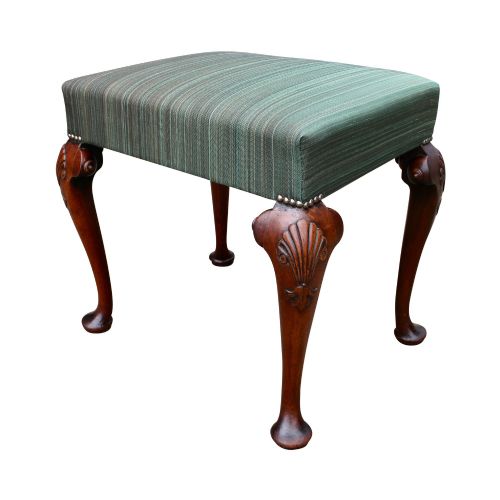
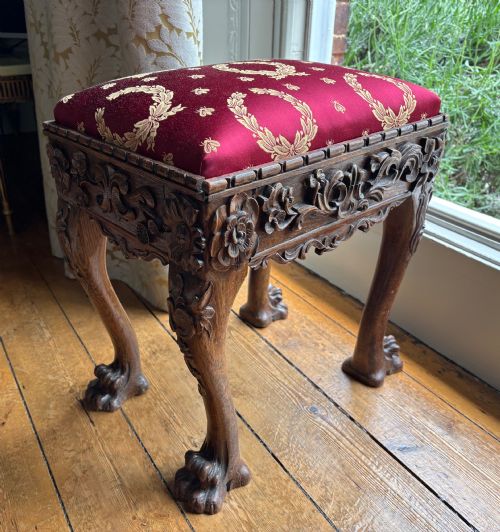
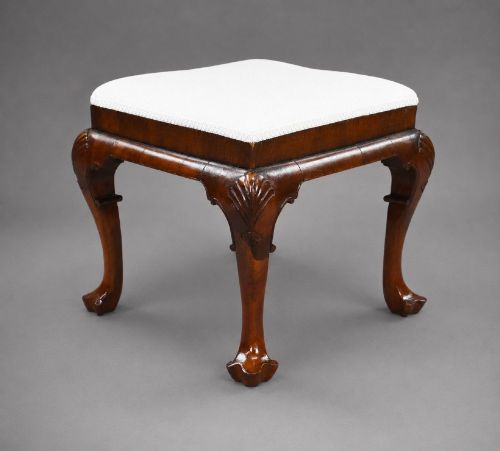
A carved cabriole footstool combines a curved wooden frame with padded upholstery to support the feet or serve as a low seat. The pieces on this page span the Victorian era, alongside specific interpretations of the Louis XV style and the Queen Anne style.
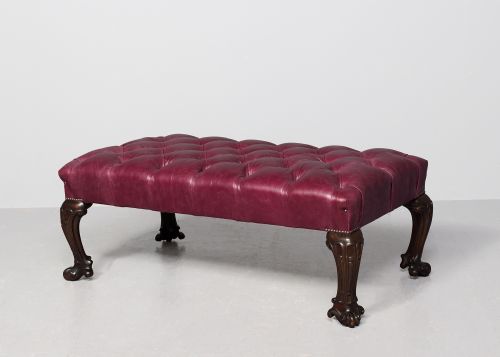
Most examples found here date from the Victorian period, appearing in timbers like mahogany and walnut alongside beech. Forms range from single low footstools to longer stools, often featuring carved frames and original or period fabric coverings.
How they were made
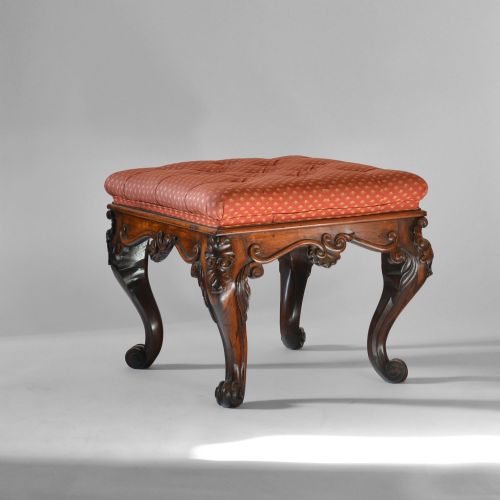
Frames are constructed from hardwoods such as mahogany, walnut and beech, shaped to form the signature double-curved leg. Carving is applied directly to the wooden frame to accent the knees and borders.
Upholstery incorporates traditional materials including tapestry, velvet and other textiles, supported internally by Hessian and jute webbing to build the seat foundation.
Retail Price Guide 2026
Typical UK retail prices for carved cabriole footstool, calculated from the Sellingantiques database of over a million retail prices indexed since 2003. This retail price guide relies exclusively on Sellingantiques data; no external sources or auction records are used, so the figures do not describe the wider market.
Mahogany and walnut are the dominant timbers found across the listed wooden frames.
What varies in quality
Quality rests in the crispness of the wood carving on the frame and the elegance of the cabriole curve in the legs. Finer examples show deeper hand-carved detail and superior timber selection.
The choice of covering material and the preservation of original fabric or traditional upholstery layers also distinguish standard domestic pieces from finer decorative examples.
The Carved Cabriole Footstool Glossary
- Cabriole leg
- A furniture leg featuring a double curve, typically bowing outward at the knee and tapering inward toward the foot. This form derives from traditional furniture design and appears frequently on period seating.
- Hessian
- A woven fabric typically made from jute fibres, utilised beneath the top upholstery as a foundation layer. It provides structural support for the stuffing and springs within traditional seats.
- Louis XV style
- A decorative style characterised by asymmetrical flowing curves, naturalistic leaf motifs and scrolled feet. It heavily influences European seating design of the nineteenth and early twentieth centuries.
- Queen Anne style
- A graceful furniture style defined by unadorned surfaces, cabriole legs and pad feet. It places emphasis on the natural grain of timbers like walnut and mahogany.
- Tapestry
- A heavy textile featuring woven pictorial or geometric designs. It is often employed as a durable decorative covering for period footstools and dressing seats.
Frequently Asked Questions
What is a cabriole leg?
A cabriole leg is a curved furniture support that swells outward at the knee and tapers inward toward the foot. This shape mimics animal limbs and appears on many period seating items.
Craftsmen carved these contours directly from solid hardwoods to provide both structural stability and ornamental grace.
How were these stools used?
These pieces served primarily as footstools placed before chairs or sofas to support resting legs. Some low variants also functioned as dressing stools in Victorian bedrooms.
Their sturdy wooden frames and padded tops allowed them to double as occasional low seats when needed in a reception room.
How do I identify a Victorian footstool?
Victorian footstools often feature dense timbers such as mahogany and walnut paired with turned or carved cabriole legs. Upholstery materials like velvet, tapestry and heavy textiles are typical of the era.
Many examples also incorporate internal webbing materials such as jute and Hessian beneath the outer fabric layer.
Are these stools upholstered in original fabric?
Some pieces retain their original fabric or period textiles, while others feature later coverings applied during the life of the item. Textile choice varied from simple utilitarian weaves to decorative tapestries.
Inspect the condition and attachment of the outer textile to determine whether the upholstery represents the period of the wooden frame.