





Studded Leather Footstool
A studded leather footstool is a low seating piece combining hide upholstery and metal fastenings, offering sturdy comfort and classic style.
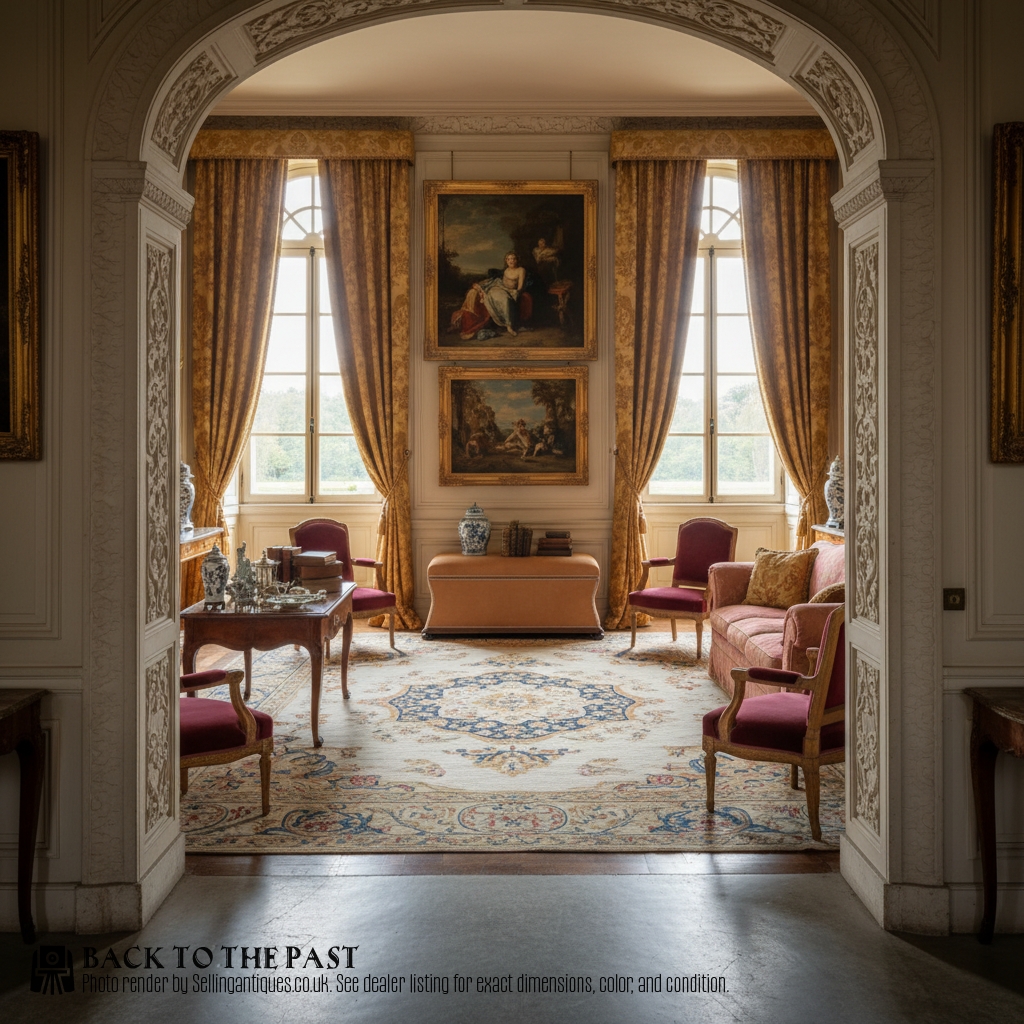
Studded Leather Footstool
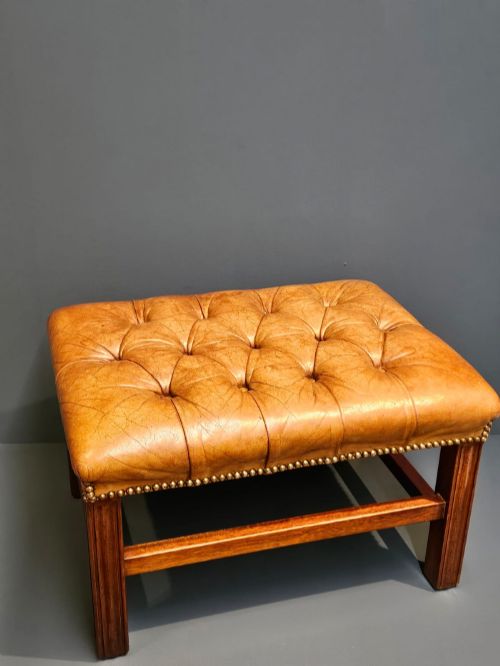
A studded leather footstool appears across the nineteenth and early twentieth centuries in forms ranging from compact dressing stools to large Regency and Victorian ottomans. These low seats serve utility and decorative roles in traditional interiors, often upholstered in rich buttoned or hand-dyed leather.
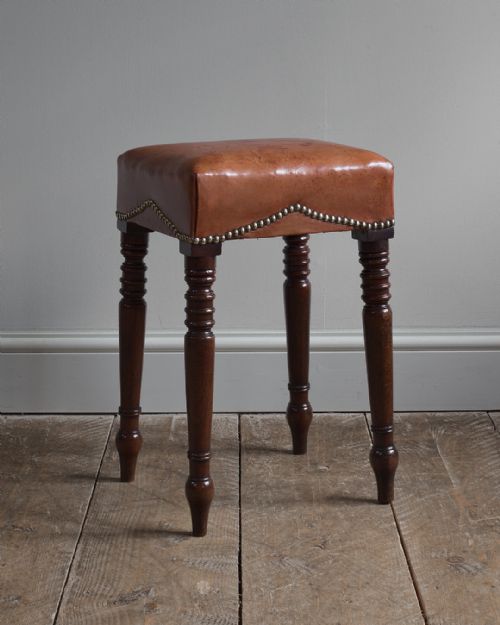
The versions most common on this page date from the Victorian and Edwardian eras alongside Regency and early twentieth-century examples. Formats vary from small mahogany frames to substantial oak and rosewood box ottomans fitted with metal studs.
Materials and construction
Makers constructed these frames from hardwoods such as mahogany, oak, walnut, rosewood, and yew wood. Joinery techniques reflect the period, utilising sturdy frames designed to support regular use.
Upholstery involves leather secured to the wooden structure using metal studs or brass nails. Artisans often applied buttons to create tufted surfaces on larger Victorian and Edwardian ottomans.
Studded Leather Footstool Retail Price Guide 2026
Typical asking prices for studded leather footstool among the pieces listed under this phrase on Sellingantiques today, from the lower quarter to the upper quarter. They describe what is for sale here now, not the wider market.
Judging quality and craftsmanship
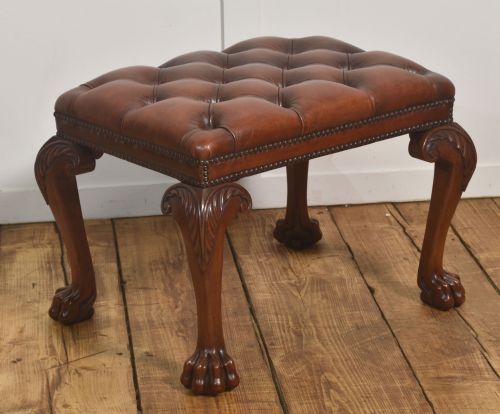
Quality rests in the selection of timber and the execution of the frame, where substantial hardwoods like mahogany and rosewood indicate finer production. Carved details, such as cabriole legs or lion's head motifs, distinguish more ambitious workshop output from simpler utilitarian seating.
The finish and condition of the leather upholstery also separate examples, with hand-dyed hides and precise metal studwork showing higher levels of craftsmanship. The integrity of the internal structure dictates longevity and daily usability.
Arthur Simpson Of Kendal·Arthur W Simpson
The Studded Leather Footstool Glossary
- Ottoman
- A low upholstered seat or footstool without a back or arms, often featuring internal storage space. These large pieces frequently dominate a room.
- Cabriole leg
- A furniture leg that curves out and then in, resembling the leg of an animal. This decorative feature appears on many Victorian examples.
- Joint stool
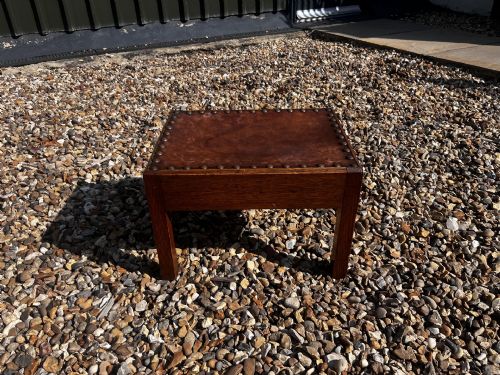
- A sturdy wooden stool constructed with mortise and tenon joints rather than turned parts. Early twentieth-century oak examples follow this traditional format.
- Buttoned
- An upholstery technique where depressions are created in the leather using deep buttons arranged in a grid. This method secures the padding and adds texture.
Studded Leather Footstool: Frequently Asked Questions
How do I date a studded leather footstool?
Dating relies upon timber selection, leg styles, and construction methods characteristic of periods like the Regency, Victorian, or Edwardian eras. Mahogany and rosewood frequently indicate earlier nineteenth-century production, while lighter oak forms often point towards the Arts and Crafts movement or the early twentieth century.
Examining the underside and the fastening of the leather provides further clues regarding age. Hand-forged or early brass studs combined with traditional joinery confirm period manufacture.
Can I use an antique footstool daily?
Most sturdy hardwood frames easily withstand regular daily use as footrests or casual seating. Checking the internal stability ensures the piece remains safe for everyday placement in a living room.
Leather surfaces benefit from basic conditioning to keep the hide supple. Treating the material correctly preserves both the historical finish and structural integrity.
What is the difference between a footstool and an ottoman?
Footstools are generally smaller pieces designed specifically for resting feet while seated on a chair or sofa. Ottomans tend to be larger, sometimes functioning as independent low seats or incorporating hinged lids for internal storage.
Larger nineteenth-century examples often blur this distinction by offering generous proportions suitable for multiple occupants. Both forms rely on similar leather upholstery and studded detailing.
How should I clean antique leather upholstery?
Cleaning requires gentle dusting with a soft cloth followed by specialised leather balms or saddle soaps if the hide appears dry. Avoiding harsh modern chemical cleaners protects the original patina and prevents cracking.
Professional restoration is advisable for deeply damaged hide or loose studwork. Regular light maintenance keeps the leather resilient over decades of domestic use.