



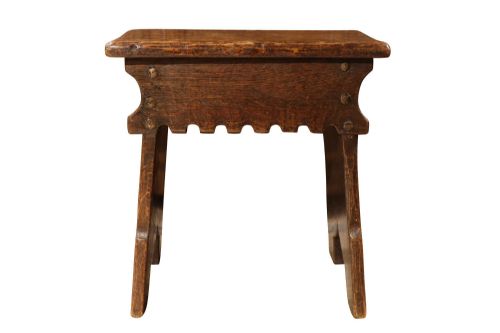


Arts and Crafts Footstool
These arts and crafts footstool pieces combine honest construction with simple utility, offering a sturdy seat built to last generations.
Arts and Crafts Footstool
When you search for arts and crafts footstool, you look at compact seating solutions rooted in the late nineteenth and early twentieth centuries. These low stools and benches emerge primarily from the Arts and Crafts movement, alongside related Gothic Revival and rustic farmhouse interpretations. Pieces on this page span several decades, ranging from nineteenth century examples to mid twentieth century works.
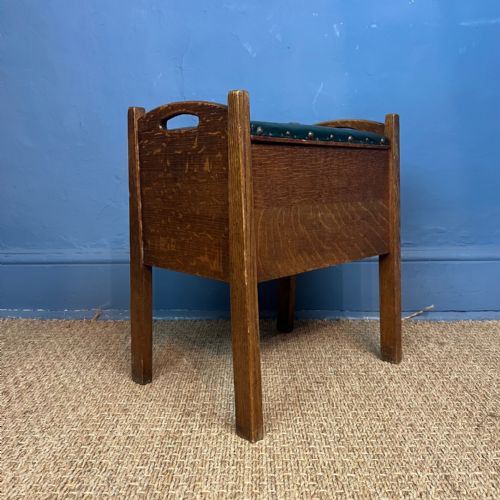
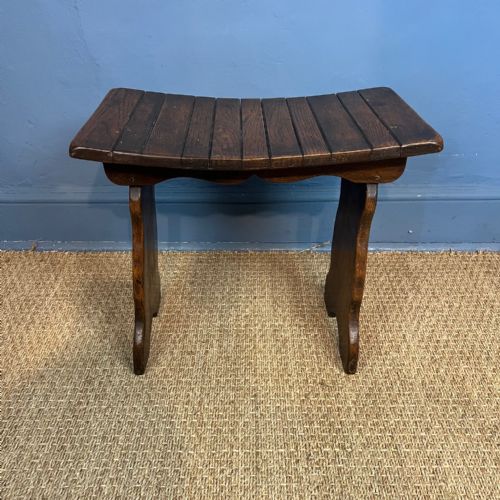
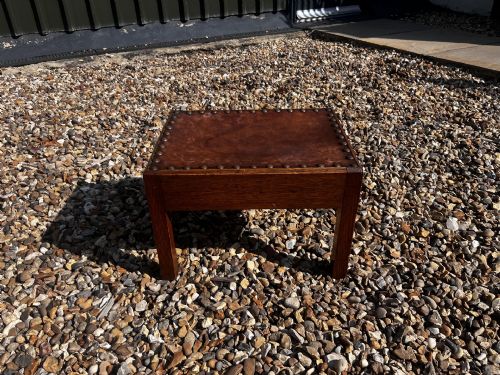
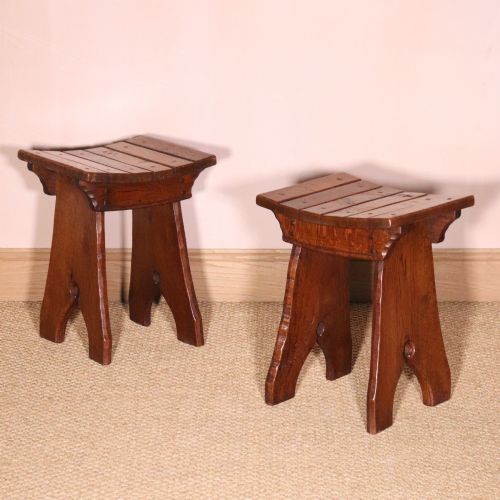
The most common form you will meet on this page is the solid oak stool, often featuring pegged construction and plain wooden seats or saddle tops. You also encounter variations upholstered in leather, fabric, tapestry upholstery, and velvet, sometimes secured with metal tacks or brass studs. Styles vary from straightforward vernacular designs to pieces reflecting specific makers or retailers like Liberty and Morris and Co.
Makers and workshops across Britain produced these items for domestic use, utilising local hardwoods and traditional methods. The selection includes dressing table stools, piano stools, window seats, and small footstools designed for fireside comfort. Each piece reflects a commitment to utility and honest materials, avoiding excessive ornamentation in favour of practical form.
How They Were Made
Makers constructed these items predominantly from solid oak, alongside occasional mahogany and other hardwoods. Woodworkers utilised traditional pegged joinery, ensuring structural integrity without relying on modern fasteners.
Upholstery techniques involved durable leather, tapestry, and fabrics such as velvet. Artisans secured these coverings using metal tacks and decorative brass studs to finish the edges cleanly.
Arts and Crafts Footstool Retail Price Guide 2026
Typical asking prices for arts and crafts footstool among the pieces listed under this phrase on Sellingantiques today, from the lower quarter to the upper quarter. They describe what is for sale here now, not the wider market.
What Varies in Quality
The distinction between standard vernacular pieces and the finest examples lies in the integrity of the joinery and the selection of timber. Superior items display careful hand-shaping, particularly on saddle seats and chamfered legs, showing the maker's control over the material. Grain selection and the tightness of pegged joints further separate ordinary workshop output from exceptional pieces.
Upholstered versions differ according to the quality of the covering materials and the execution of the padding. Pieces retaining original leather, brass studs, or branded textiles like Liberty and Morris and Co. fabrics carry greater historical interest. The balance of proportion and the restraint shown in any decorative carving or metalwork dictate the overall refinement of the design.
Arthur Simpson Of Kendal·Jack Grimble·Morris And Co·David Oakleafman Langstaff
The Arts and Crafts Footstool Glossary
- Pegged construction
- A method of joining wooden components using tight wooden dowels or pegs rather than metal nails or modern glues. This traditional technique allows wood to expand and contract naturally with seasonal humidity changes.
- Saddle seat
- A wooden seat carved with a scooped or hollowed profile to fit the human form comfortably. Makers often shaped these using adzes or drawknives.
- Thebes stool
- An ancient Egyptian-inspired stool design popularised in Britain during the late nineteenth century. These pieces typically feature splayed legs and a slightly dished seat.
- Tapestry upholstery
- A heavy, decorative woven textile used to cover seat pads. Such fabrics often depict floral or geometric patterns suited to period interiors.
- Brass studs
- Small decorative metal nails driven into upholstery edges to secure fabric and hide seams. They provide both a functional fixing and a subtle visual accent.
Arts and Crafts Footstool: Frequently Asked Questions
How do I use an arts and crafts footstool today?
These low seats function well as traditional footrests by an armchair or as casual perches in a hallway or bedroom. Their compact dimensions make them easy to tuck beneath dressing tables or windows.
Because of their sturdy solid wood construction, smaller examples also serve effectively as plant stands or occasional display surfaces.
What is the difference between an arts and crafts footstool and a window seat?
Footstools are generally smaller, square or round pieces designed specifically to support seated feet or provide a low seat. Window seats tend to be longer bench forms intended for prolonged sitting beneath a window.
Both share similar pegged construction and vernacular material choices, but their proportions dictate their primary placement in a room.
How do I care for the wood and leather on these stools?
Maintain the timber surfaces by applying a traditional beeswax polish occasionally to nourish the oak or mahogany. Avoid placing them near direct heat sources that might cause the wood to dry out and split.
Clean leather upholstery with a dry or barely damp cloth, avoiding harsh chemical cleaners that strip natural oils.
Are these stools comfortable for regular seating?
Saddle-seated wooden versions offer surprising support through their ergonomic hand-carved contours. Upholstered variants provide softer seating depending on the condition of the internal padding.
While designed primarily for short periods of rest or dressing, many find them perfectly comfortable for daily use.