



Oak Leather Stool
These oak leather stools combine sturdy frames with tactile hides, offering honest utility and enduring craft.
Oak Leather Stool
When you search for an oak leather stool, you encounter seating designed for practical daily use across several centuries. The selection spans compact footstools, heavy joint stools, adjustable music seats, and broader window benches.
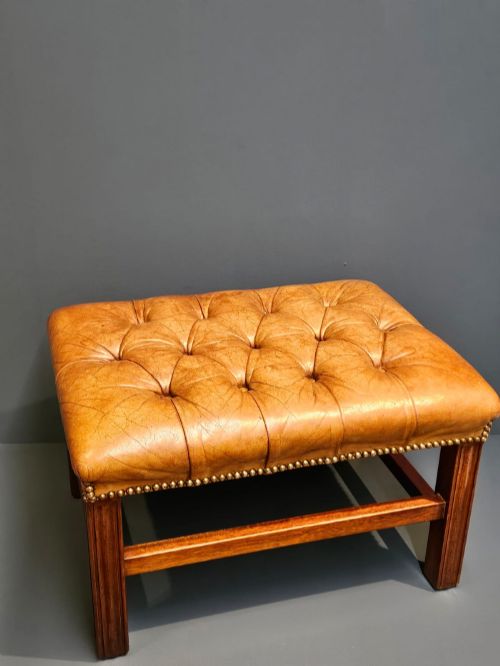
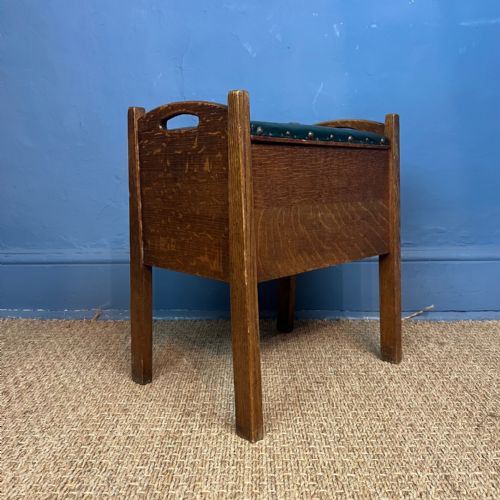
Arts and Crafts workshops and Victorian makers produced the bulk of these designs. You will frequently find pieces featuring exposed timber frames paired with buttoned or plain leather upholstery.
The forms range from simple low footstools to complex metamorphic library steps and X-frame supports. Each variant serves a distinct domestic purpose rooted in nineteenth and early twentieth-century life.
Materials and construction
Joiners built the foundational frames using solid oak, sometimes supplemented with beech, elm, or metal bracing. Carpenters shaped these timbers with traditional joints, occasionally employing adzed surfaces or carved detailing.
Upholsterers secured the hides using brass metal studs or iron fixings directly onto the wooden bases. Buttoning and padded cushioning appeared on finer domestic footstools and library seats.
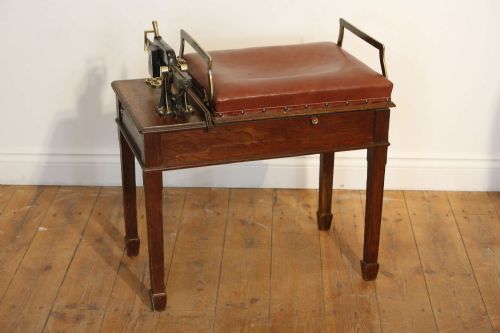
Adjustable mechanisms incorporated metal screws and swivel joints to create revolving piano chairs and variable height bar stools.
Oak Leather Stool Retail Price Guide 2026
Typical asking prices for oak leather stool among the pieces listed under this phrase on Sellingantiques today, from the lower quarter to the upper quarter. They describe what is for sale here now, not the wider market.
Several items double as library steps, proving that nineteenth-century readers appreciated furniture that could climb.
Markers of quality
The standard of timber selection and joinery separates standard utility seating from workshop pieces. Master makers employed thick, well-seasoned oak with considered grain patterns rather than salvaged timber.
Upholstery execution dictates overall refinement, seen in the hand-placement of individual brass studs and the grade of the leather. Thick, supple hides stitched or tacked with precision outlast thin modern replacements.
Maker provenance elevates a piece significantly, with branded labels, stamps, or documented workshop attribution confirming origin and adding archival certainty.
Arthur Simpson of Kendal·Liberty·James Shoolbred·Denby and Spinks·Mouseman·Gordon Russell
The Oak Leather Stool Glossary
- Joint stool
- A traditional sturdy wooden seat assembled with mortise and tenon joints rather than turned legs alone. These pieces date back centuries and offer immense structural rigidity.
- Metamorphic
- Furniture designed to transform from one form into another, such as an armchair that folds out into library steps. These clever mechanisms required high joinery skill.
- X-frame
- A structural base formed by intersecting diagonal timbers that cross to support the seat. This design appears frequently in Arts and Crafts and revival pieces.
- Adzed
- Timber finished with a hand tool that leaves distinct curved facets across the surface. This technique creates a textured, tactile finish popular in vernacular woodwork.
- Buttoned
- An upholstery method where depressions are pulled into the leather using twine secured through the padding. This technique keeps internal stuffing evenly distributed.
Oak Leather Stool: Frequently Asked Questions
How do I date an oak leather stool?
Examine the construction methods, tool marks on the timber, and the style of the hardware used. Hand-cut joinery and aged patina often point to nineteenth-century or earlier origins, while specific workshop labels clarify the decade.
Compare the upholstery technique and the wear on the leather with known period examples. Machine screws and modern adhesives indicate twentieth-century production or later restoration work.
Were these stools used in libraries?
Certain taller or metamorphic examples served specifically in domestic libraries for reaching high shelves. These multifunctional designs doubled as armchairs or steps when needed.
Standard low footstools remained by the hearth, while revolving variants suited music rooms and studies.
How do I care for antique leather?
Keep leather seats away from direct sunlight and excessive heat sources to prevent the hide from drying and cracking. Gentle dusting and occasional specialist leather feeding maintain suppleness.
Avoid harsh modern chemical cleaners that strip the natural oils accumulated over decades of use.
What is an Arts and Crafts stool?
Arts and Crafts pieces emphasise honest construction, visible joinery, and materials that display natural grain. Makers rejected mass production in favour of individual craftsmanship.
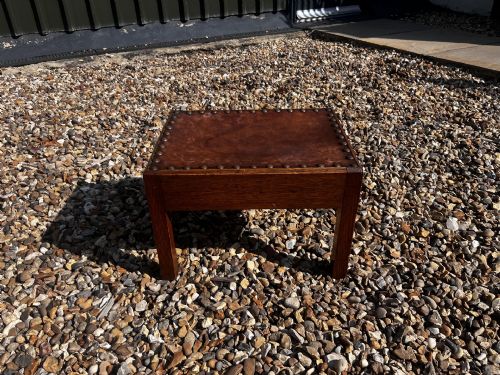
These stools often feature solid golden oak frames paired simply with stud-secured leather tops.