




Vintage Oak Footrest
These vintage oak footrest examples are solid timber pieces designed to support tired feet, offering both rustic charm and practical utility.
Vintage Oak Footrest
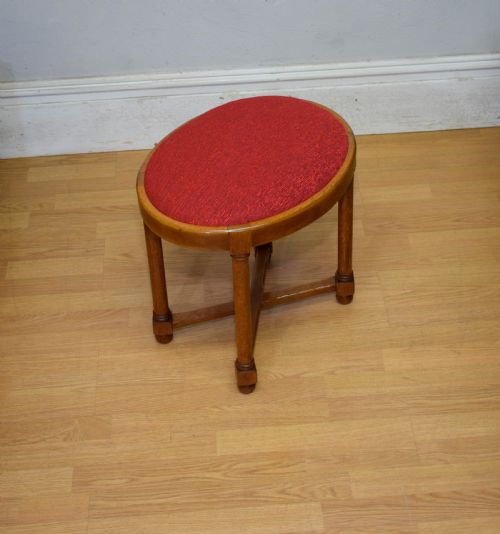
When you search for a vintage oak footrest, you encounter low timber stools designed for seating or resting feet, frequently appearing as footstools and ottomans. These pieces span periods from the nineteenth century through the Edwardian era up to nineteen thirty, drawing on English Country, Victorian, and Jacobean Revival traditions. You meet compact rush-seated versions alongside larger padded designs upholstered in leather, fabric, or velvet.
The aesthetic range includes plain utilitarian forms alongside pieces influenced by the Arts and Crafts movement or the Aesthetic Movement. Carved details such as lions head motifs appear on Edwardian examples, while others rely purely on clean lines and turned or straight legs. Most selections on this page adhere to straightforward domestic utility rather than grand salon display.
How they were made
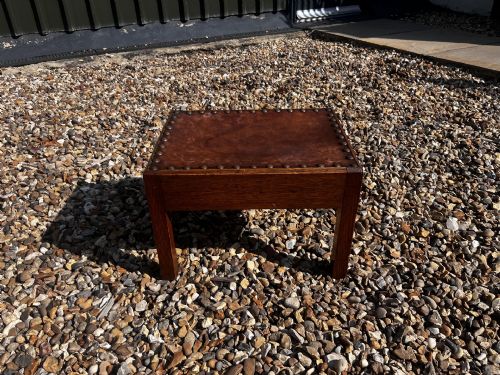
Construction relies primarily on oak and hardwood framing, joined solidly to bear weight close to the floor. Makers utilised natural materials for seating surfaces, incorporating woven rush alongside padded tops finished with leather, fabric, or velvet. Metal studs frequently secure the edges of upholstered covers to the wooden frame.
Carving and turning give structural members their character, from straightforward legs to detailed sculptural additions. Finish choices emphasise the natural grain of the timber, maintaining a warm brown tone across the nineteenth and early twentieth century examples.
Listings span periods from eighteen sixty to nineteen thirty, uniting oak, leather, rush, and velvet across Arts and Crafts and Victorian styles.
What varies in quality
Quality reveals itself in the integrity of the wooden joinery and the selection of the timber. Dense, well-figured oak provides a stable foundation that outlasts lighter or softer secondary woods.
The standard of handcraftsmanship defines the upper tier, particularly in bespoke pieces carrying workshop attribution. Neat rush weaving and securely fixed upholstery distinguish superior examples from ordinary utilitarian work.
Arthur Simpson Of Kendal·Arthur W Simpson
The Vintage Oak Footrest Glossary
- Rush
- Dried marsh grass woven into tight seating surfaces. This traditional material yields a resilient and tactile top for country and Arts and Crafts stools.
- Arts and Crafts
- A design movement valuing handcraft and natural materials over mass production. Pieces from this tradition display honest construction and simple structural forms.
- Buttoned leather
- Upholstery secured with deep indentations held by buttons. This technique creates a textured surface seen on Victorian and Edwardian examples.
- Jacobean Revival
- A style echoing seventeenth-century furniture design through dark timber and heavy turning. It appears on revival pieces produced during the Victorian and Edwardian periods.
- Aesthetic Movement
- A late nineteenth-century design approach prioritising visual harmony. Objects influenced by this movement reject heavy historicism in favour of refined proportions.
Vintage Oak Footrest: Frequently Asked Questions
What periods do these pieces cover?
The selection spans from the nineteenth century through the Edwardian era into the nineteen thirties. You will find Victorian, Edwardian, and Arts and Crafts examples representing these decades.
Production methods shifted over this time, moving from heavy carved revival styles to cleaner, movement-influenced designs while retaining oak as the primary material.
How were these stools originally used?
They served primarily as domestic footstools positioned before armchairs and firesides. Some functioned as low occasional seats or centre stools in parlours and halls.
Their sturdy construction ensured they could handle daily use in busy household settings without losing stability.
What upholstery materials appear most often?
Upholstered versions frequently feature leather, velvet, or woven fabric secured with metal studs. Buttoning adds texture and firmness to many of the padded tops.
Unupholstered variants rely instead on woven rush or plain wooden boards to form the seat.
How do I identify an Arts and Crafts piece?
Arts and Crafts examples emphasise visible construction, simple geometric forms, and natural materials. They often feature unadorned oak surfaces or tidy rush seating.
Workshops associated with this movement occasionally marked their output, providing a clear attribution for the maker.
Are all these items made of oak?
Oak is the dominant timber across the range, supported occasionally by general hardwood varieties. Different pieces display light oak, dark oak, or heavy framing depending on their era and style.
Secondary materials include brass fittings, metal studs, and natural seating fibres like rush.