



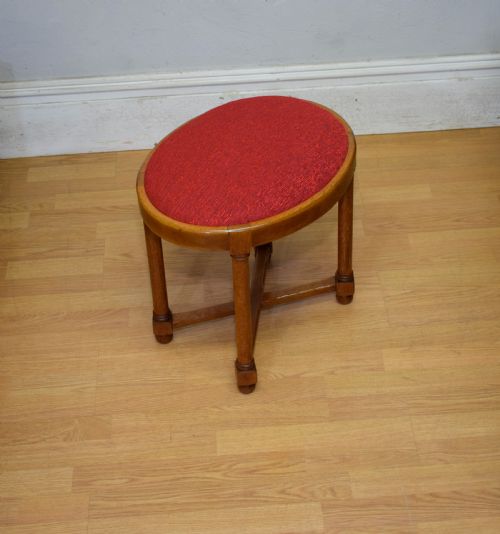
Low Oak Dressing Stool
These low oak dressing stool options are compact, timber-framed seats designed for the vanity table.
Low Oak Dressing Stool
A low oak dressing stool provides a sturdy, short-statured seat designed specifically for use at a dressing table or vanity. Buyers searching this phrase encounter examples ranging from the nineteenth century through to the early twentieth century, spanning styles such as Victorian, Georgian, and Arts and Crafts.
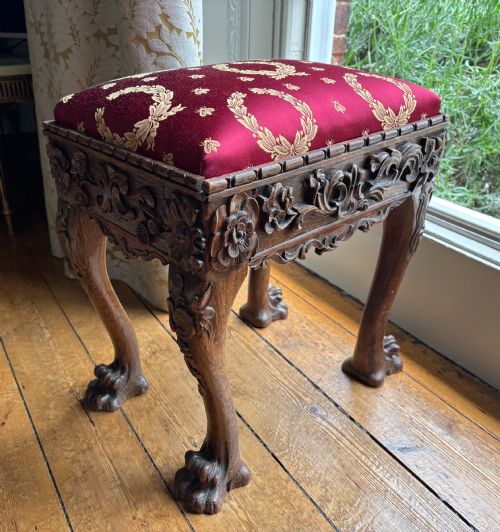
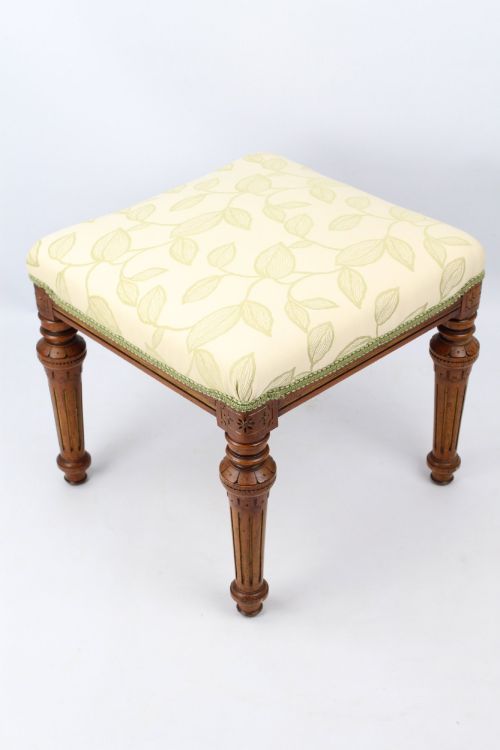
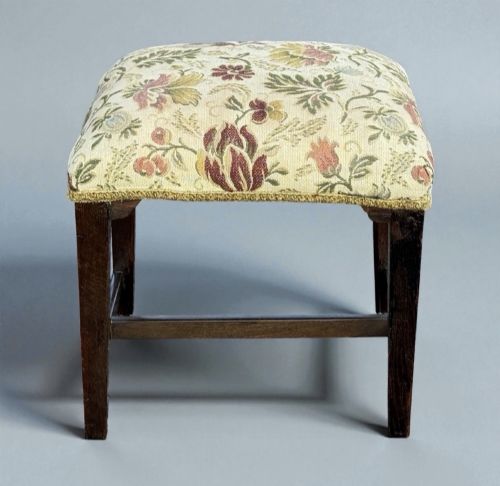
The forms vary from simple rustic farmhouse designs to revival interpretations featuring carved woodwork and upholstered tops. These seating pieces appear in various configurations, including oval wooden tops, cane work, and padded seats covered in fabric, linen, tapestry, or leather.
Origins represented in these listings stretch across English and French workshops, encompassing distinct periods like the William and Mary era and the Art Deco movement. Such diversity ensures that a low oak dressing stool can complement both period interiors and eclectic modern spaces.
How they were made
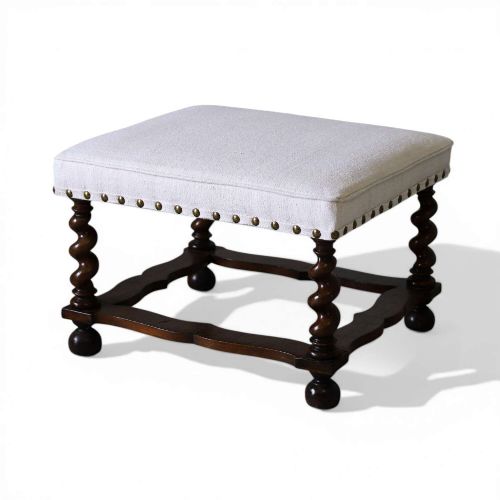
Makers constructed these pieces primarily using solid oak timbers, occasionally incorporating walnut elements, parcel gilt accents, and brass fittings for structural or decorative effect. Joinery traditions dictated the stability of the frames, utilising pegged joints and turned components such as barley-sugar legs.
Upholstered variants relied on traditional textile coverings including linen, tapestry, and leather, while woven cane work provided lighter seating surfaces on specific frames. Artisans also applied oyster-veneering techniques to stretchers, adding surface pattern to the dense timber.
Low Oak Dressing Stool Retail Price Guide 2026
Typical asking prices for low oak dressing stool among the pieces listed under this phrase on Sellingantiques today, from the lower quarter to the upper quarter. They describe what is for sale here now, not the wider market.
Some stools boast barley-sugar legs that make them look like giant confectionery.
What varies in quality
The distinction between standard and superior examples rests upon the ambition of the carving and the integrity of the timber framing. Pieces exhibiting hand-carved details or distinctive revival stylings command greater attention than plain utility seating.
Materials contribute heavily to the grade of a piece, with high-tier examples featuring intricate oyster veneers, robust brass details, or specialised leather and tapestry upholstery. The presence of documented workshop attribution or distinct period characteristics elevates the standing of an individual stool.
Harry & Lou Epstein·Arthur W Simpson
The Low Oak Dressing Stool Glossary
- Oyster-veneering
- Cutting branches or small trunks transversely to produce circular or oval wood patterns resembling oyster shells. This technique creates decorative surfaces on stretchers and panels.
- Barley-sugar legs
- Turned wooden furniture legs resembling the spiral twist of traditional barley sugar confectionery. They appear frequently on furniture from seventeenth-century revival periods.
- Parcel gilt
- The practice of applying thin layers of gold leaf to specific carved details or raised areas of a wooden object. This highlights particular decorative motifs against the darker oak background.
- Cane work
- Woven plant material, typically rattan, used to create breathable and flexible seat panels. It lightens the visual weight of heavy wooden frames.
Low Oak Dressing Stool: Frequently Asked Questions
What is a low oak dressing stool used for?
These low oak dressing stool items provide a compact seating option positioned in front of a bedroom dressing table or vanity mirror. Their reduced height allows them to slide neatly underneath furniture surfaces when not in use.
Historically, they served the daily routine of grooming and dressing in private chambers. Today, they function equally well as movable footstools or low occasional seats in living spaces.
How do I identify a Victorian oak stool?
Victorian examples often display heavy carved decoration reflecting nineteenth-century revivals of earlier historical styles. They utilise solid oak timber combined with upholstered pads covered in fabrics, tapestry, or leather.
Examination of the underside and joint construction helps confirm the period manufacturing techniques. These pieces frequently show the dense grain and dark patination typical of nineteenth-century cabinet work.
Can I use these stools as footstools?
Their low stature makes these items suitable for resting feet as well as sitting. Upholstered variants provide a comfortable surface for this purpose.
Heavier frames with solid wooden or cane tops also function well for this role, though adding a cushion increases comfort. Their robust oak construction easily withstands weight from multiple uses.
What styles are available?
The available selection encompasses a broad range of historical aesthetics including Victorian, Georgian, William and Mary, and Arts and Crafts. Each style introduces distinct decorative elements such as twisted legs or carved woodwork.
Art Deco examples also appear, showing cleaner geometric lines and specific maker attribution. This variety allows buyers to match the seating to existing antique or vintage furniture collections.