



Antique Oak Footrest
These heavy, honest pieces are an antique oak footrest, built to elevate tired feet and anchor a traditional room.
Antique Oak Footrest
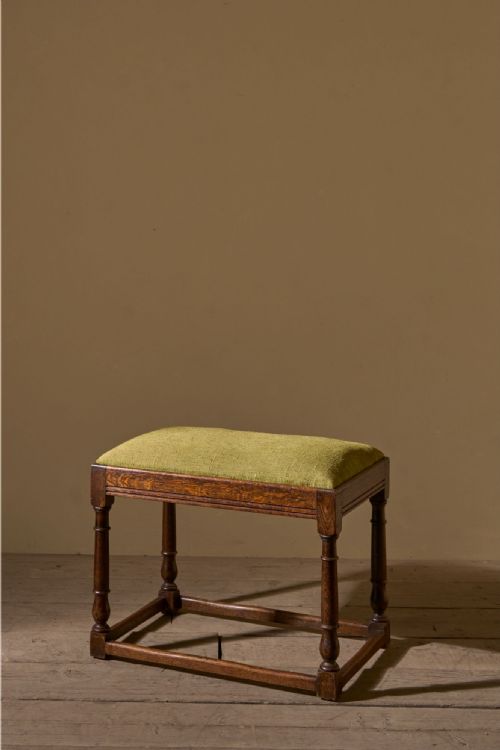
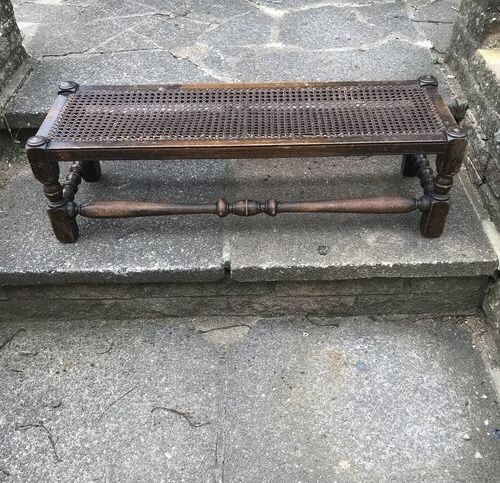
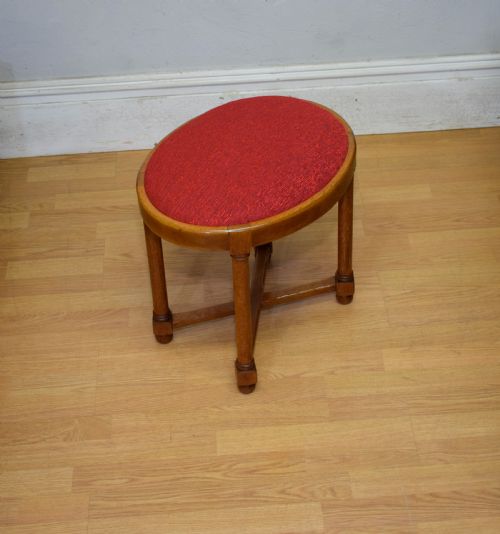
An antique oak footrest is a solid timber platform designed for comfort, appearing here as low stools, joint stools, and upholstered footstools. These pieces serve primarily to support the feet while seated in a parlour, library, or drawing room.
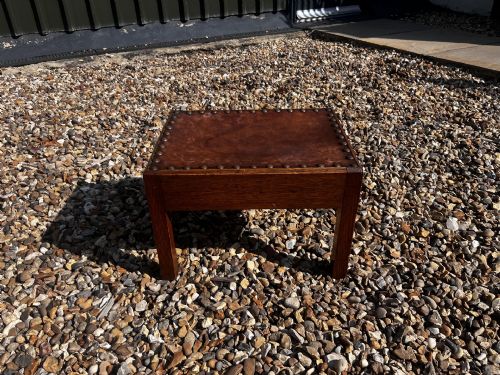
The versions most commonly met on this page date from the nineteenth century into the early twentieth century, spanning Victorian, Edwardian, and Arts and Crafts periods. They range from simple turned leg designs to carved models with buttoned leather tops.
Makers such as Arthur Simpson of Kendal produced notable Arts and Crafts examples, while other pieces reflect country house styles with rush seats or linen upholstery. Buyers encounter everything from small aesthetic stools to large carved centre stools.
What varies in quality
The distinction between a standard piece and a superior one lies in the integrity of the timber framing and the execution of carved or turned details. Sharp definition in carved elements like lion heads and precise joinery distinguish finer workshop output from basic utilitarian furniture.
Upholstery finish also dictates quality, where hand-stitched buttoned leather or heavy green linen applied with neat metal studs demonstrates greater craftsmanship. The choice between a plain structural joint stool and an aesthetically influenced design shifts the character entirely.
Antique Oak Footrest Retail Price Guide 2026
Typical asking prices for oak footrest among the pieces listed under this phrase on Sellingantiques today, from the lower quarter to the upper quarter. They describe what is for sale here now, not the wider market.
Listings feature periods from the nineteenth century up to nineteen thirty, utilising materials like oak, leather, brass, fabric, metal studs, hardwood, linen, and cane.
Arthur Simpson Of Kendal·Arthur W Simpson
The Antique Oak Footrest Glossary
- Joint stool
- A sturdy wooden stool constructed with mortise and tenon joints, commonly used for seating or resting feet in historic interiors.
- Arts and Crafts
- A design movement prioritising traditional craftsmanship, simple forms, and visible construction methods, often seen in pieces by makers like Arthur Simpson.
- Rush seat
- A seating surface woven from dried marsh rushes, providing a resilient and textured top on country stools.
- Buttoned leather
- An upholstery technique where leather is pulled tight and secured with deep buttons, creating a padded and quilted surface.
- Turned legs
- Furniture supports shaped on a lathe to create decorative cylindrical or bulbous profiles.
Antique Oak Footrest: Frequently Asked Questions
What is an antique oak footrest used for?
These wooden stools provide a low platform to elevate the feet while sitting in a chair or by the fireside. They bring practical comfort and solid wood construction to living spaces.
Historically placed in parlours and studies, they also function simply as small extra seats when guests visit.
How do I identify an Arts and Crafts oak stool?
Arts and Crafts pieces show honest construction, simple geometric forms, and materials chosen for their natural grain and texture. Look for clean lines and solid oak without excessive ornamentation.
Workshops associated with this movement often focused on utility combined with thoughtful handcrafted detail.
Are these footrests suitable for daily use?
Solid oak frames and sturdy turned legs make these pieces robust enough for everyday seating and foot support. The durable construction handles regular weight without difficulty.
Upholstered leather or heavy linen tops also withstand normal domestic wear while maintaining their structural integrity.
How do I care for leather and oak?
Clean the oak frame with a dry cloth and occasionally apply natural wax to feed the timber. Avoid placing the wood near direct heat sources to prevent drying.
Treat leather tops gently with appropriate leather balms to keep the material supple and prevent cracking over time.
What periods do these footstools come from?
The listings span the nineteenth and early twentieth centuries, including Victorian, Edwardian, and Arts and Crafts eras. Each period brings distinct design choices, from Gothic Revival hints to simpler country forms.
Dates range from mid-nineteenth century examples up to pieces made around nineteen thirty.