


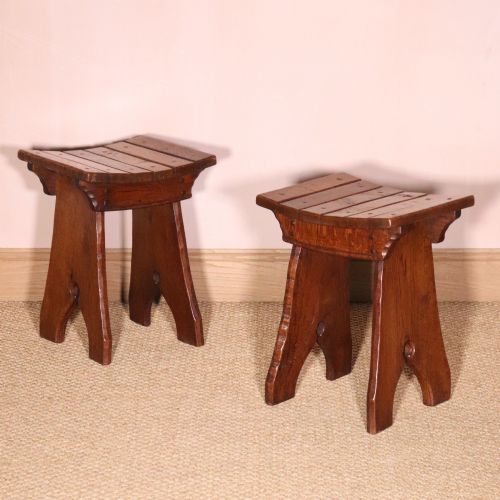


Solid Oak Footstool
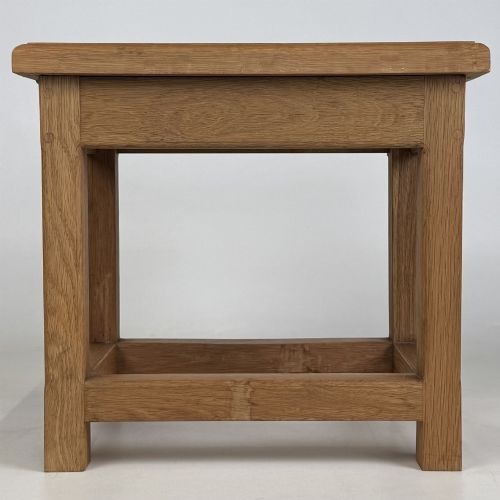
A solid oak footstool brings honest timber and sturdy construction to a room, offering practical seating or a low rest.
Solid Oak Footstool
A solid oak footstool represents a durable category of wooden seating found across several centuries of British cabinetmaking. When you search for a solid oak footstool, you encounter forms ranging from early joint stools to Arts and Crafts movement designs.
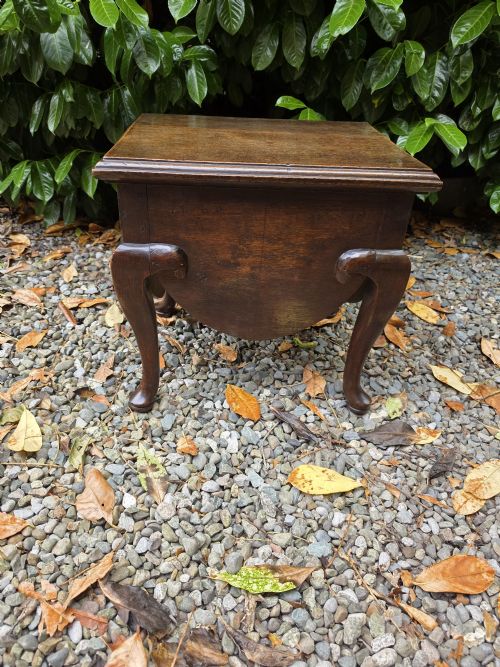
The pieces appearing on this page span diverse periods, including the seventeenth, eighteenth, and nineteenth centuries, alongside Edwardian and twentieth-century interpretations. Simpler rustic farmhouse examples and revival styles such as Jacobean and Queen Anne appear frequently.
Storage options and saddle-seated variants provide functional alternatives to standard low stools. These diverse objects share a heavy reliance on solid hardwood construction and traditional joinery.
Materials and construction methods
Makers utilised solid oak and elm timber, shaping the heavy wood through traditional joinery techniques. Frames are frequently joined with pegged mortise and tenon joints to ensure lasting stability.
Textile upholstery appears on several pieces, complementing the exposed wooden frames with padded leather or woven seats. Hardwood construction defines the structural integrity of every stool and storage box.
Some nineteenth-century stools doubled as window seats, giving weary household pets the finest view on the street.
Distinctions in quality
The grade of timber and the complexity of the joinery set examples apart. Pieces displaying crisp hand-carved details or refined cabriole legs show a higher level of artisanal skill than plain utilitarian forms.
Age and original condition influence the character of each piece. Retaining early pegged joints and untouched surfaces elevates an object above later reproductions or heavily altered examples.
Jack Grimble
The Solid Oak Footstool Glossary
- Joint stool
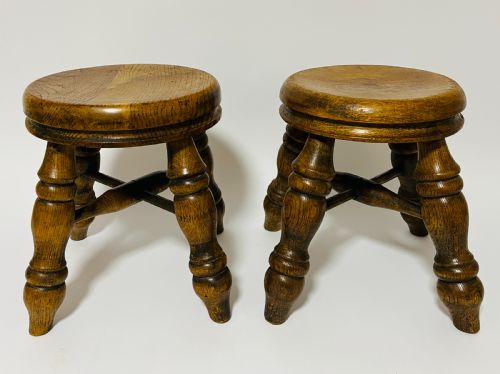
- A traditional wooden stool built with mortise and tenon joints pegged together for strength. These low seats date back centuries and served various household purposes.
- Cabriole leg
- A furniture leg featuring a double curve, typically bowing outward at the knee and tapering inward at the foot. This design appears on eighteenth-century stylistic revivals.
- Arts and Crafts
- A design movement valuing handcraftsmanship and simple vernacular forms over mass production. Pieces from this tradition often display honest construction and unadorned materials.
- Saddle seat
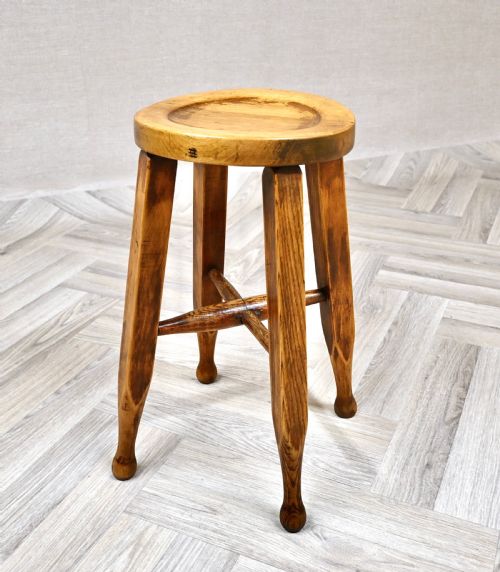
- A wooden seat carved with hollowed contours to mimic the shape of a riding saddle. This ergonomic feature provides comfort on low stools and Windsor chairs.
Solid Oak Footstool: Frequently Asked Questions
How do I date a solid oak footstool?
Dating relies upon examining the tool marks, joinery methods, and timber patination. Early pieces exhibit hand-sawn surfaces and pegged joints.
Revival pieces from the twentieth century often display machine-cut elements and distinct period styling cues.
What is a joint stool?
A joint stool is a sturdy wooden seat constructed using pegged mortise and tenon joinery. They were common in early households for sitting or reaching high places.
Their rigid frames made them exceptionally durable compared to glued furniture.
Where should I place a low wooden stool?
These compact pieces fit easily beside a fireside armchair or serve as a low occasional seat. Their modest footprint allows them to tuck beneath tables when not in use.
Storage variants also function well at the foot of a bed for linens.
What distinguishes Arts and Crafts stools?
Arts and Crafts examples focus on visible construction, simple geometric forms, and honest materials. Makers prioritized utility and straightforward craftsmanship.
These designs often feature plain solid oak or saddle-shaped wooden tops.