





Small Oak Stool
A small oak stool offers modest utility and sturdy provincial charm, spanning centuries of vernacular craftsmanship from simple milking seats to jointed designs.
Small Oak Stool
When you search for a small oak stool, you encounter low seating designed for domestic tasks, farmhouse kitchens, and cottage parlours. The selection ranges from rudimentary boarded forms to joined examples modelled on earlier centuries.
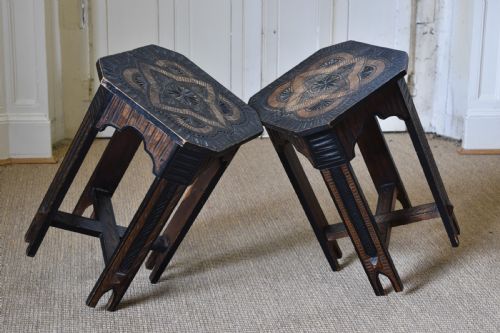
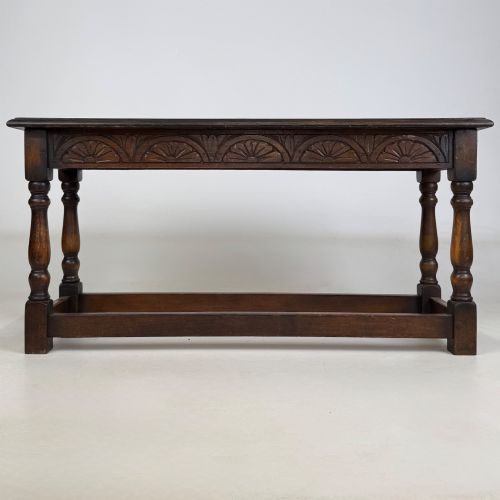
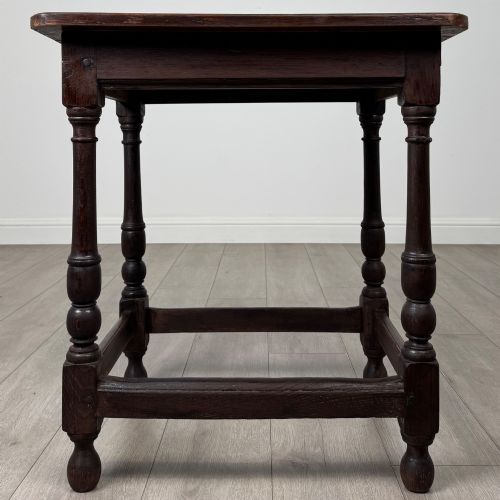
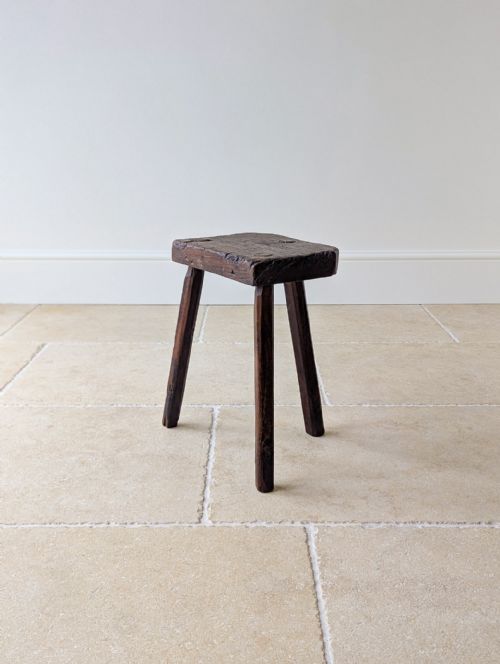
The pieces on this page include country milking stools, joint stools with pegged construction, and box stools intended for storage or bedside use. Many reflect Victorian and Edwardian revivals of Jacobean and Arts and Crafts styles.
Originating largely from British workshops and rural homesteads, these items served practical purposes near hearths and workbenches. Their compact proportions make them adaptable as occasional seats or low display surfaces today.
Materials and technique
The primary material is solid oak, frequently paired with elm for seats or combined with ash, brass, and rush. Timber was selected for durability, often showing prominent grain or quartersawn figuring.
Construction methods rely on traditional joinery such as pegged mortise and tenon joints, dovetails, and simple turned legs. Carpenters utilised hand tools for chip carving, panel moulding, and shaping solid wood tops.
Listings feature oak, elm, and rush across styles spanning 17th-century vernacular work to Arts and Crafts revivals.
What varies in quality
Quality rests in the integrity of the timber selection and the precision of the joinery rather than ornate decoration. Early pieces demonstrate robust pegged frames and thoughtful proportion, whereas later revival items can range from heavy-handed copies to delicate vernacular expressions.
The character of the surface timber creates distinction, with well-handled surfaces displaying rich patination and minimal restorative intervention. Evidence of original construction techniques, such as hand-turned spindle work or sculpted seats, separates standard utility items from finer examples.
Liberty and Co
The Small Oak Stool Glossary
- Joint stool
- A low wooden stool constructed with tight mortise and tenon joints held together by wooden pegs. These sturdy pieces served various domestic functions before chairs became common.
- Box stool
- A low seat featuring a hinged or removable lid that reveals an interior compartment for storage. They were often kept near firesides to hold candles or small items.
- Milking stool
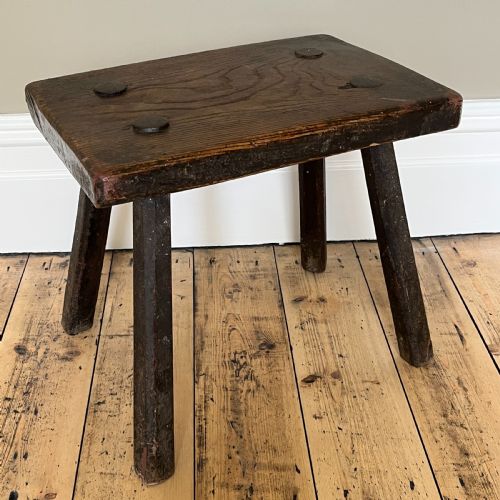
- A simple, three-legged seat designed for stability on uneven agricultural floors. The legs are typically cleft and wedged directly into the underside of the solid wooden top.
- Vernacular
- Objects built by local craftsmen following regional traditions rather than high-style architectural designs. These pieces prioritise practical utility and local materials over academic ornamentation.
- Pegged construction
- A method of joining timber components using wooden dowels instead of metal fasteners. This allows the wood to expand and contract naturally with changes in humidity.
Small Oak Stool: Frequently Asked Questions
How were small oak stools used?
These low seats served practical domestic functions around the home, from milking cows in barns to sitting near hearths for warmth and close work. Their compact size made them easy to tuck beneath tables or move beside beds and fires.
Over time, many adapted into incidental surfaces for holding candles, books, or small decorative objects. Today, buyers frequently place them in hallways or living spaces for occasional seating.
How do I tell an early stool from a later revival?
Early pieces display hand-tool marks, authentic wear patterns, and timber shrinkage appropriate to centuries of age. Joinery techniques like handmade pegged joints provide clues to the period of manufacture.
Revival pieces from the Victorian and Edwardian eras often mimic Jacobean or Elizabethan styles with machine assistance or uniform patination. Examining the underside and the nature of the wood grain helps clarify the true age.
Are these stools sturdy enough for daily seating?
Most solid oak examples remain remarkably robust due to dense hardwood construction and pegged joinery. However, pieces with delicate turned legs or antique rush seats require more mindful handling.
Assessing the stability of the frame ensures they can safely support everyday use as footstools or low seats. Regular waxing helps maintain the moisture balance of the older timber.
What is a box stool?
A box stool is a low wooden seat that incorporates a concealed storage compartment beneath the top surface. The lid often lifts on hinges, providing a tidy space for small household items.
These versatile furnishings functioned as kneeling benches, bedside chests, or candle boxes in historic homes. Their dual purpose makes them especially appealing for compact modern interiors.