
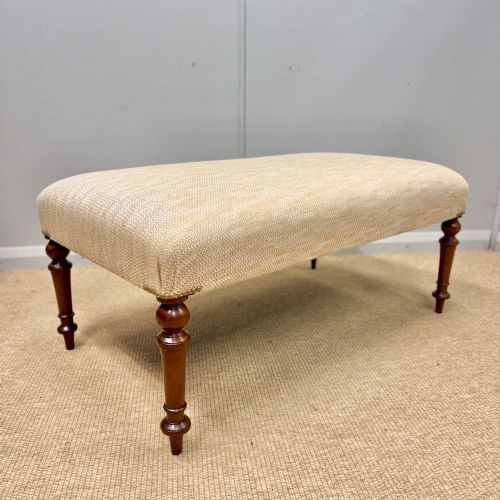
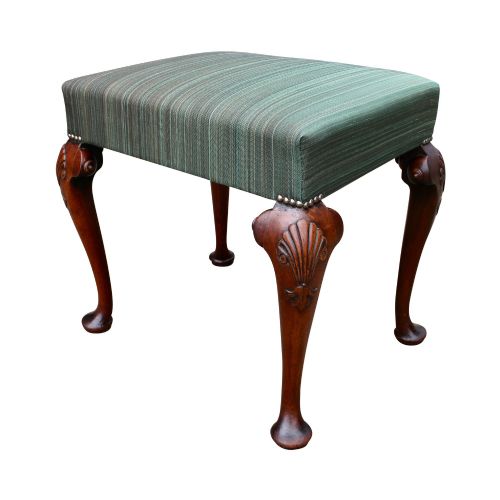
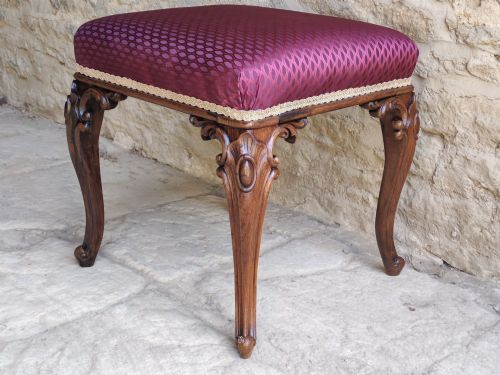
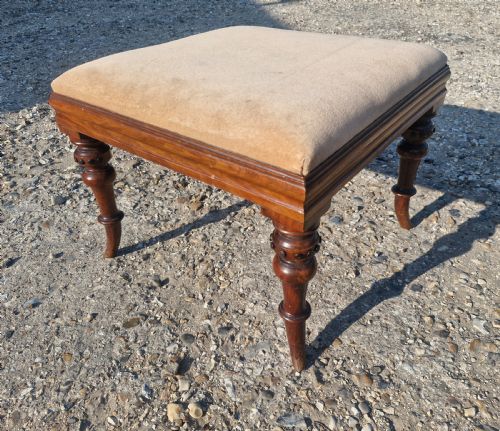



Victorian Padded Footrest
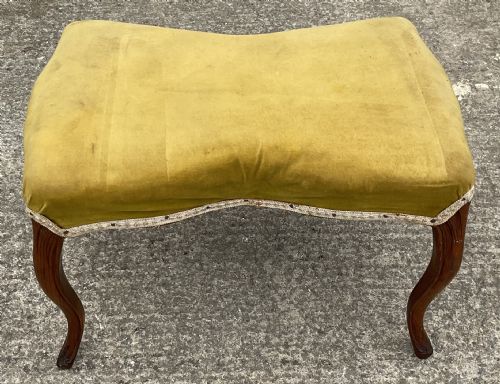
These Victorian padded footrest pieces offer solid timber frames and upholstered tops designed for comfort by the fireside.
Victorian Padded Footrest
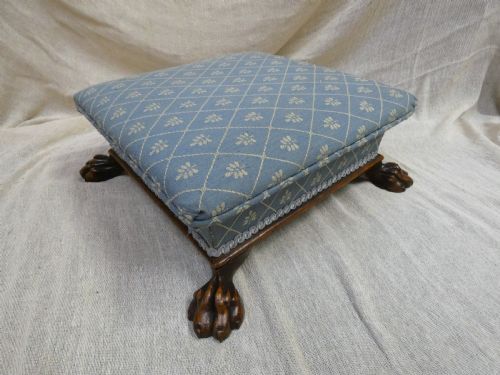
A victorian padded footrest takes the form of a low stool, fender stool, or ottoman designed to support the feet while seated. These pieces range from small oblong footstools to large ottomans with storage.
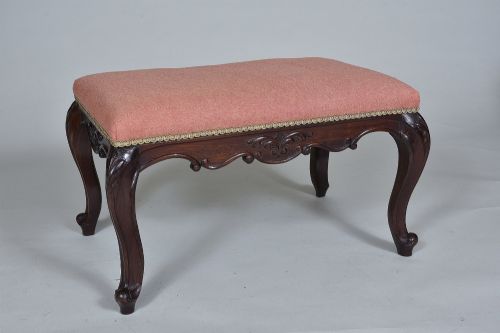
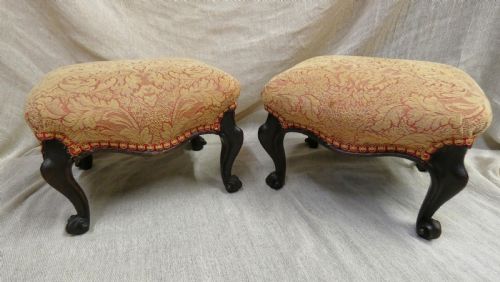
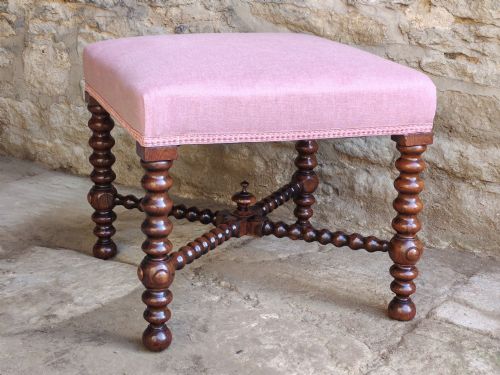
The version most commonly met on this page combines a timber frame in mahogany, walnut, or rosewood with a textile, velvet, fabric, or leather padded top. Many rest upon cabriole legs or brass castors.
Originating predominantly in the nineteenth century, these items span periods from eighteen-fifty to eighteen-ninety and encompass revival styles such as Queen Anne and Louis XV.
How they were made
Makers shaped solid woods including mahogany, walnut, rosewood, and beech into carved frames with cabriole legs, bobbin turns, or gilt details. Timber selection defined the structural integrity of each piece.
Upholstery involved textiles, velvet, tapestry, and leather, often secured over padding with deep buttoning or needlework finish. Metal components like brass castors provided mobility to larger ottomans and fender stools.
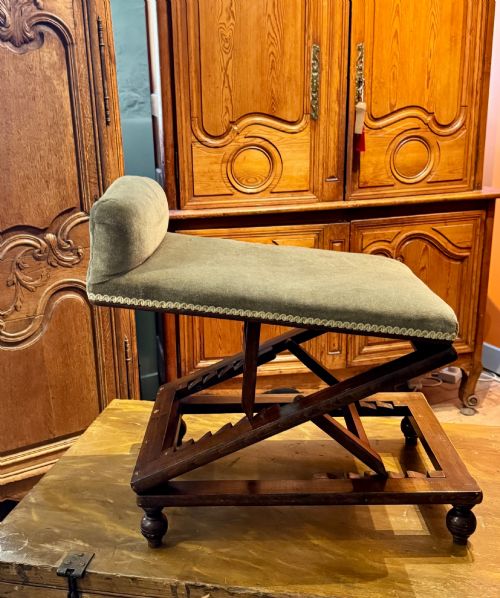
Some nineteenth-century occupants rested their aching joints on ingenious rocking and adjustable gout stools.
What varies in quality
The refinement of the timber carving separates standard examples from exceptional pieces. Crisp detailing on walnut or rosewood frames indicates superior cabinet work.
The choice of upholstery material and the execution of the padding influence the overall finish. Deep buttoning and quality textiles elevate the presentation of the stool.
Howard and Sons·Liberty
The Victorian Padded Footrest Glossary
- Fender stool
- A long, low stool designed to sit in front of a hearth fender. These pieces are typically narrow and accommodate multiple feet.
- Gout stool
- An adjustable or rocking footstool designed to elevate and support the foot of a person suffering from gout. They often feature mechanical tilting mechanisms.
- Ottoman
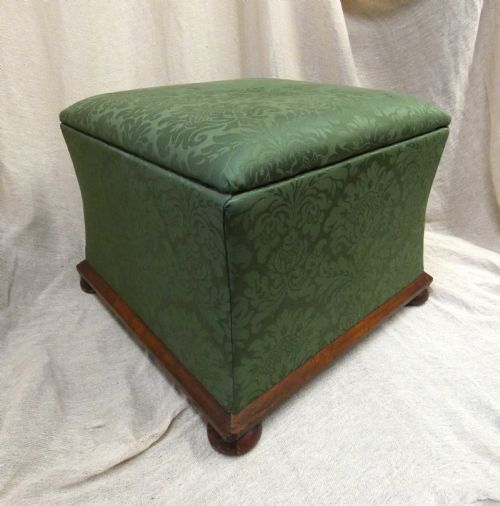
- A padded seat or footstool, sometimes fitted with internal storage accessed via a hinged top. Larger examples function as centre stools.
- Cabriole leg
- A furniture leg that curves outward and then tapers inward, finishing in a pad or scroll foot. This shape is common on mid-nineteenth-century revival pieces.
- Deep buttoning
- An upholstery technique where twine is pulled through the padding and secured to create a diamond pattern of indentations. This method keeps the stuffing evenly distributed.
Victorian Padded Footrest: Frequently Asked Questions
What is a fender stool used for?
A fender stool was placed directly in front of the fireplace hearth to keep feet warm and elevated away from cold stone floors. Their long, narrow proportions allowed them to sit neatly alongside the fender without blocking heat.
Today, these pieces work well positioned before a sofa or fireside chair, serving their original purpose while adding period character to a room.
Where should I place an ottoman stool?
An ottoman stool suits a living room, dressing room, or bedroom as a flexible seat or footrest. Examples featuring internal storage offer a practical place to keep blankets or small items.
Their substantial frames and castors make them easy to move around the room depending on seating arrangements.
What is the difference between an ottoman and a footstool?
A footstool is primarily designed to support the feet while sitting in an armchair. An ottoman is generally larger and can function independently as a low seat or centre piece.
Many nineteenth-century ottomans include hinged upholstery lids and internal compartments, combining seating with concealed storage.