
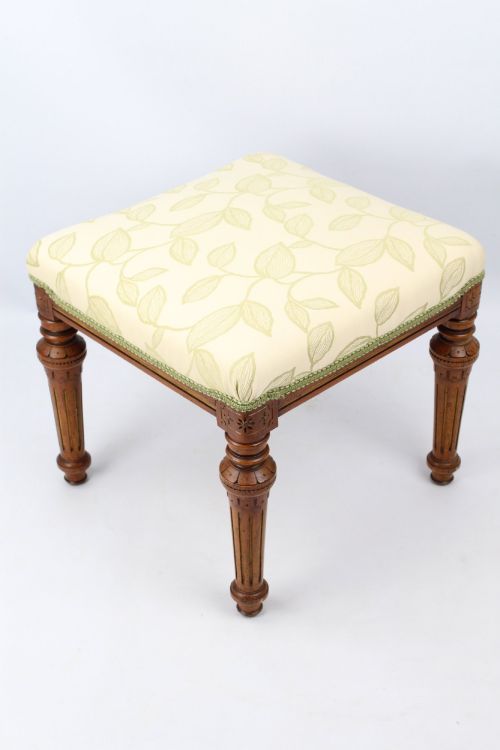
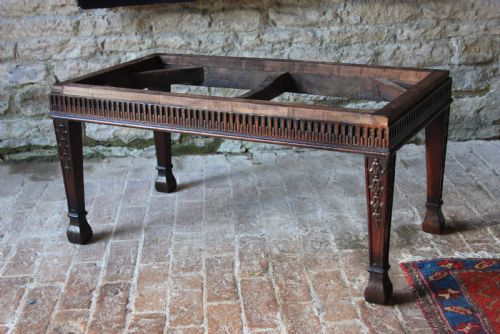
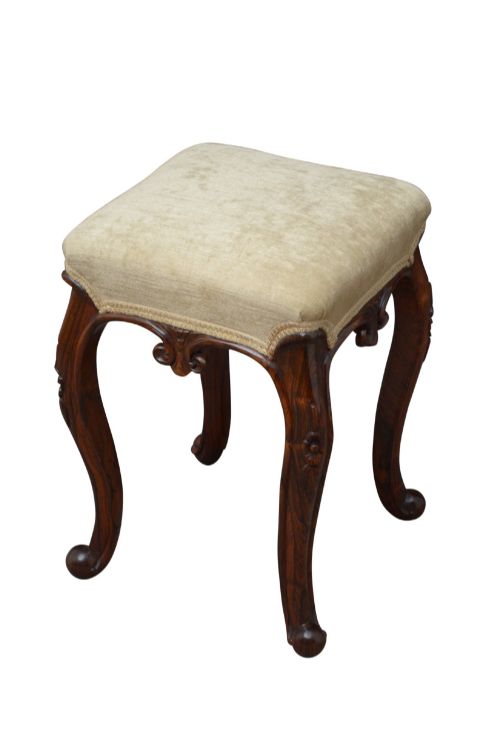
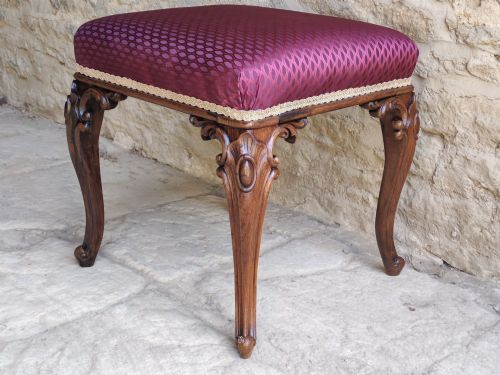
Carved Wood Dressing Stool
A carved wood dressing stool brings compact seating and fine timber frames to a bedroom, offering a useful perch before a mirror.
Carved Wood Dressing Stool
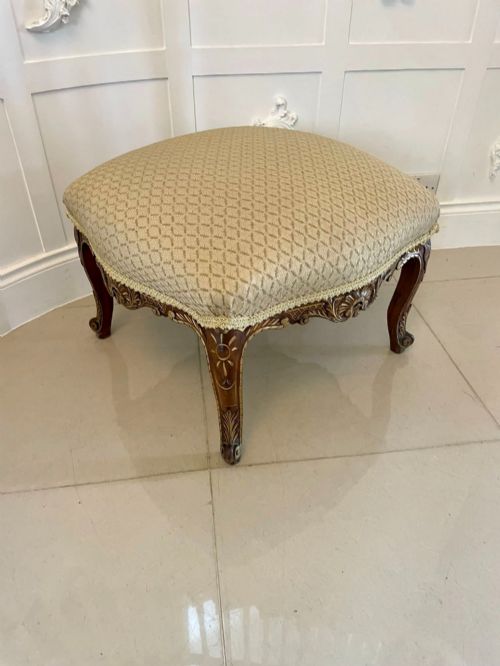
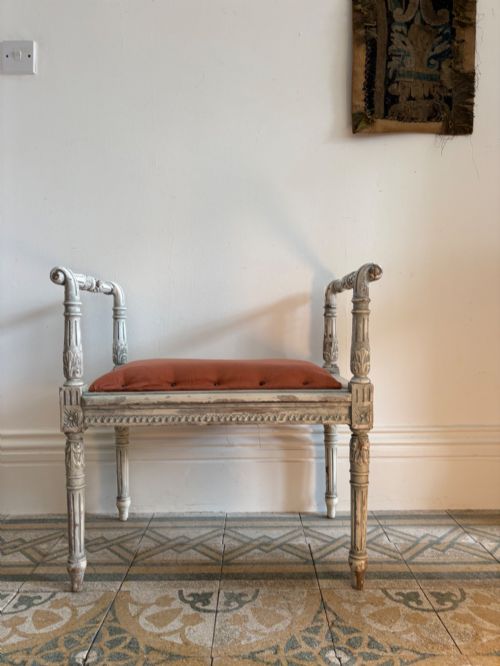
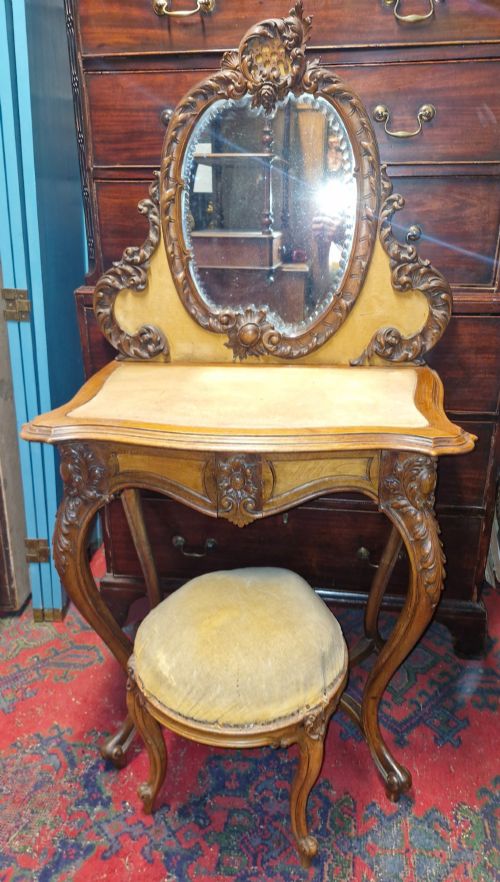
A carved wood dressing stool is a low seat designed to sit beneath a dressing table or vanity, providing practical seating in a bedroom. Buyers look for these pieces to complete period bedroom arrangements or to add a small seat with character to a dressing space.
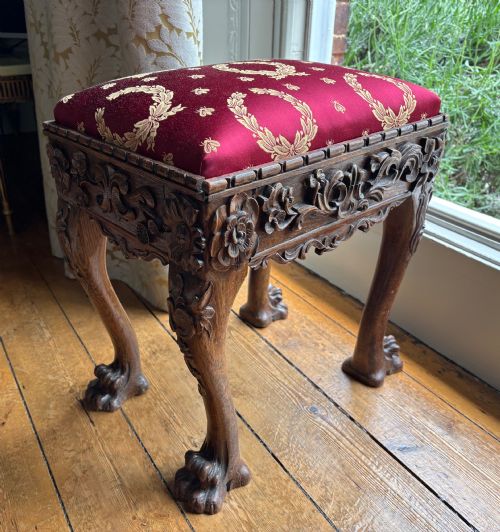
The versions most commonly met on this page date from the nineteenth century, including Victorian interpretations and revival styles. These pieces often feature timber frames paired with upholstered tops in various fabrics.
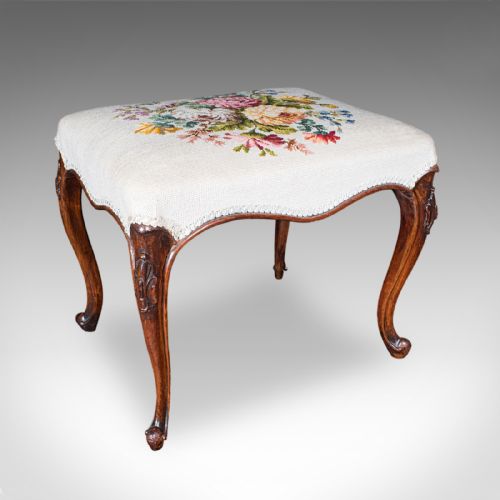
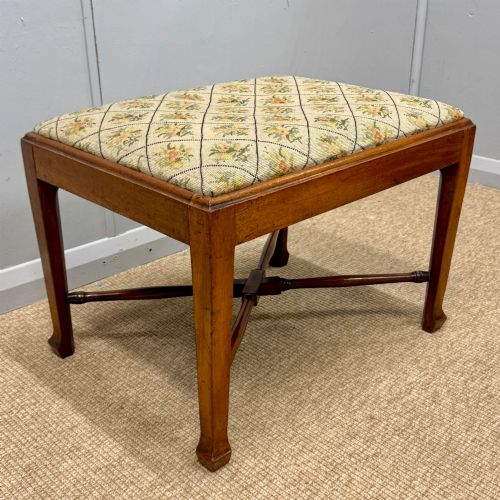
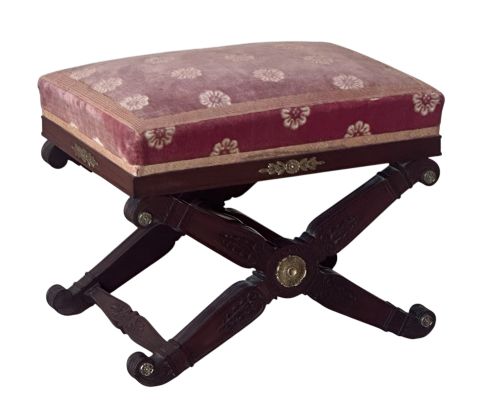
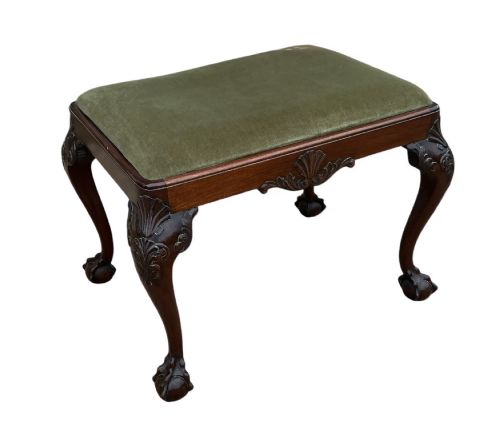
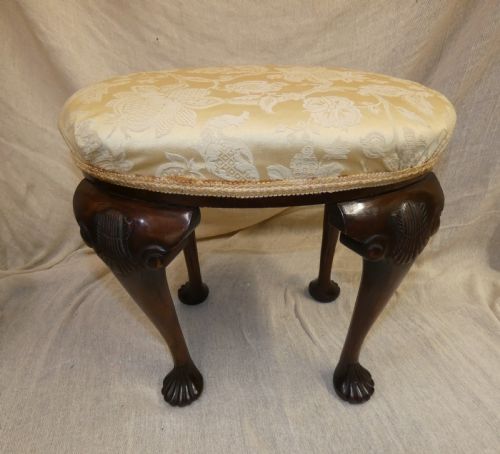
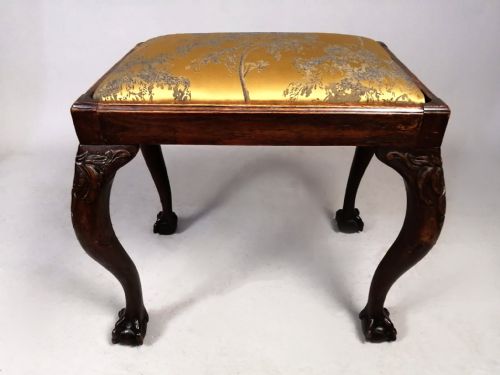
Forms range from straightforward rectangular seats on cabriole legs to cross-frame x-frame designs and round boudoir stools. They appear alongside dressing tables or as standalone low seats.
How they were made
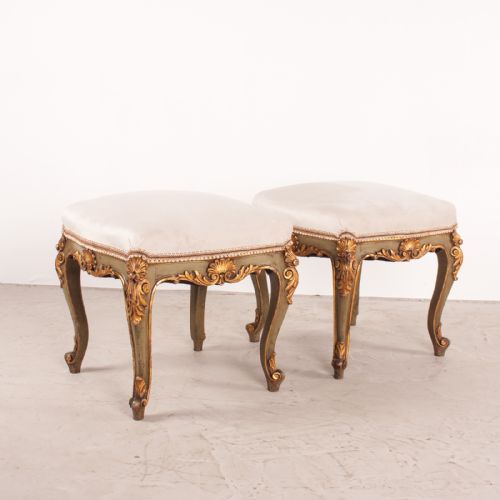
Cabinet makers constructed the frames using hardwoods such as mahogany, walnut, rosewood, and goncalo alves, often shaping the timber with carved ornamentation. Giltwood, painted finishes, and gesso also appear on continental and revival examples.
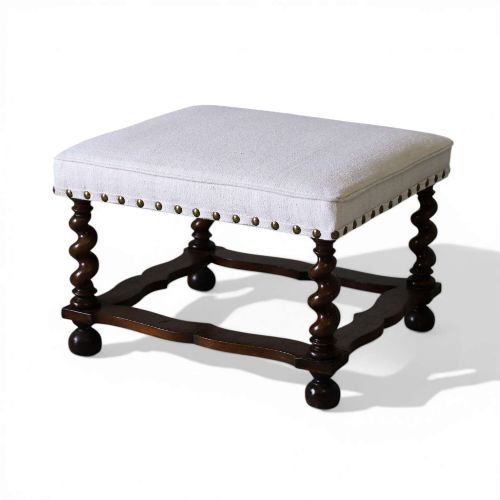
Seats utilise traditional upholstery techniques, supporting textile, velvet, silk, or needlepoint coverings over padding. Frames incorporate structural details like cross stretchers, cabriole legs, and twisted rope supports.
One French nineteenth-century giltwood stool carries the actual stamp of Loidrault Freres of Paris.
What varies in quality
The sharpness and depth of the wood carving separate standard production from finer work, as hand-chiselled detail reveals the skill of the maker. Timber selection also dictates grade, with figured walnuts and dense rosewoods sitting above simpler woods.
Proportion and structural integrity define the better examples, where legs and stretchers meet the frame securely without awkward joins. The quality of the upholstery execution and the choice of covering fabric complete the piece.
The Carved Wood Dressing Stool Glossary
- Cabriole leg
- A furniture leg that curves outward at the knee and tapers inward to an ankle, common on mid-nineteenth-century seating. This profile draws inspiration from animal limbs and was widely adopted during the Victorian period.
- X-frame
- A stool base formed by intersecting diagonal members that create an X shape from the side elevation. This ancient form appears in various revival styles throughout the nineteenth century.
- Needlepoint
- A type of canvas work embroidery used for upholstery on seat tops. It provides a textured, decorative surface often worked in wool.
- Giltwood
- Timber coated with a thin layer of gold leaf or gold paint for decorative effect. This finish is frequently found on French and continental revival pieces.
- Stretcher
- A horizontal support connecting the legs of a stool to increase stability. Stretchers take various forms, including cross configurations and twisted rope designs.
Carved Wood Dressing Stool: Frequently Asked Questions
What is a carved wood dressing stool used for?
A carved wood dressing stool serves as a low seat positioned in front of a dressing table or vanity mirror. It provides a movable perch for grooming and personal care.
Beyond the bedroom, these compact seats function well as occasional footstools or low accent seating in living spaces. Their modest footprint allows them to tuck neatly beneath tables when not in use.
How do I date a Victorian dressing stool?
Dating a Victorian stool involves examining the timber species, leg profiles, and construction methods recorded in the piece. Victorian examples frequently employ walnut, rosewood, or mahogany shaped into cabriole legs.
Stylistic markers such as Rococo revival carving or needlepoint upholstery help narrow the period of manufacture. Comparing the joinery and timber patination to documented nineteenth-century examples confirms the era.
Are these stools sturdy enough for daily sitting?
Nineteenth-century stools were built to support an adult's weight during daily use at a dressing table. Solid hardwood frames and sturdy leg junctions provide the necessary structural strength.
When joints remain tight and stretchers are secure, these pieces handle regular sitting without issue. Loose joints simply require professional tightening by a furniture restorer.