


Antique Cross Frame Stool
These antique cross frame stool designs bring architectural symmetry and classical authority to any interior.
Antique Cross Frame Stool
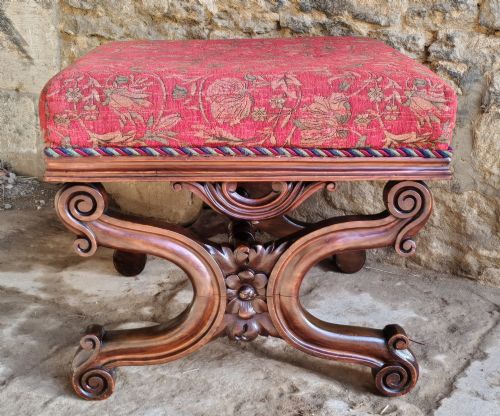
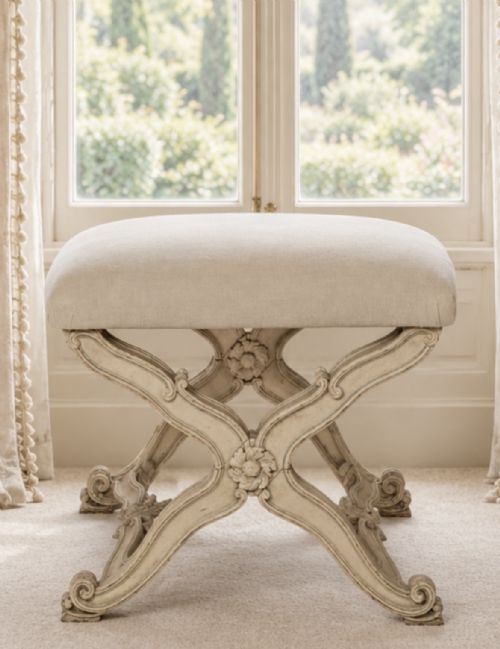
An antique cross frame stool offers a distinct architectural silhouette rooted in classical forms, drawing upon ancient Roman curule seats and later revival movements. These pieces appear across various nineteenth-century periods, including the Victorian era, the Regency, and the Empire style, each adapting the X-frame geometry for domestic comfort. Buyers encountering this selection will frequently find mahogany, walnut, and giltwood frames supporting diverse textile seats.
The physical form relies on two intersecting legs that create an X-shape from profile view, providing inherent structural stability while maintaining a light visual footprint. Makers utilised this enduring geometry for dressing stools, footstools, and occasional seating within grand chambers and modest dressing rooms alike. Surviving examples demonstrate how nineteenth-century cabinet makers reinterpreted neoclassical and French chateau aesthetics for contemporary homes.
Materials and construction
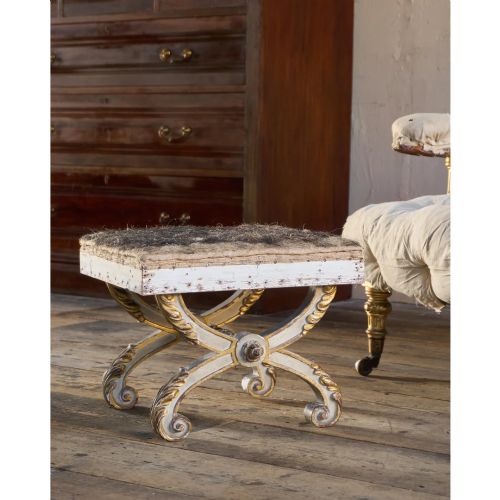
Cabinet makers constructed these frames from dense hardwoods such as mahogany, walnut, and oak, often employing carved ornamentation or applied gesso upon giltwood surfaces. The intersection of the cross frame required precise joinery to bear weight safely while preserving the clean lines characteristic of neoclassical and Regency designs. Selected timbers were turned, carved, or left with polished surfaces to highlight the natural grain of the wood.
Upholstery completed the piece, utilising traditional materials ranging from wool and linen to red damask and intricate glass beadwork. Needlework and beadwork seats reflect the domestic handcrafts popular during the Victorian period, fixed securely over padded foundations. Some variations incorporate cane seating surfaces supported by lighter structural frames like bamboo.
Victorian makers occasionally utilised glass beads by the thousand so that tired feet rested upon glittering landscapes of flora and fauna.
Assessing quality and execution
Quality in these pieces rests upon the precision of the frame joinery and the integrity of the carved or gilded ornament. Superior examples display crisp detailing in the wood carving or gesso work, where structural joints remain tight and balanced under the cross frame intersection. The choice of primary timber, from figured mahogany to fire-gilt surfaces, directly reflects the ambition of the original workshop.
The grade of the upholstery and the fidelity to historical revival styles further distinguish the execution. Pieces retaining period textiles, such as hand-worked beadwork or fine damask, demonstrate the original decorative context intended by the maker. Subtleties in the curvature of the X-frame and the harmony of the proportions separate standard production items from distinguished studio commissions.
Miles & Edwards
The Antique Cross Frame Stool Glossary
- Curule stool
- An ancient Roman magistrate's seat featuring crossing legs, which inspired later neoclassical and Empire revival seating forms. This ancient silhouette became a favourite motif for nineteenth-century designers seeking classical authority.
- Giltwood
- Timber coated with a thin layer of gold leaf over a prepared gesso ground. This luxurious finish defines many neoclassical and baroque revival pieces.
- Damask
- A reversible figured fabric woven on a loom, frequently utilised for traditional upholstery. Its patterned surface adds textural depth to antique seating.
- Beadwork
- Decorative work created by sewing small glass beads onto a fabric ground, common on Victorian footstools. This technique produced durable, highly coloured seats.
- X-frame
- A structural furniture form defined by two intersecting legs creating an X-shaped profile. It provides robust support while maintaining an open, airy appearance.
Antique Cross Frame Stool: Frequently Asked Questions
What is a cross frame stool?
A cross frame stool is a portable or fixed seat built with intersecting diagonal legs that form an X-shape from the side. This ancient architectural form provides sturdy weight-bearing capacity through geometric tension rather than traditional four-leg construction.
Such pieces gained renewed popularity during the nineteenth century through neoclassical, Regency, and Victorian revivals. They served primarily as dressing stools, footstools, or decorative occasional seats within domestic interiors.
Where were these stools used?
These stools typically functioned in bedrooms as dressing table seats or in drawing rooms as movable footstools and ottomans. Their compact footprint allowed them to be placed easily beside larger chairs or beneath tables when not in use.
More ornate giltwood or neoclassical examples were designed for formal reception rooms to display classical taste. Simpler mahogany and walnut versions suited private chambers and dressing rooms.
How do I date a Victorian X frame stool?
Dating relies on examining the secondary timbers, the style of the carving, and the nature of the upholstery foundation. Victorian examples often feature walnut or mahogany frames decorated with heavy turnings or characteristic nineteenth-century aesthetic movement details.
The presence of original textiles, such as Victorian beadwork or wool needlepoint, also points directly to the mid-to-late nineteenth century. Construction methods, including machine-sawn timber elements or hand-cut joints, help narrow the period further.
Are these stools comfortable for daily use?
Most antique cross frame stools provide firm support due to their rigid wooden frames and traditional horsehair or pad stuffing. They function very well as occasional seats or footrests rather than lounging chairs for extended periods.
The height of dressing stools is specifically proportioned for vanity tables, while footstools are lower and designed to support seated legs.