





Antique French Footstool
An antique french footstool brings low seating and rich upholstery into a room, spanning revival styles and sturdy nineteenth-century walnut frames.
Antique French Footstool
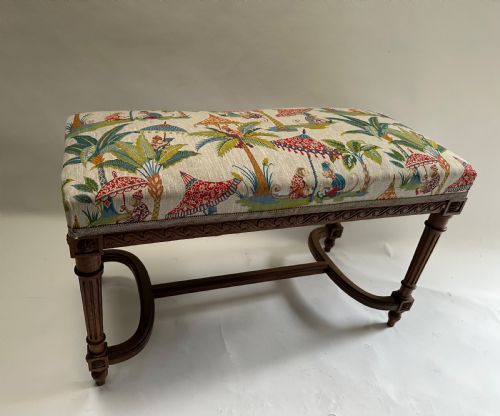
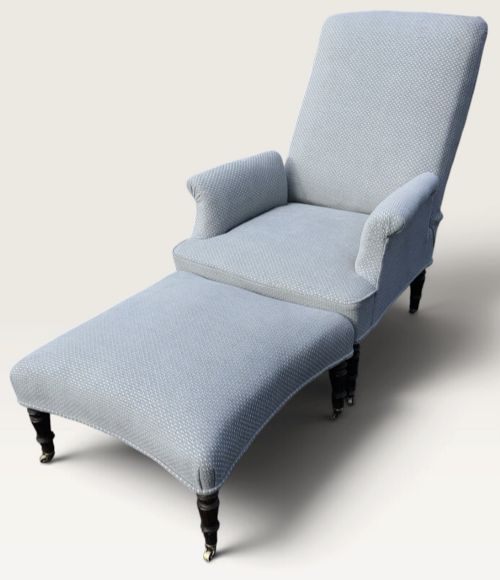
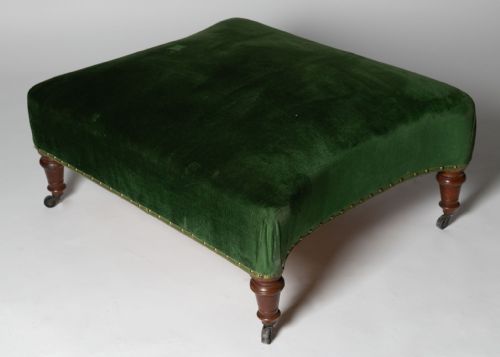
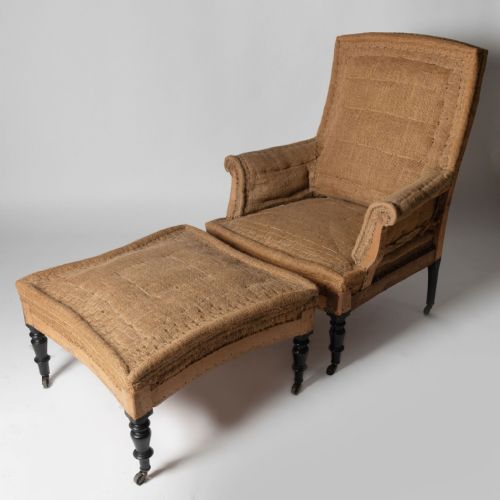
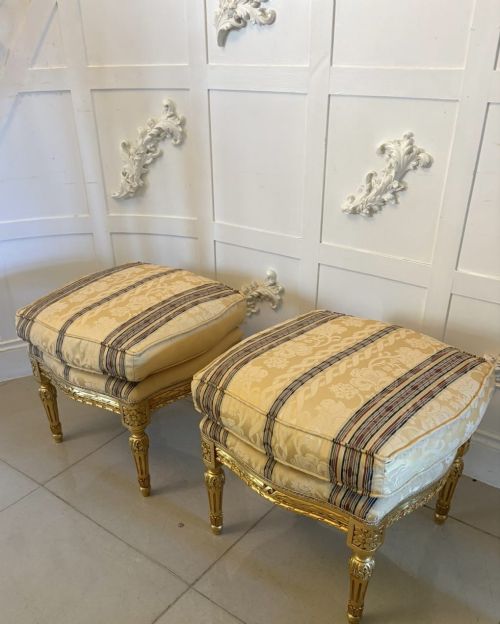
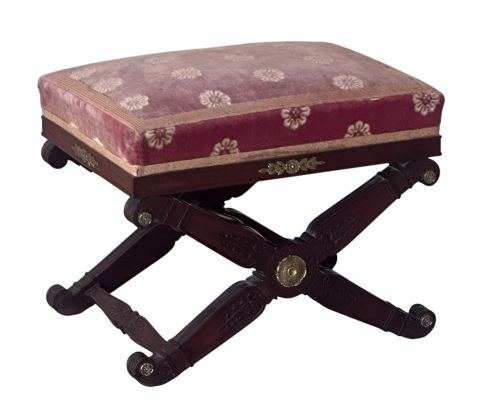
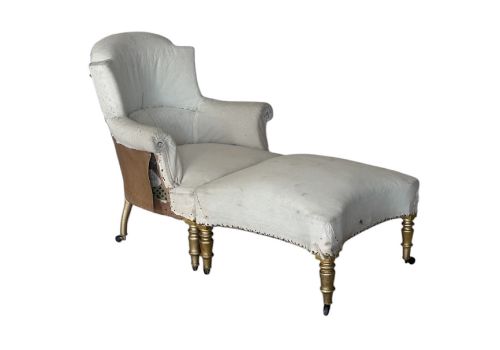
An antique french footstool takes many forms across the nineteenth and early twentieth centuries, appearing as low footstools, upholstered ottomans, and matching companions to armchairs and duchesse brisées. Buyers searching this phrase encounter pieces shaped by revival tastes, from Louis XV curves to heavier Victorian proportions.
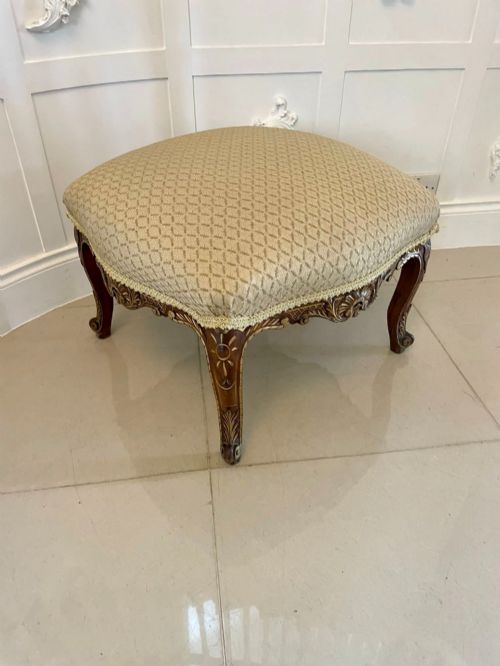
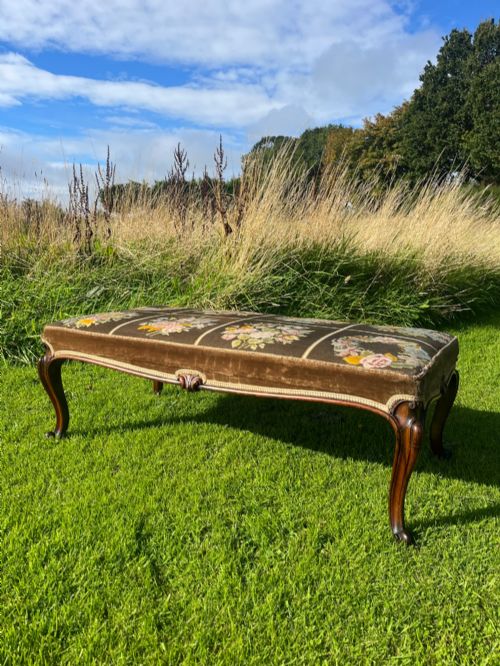
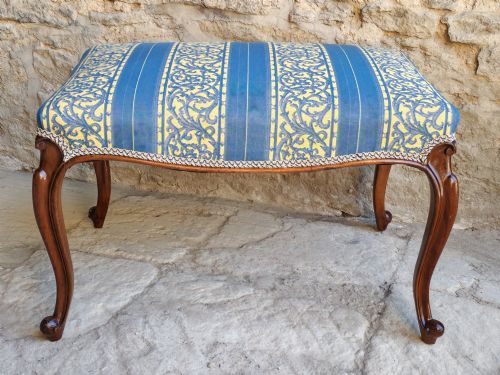
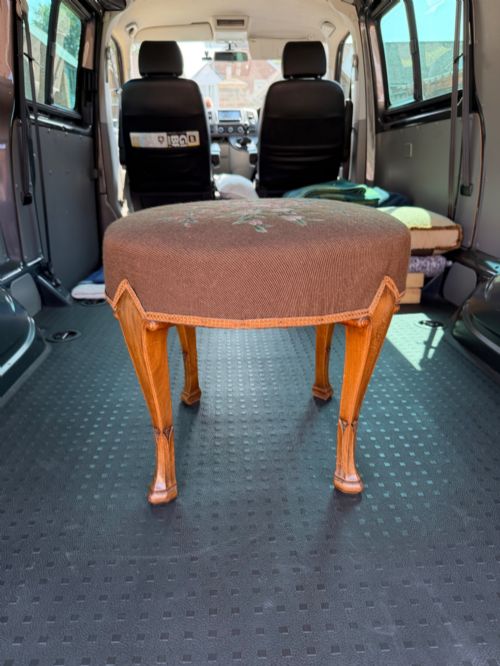
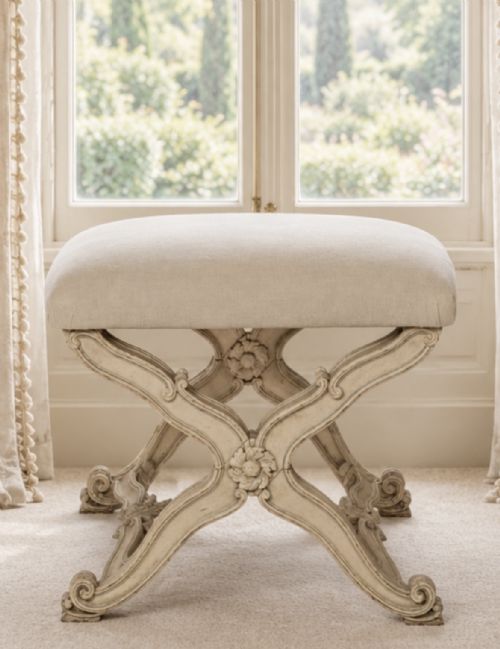
The most common versions met on this page are carved walnut or giltwood frames upholstered in fabric, velvet, or tapestry needlepoint. These range from simple rustic milking stools to grand salon pieces resting on cabriole legs or X-frames.
Many items survive from the eighteen-eighties and eighteen-nineties alongside earlier nineteenth-century examples and later interpretations into the nineteen-thirties. They function equally as low seats, dressing stools, and foot rests before larger armchairs.
Materials and construction
Makers shaped these frames from dense hardwoods like walnut, mahogany, and beech, alongside softer woods chosen for painted or gilded finishes. Giltwood and parcel gilt surfaces reflect the formal French taste, while simpler pieces utilise exposed timber or original paint.
Upholstery defines the upper portion, employing traditional textile coverings such as velvet, needlework, and tapestry. Brass tacks and buttoning frequently secure the fabric to the wooden foundation.
Antique French Footstool Retail Price Guide 2026
Typical asking prices for french footstool among the pieces listed under this phrase on Sellingantiques today, from the lower quarter to the upper quarter. They describe what is for sale here now, not the wider market.
Judging quality in these stools
The distinction between standard and superior pieces lies in the depth and crispness of the wood carving. Fine examples display deeply sculpted cabriole legs and clean floral motifs rather than flat or mechanical shaping.
Proportion and material weight also divide the range, with solid walnut and heavy giltwood frames offering greater substance than lighter painted alternatives. Original upholstery details and stamped maker marks elevate specific pieces above standard workshop production.
LOIDRAULT FRERES PARIS
The Antique French Footstool Glossary
- Cabriole leg
- A furniture leg that curves outward and tapers inward to a small foot, mimicking animal limbs. This form appears frequently on walnut and giltwood frames.
- Giltwood
- Wood that has been coated with gold leaf or a gold-coloured metallic finish. It defines many formal pieces styled after French court aesthetics.
- Duchesse brisée
- A chaise longue split into two or three parts, typically comprising an armchair and a matching footstool or ottoman. They are often upholstered in matching fabric.
- Needlepoint
- A type of canvas work embroidery used for seat covers and upholstery. It provides durable and decorative patterning on nineteenth-century pieces.
- X-frame
- A structural base formed by two intersecting diagonal members supporting the seat. This form references earlier classical and Renaissance seating designs.
Antique French Footstool: Frequently Asked Questions
How do I use an antique french footstool today?
These low seats function well as traditional foot rests before armchairs or as standalone occasional seats in a bedroom or dressing room. Their compact size allows them to fit easily into smaller spaces.
Many buyers also utilise them as low display surfaces or decorative accents next to larger period furniture.
What is the difference between a footstool and an ottoman?
Footstools generally measure smaller and sit lower to the ground, designed specifically to support feet while seated. Ottomans often provide larger upholstered surfaces that can double as extra seating.
Both forms appear frequently in matching sets alongside larger armchairs and chaise longues.
How do I date an antique french footstool?
Dating relies on observing the interplay of timber, carving style, and upholstery methods. Pieces from the mid nineteenth century often feature heavy walnut and bold revival carving, while later examples incorporate ebonised finishes or simpler painted surfaces.
Makers' stamps and structural joinery also offer clear clues to a piece's exact decade of origin.
Are these stools suitable for everyday seating?
Solid hardwood frames in walnut and mahogany provide strong structural foundations for daily use. However, older upholstery may require reinforcement or complete re-webbing to support regular sitting.
Many pieces survive in sturdy condition, ready for modern domestic environments.