
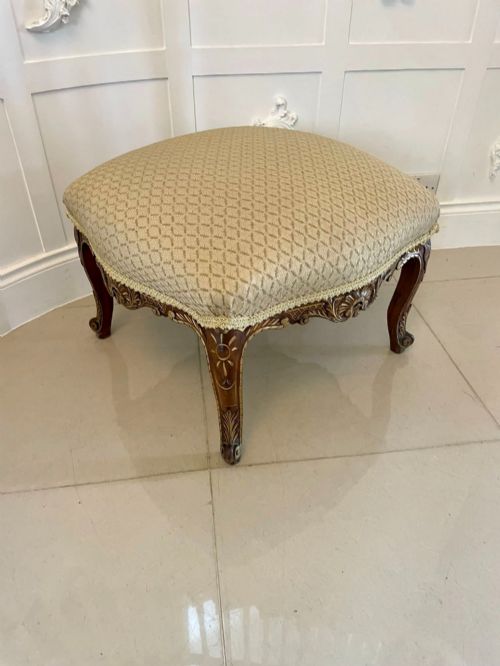
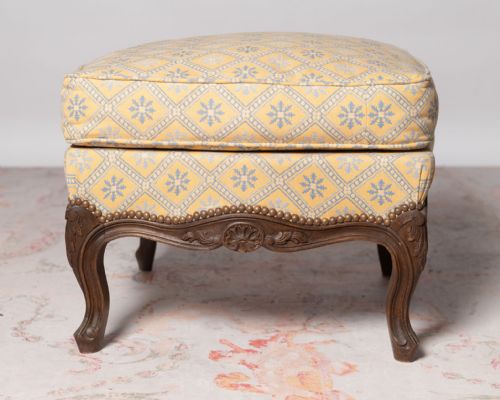
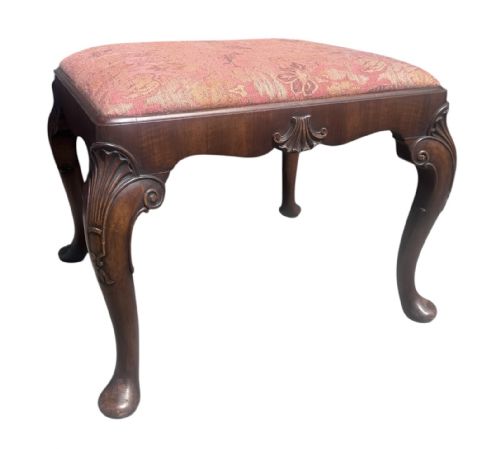


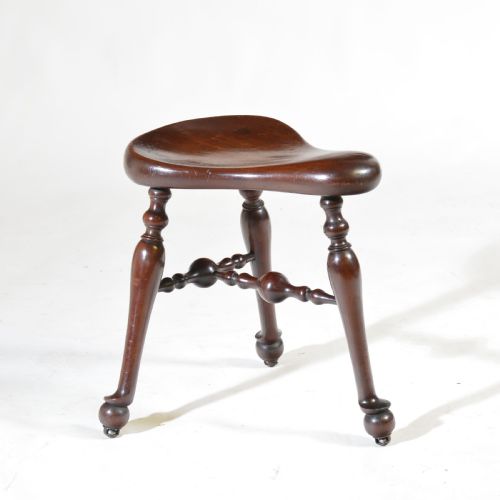


Carved Walnut Accent Stool
A carved walnut accent stool brings warmth and rich timber grain to an interior while offering a practical extra seat.
Carved Walnut Accent Stool
A carved walnut accent stool is a compact seating piece defined by figured timber and carved ornamentation. These items range from mid nineteenth century examples to early twentieth century productions.
The selections encountered here span Victorian pieces and revival styles such as Georgian style, French Rococo revival, and Renaissance revival. Forms include dressing table stools, window seats, and X framed supports.
Makers and workshops utilised sturdy walnut framing alongside various textile coverings, brass details, and leather. Buyers typically find these items serving as functional footstools or decorative occasional seats.
How they were made
Cabinetmakers worked with solid walnut timber, shaping frames through hand carving and turning techniques. Structural elements often incorporated twisted rope legs, X shaped supports, or carved animal heads.
Upholstered sections relied on traditional stuffing and textile coverings, ranging from newly applied fabric to older textiles. Gilding and brass components were occasionally added to highlight specific carved details on the timber.
Listings feature walnut frames paired with textiles, brass, leather, and giltwood across Victorian and revival styles.
What varies in quality
Quality in a carved walnut accent stool rests upon the crispness of the timber carving and the structural integrity of the frame. Superior examples display deep, deliberate chisel work rather than soft or shallow detailing.
The choice of walnut timber grain and the joinery execution distinguish standard production items from finer workshop pieces. Original upholstery treatments and well preserved frame finishes elevate the overall character of the piece.
James Shoolbred
The Carved Walnut Accent Stool Glossary
- Walnut
- A dense, dark hardwood prized for its rich grain patterns and durability in antique furniture making. It accepts fine carving exceptionally well.
- X Frame
- A structural design utilising intersecting curved or straight timber members shaped like the letter X for support. This form provides both stability and decorative presence.
- Prie-Dieu
- A low devotional chair featuring a high back and a narrow kneeling shelf, often constructed in walnut during the Victorian era. These pieces served domestic prayer practices.
- Aesthetic Movement
- A late nineteenth century design style emphasising visual beauty and artistic expression over heavy historicism. Pieces from this movement often feature refined lines.
- Giltwood
- Timber that has been coated with a thin layer of gold leaf or metallic paint to create a lustrous surface finish. It highlights specific decorative mouldings.
Carved Walnut Accent Stool: Frequently Asked Questions
What is an accent stool?
An accent stool is a small, moveable seating piece designed to complement a room's primary furniture while offering a functional perch. These items provide flexible seating solutions for dressing areas or living spaces.
Historical examples frequently feature decorative carved walnut frames and upholstered tops that match various nineteenth century interior schemes.
How do I date a walnut stool?
Dating relies on examining the timber preparation, joinery methods, and stylistic revival markers present in the construction. Victorian pieces often display characteristic carving motifs and specific leg turning.
Comparing the upholstery substrate and secondary timbers helps narrow down whether a piece originates from the mid nineteenth century or later periods.
Where should I place a window stool?
A window stool fits naturally beneath low window sills, at the foot of a bed, or in a hallway as a convenient resting place. Their compact footprint allows them to occupy narrow spaces without crowding a room.
The decorative carved walnut frame ensures the piece remains visually engaging from multiple angles.
Are these stools comfortable for daily use?
Most of these pieces were constructed as supportive perches for dressing tables or brief seating rather than deep lounging. The firmness depends on the traditional upholstery stuffing used within the seat.
Many examples feature newly applied covers that make them ready for regular domestic placement.