




Mahogany Bench on Castors
These mahogany bench on castors pieces bring solid timber frames and easy mobility together for flexible seating.
Mahogany Bench on Castors
A mahogany bench on castors combines rich timber frames with useful mobility, offering a practical seating option for period interiors. Buyers exploring this category encounter various long forms, from low footstools and dressing stools to window seats and larger ottomans.
Most examples hail from the nineteenth century, including Victorian, Regency, and William IV eras, alongside earlier George III pieces. These seating items served practical purposes in country houses and town homes alike, adapting easily from bedrooms to drawing rooms.
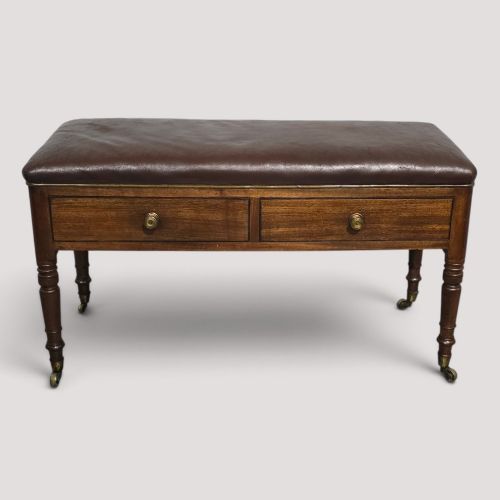
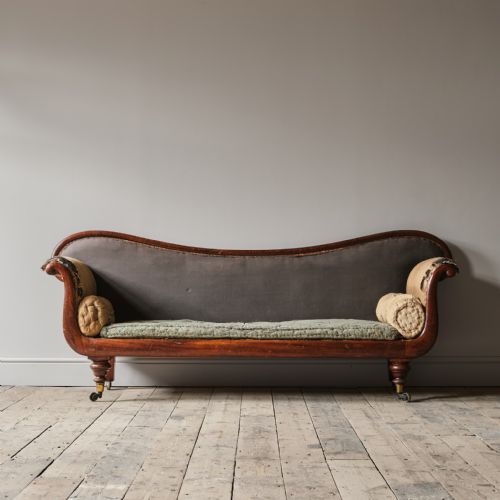
The assortment on this page spans distinct seating types rather than a single uniform form, incorporating cane-seated stools, deep buttoned footstools, and chaise longues. Such variety reflects how makers adapted the core timber frame and castor combination to diverse domestic functions over successive decades.
Materials and construction
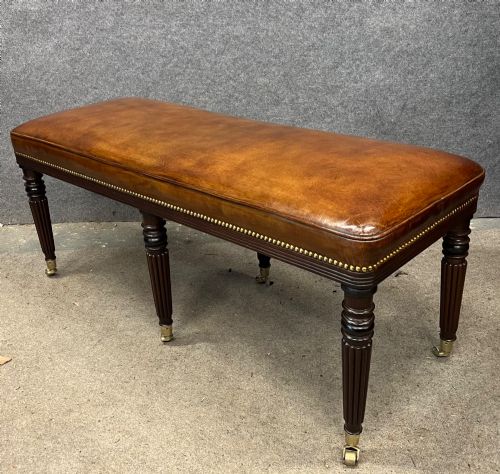
Makers built these pieces primarily from solid mahogany, utilising its durability and deep reddish-brown grain for structural stability. Turned or cabriole legs carry heavy brass castors, allowing substantial pieces of furniture to glide across carpets and floorboards without heavy lifting.
Upholstery varied widely according to period and taste, featuring fabrics such as damask, calico, velvet, and standard upholstery fabric. Alternatively, some larger stools employed woven cane for seat panels, providing a lighter texture atop the heavy mahogany frames.
Object forms on this page include sofas, chaise longues, ottomans, window seats, and both small dressing stools and large footstools.
Assessing quality in mahogany bench on castors
Quality reveals itself in the crispness of timber turnings and the joinery hidden beneath the upholstery webbing. Superior pieces display substantial mahogany scantlings shaped with care, ensuring the frame remains rigid and dependable under heavy use.
The integration of brass castors matters significantly, as original hardware moves more smoothly and complements the scale of the legs. Finer examples also exhibit careful attention to traditional upholstery techniques, such as deep buttoning and firm edge-stitched stuffing.
The Mahogany Bench on Castors Glossary
- Mahogany
- A durable tropical hardwood prized for its rich grain and deep colour. It served as the primary timber for high-quality furniture frames throughout the eighteenth and nineteenth centuries.
- Castor
- A small wheel mounted on a swivel attached to the base of a furniture leg. It allowed heavy seating to be repositioned easily across a room.
- Window seat
- A long, narrow bench designed specifically to fit the recess of a window. These pieces often feature upholstered tops and short legs.
- Chaise longue
- An upholstered sofa shaped with an asymmetric backrest for reclining. Examples often incorporate mahogany show-wood frames and scrolled ends.
- Buttoning
- An upholstery technique where twine is pulled through the padding to secure buttons in a geometric pattern. This creates deep tufting that holds the filling firmly in place.
Mahogany Bench on Castors: Frequently Asked Questions
Where were these benches placed in a home?
These pieces served multiple rooms, functioning as dressing stools in bedrooms, extra seating in drawing rooms, or long window seats in corridors.
Their mobility on castors meant staff could shift them easily to accommodate guests or clear floor space when required.
How do I distinguish a Regency piece from a Victorian one?
Regency items typically display leaner classical proportions, sometimes drawing inspiration from ancient Greek or Roman designs with restrained decorative carving.
Victorian examples often present heavier, more robust proportions, occasionally featuring elaborate deep buttoning or curved cabriole legs.
Are the castors on these benches original?
Many pieces retain their original brass or brass-and-ceramic castors, though replacements are common due to centuries of wear.
Original castors match the age of the timber frame and show consistent patination suited to the period of manufacture.
Can these benches support daily seating use?
Solid mahogany frames provide immense structural strength, making these historic pieces remarkably robust for everyday seating.
Modern buyers frequently use them as footstools, coffee table alternatives, or hallway benches without issue.