




Victorian Velvet Ottoman
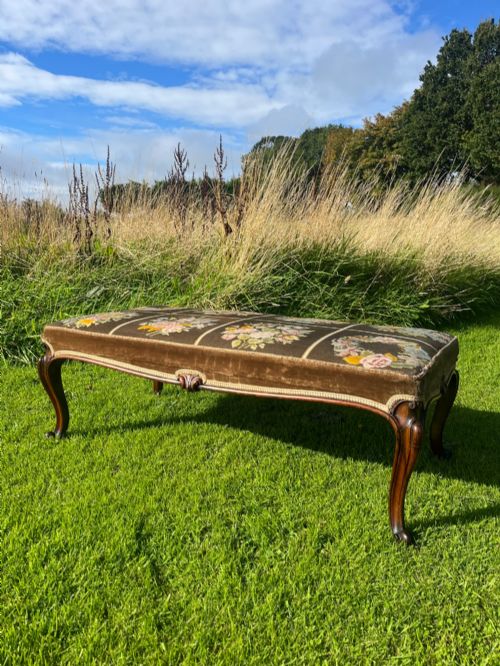
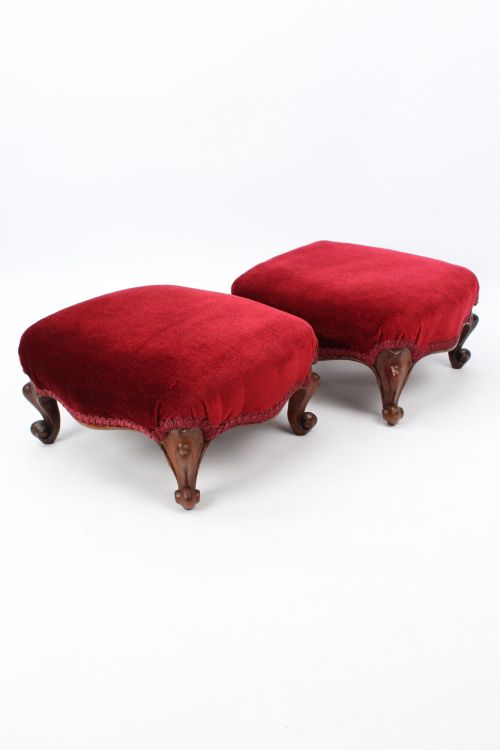
A victorian velvet ottoman brings deep nineteenth-century textile texture and sturdy timber frames into a room as practical seating.
Victorian Velvet Ottoman
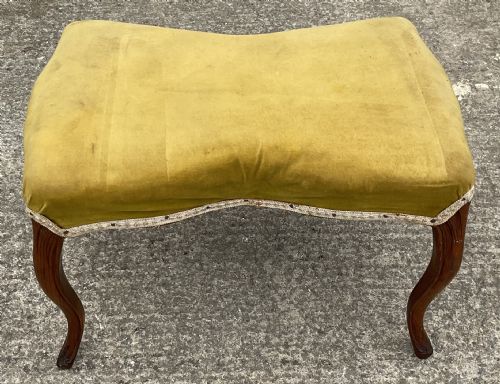
When you search for a victorian velvet ottoman, you encounter low upholstered seating designed for drawing rooms, boudoirs, and grand halls. These pieces appear primarily as footstools, centre stools, and storage ottomans built during the nineteenth century, running from the Regency period through to the late Victorian era.
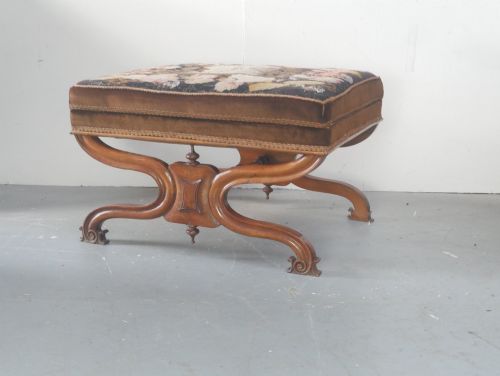
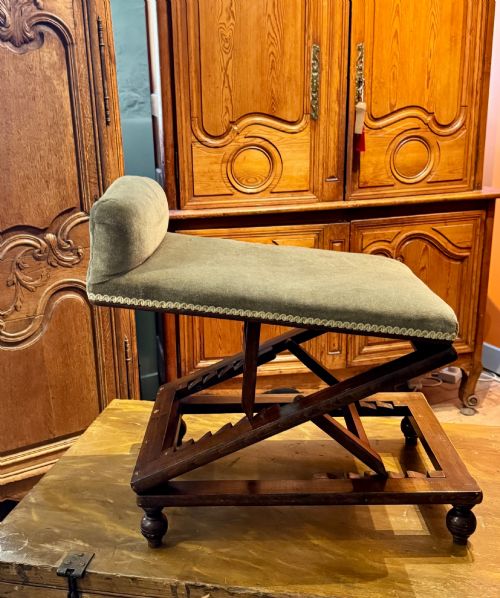
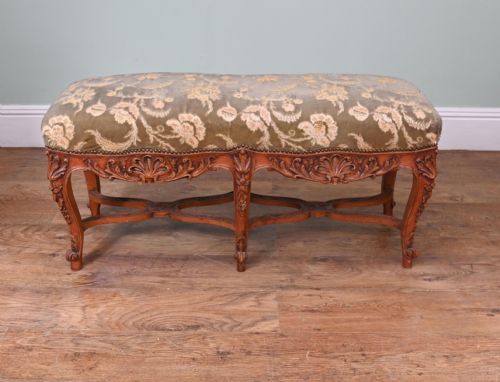
The versions most common in trade are walnut or mahogany framed footstools and larger salon stools upholstered in plush textiles. You also meet specialised forms such as adjustable gout stools, X-framed rosewood benches, and substantial storage boxes covered in velvet or needlepoint tapestry.
Makers and workshops of the period drew upon diverse stylistic influences, ranging from straightforward Victorian revival forms to Gothic oak, French Provincial, and Scottish Baronial designs. The timber framework matches the upholstery, creating low foundational furniture intended for relaxation and display.
How they were made
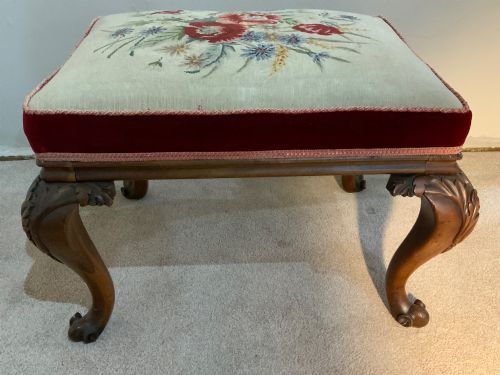
Cabinetmakers constructed the structural frames of these pieces using dense hardwoods such as walnut, mahogany, rosewood, and beech. These timbers were frequently carved with cabriole legs, scrollwork, or geometric mouldings depending on whether the piece followed a Rococo Revival or Gothic style.
Upholsterers layered traditional stuffing materials beneath outer coverings of velvet, fabric, or needlepoint tapestry, occasionally utilising brass elements for adjustable mechanisms. Buttoning and textile borders were secured directly to the wooden rails to withstand regular daily use.
Period forms span the early nineteenth-century Regency era through the height of Victorian production in eighteen ninety.
What varies in quality
The distinction between ordinary production and superior work lies in the depth of timber carving and the architectural ambition of the frame. Pieces featuring heavy rosewood, intricate Scottish Baronial scale, or complex X-frame construction stand apart from simple stained-beech utilities.
Upholstery execution also dictates standard, where hand-stitched buttoning and substantial hardwood foundations outlast lighter pine or secondary woods. The harmony between the original timber frame and its textile covering determines the overall integrity of the piece.
Hallett & Sons·A.M.E. Fournier·Awn Pugin
The Victorian Velvet Ottoman Glossary
- Centre stool
- A large freestanding seat designed to sit in the middle of a room rather than against a wall. These pieces finished on all sides so they look correct from any angle in a salon.
- Gout stool
- An adjustable footstool engineered with a pivoting mechanism to elevate and support the foot or leg. Nineteenth-century examples often combine beechwood frames with mechanical brass adjusters.
- X-frame
- A structural base formed by intersecting diagonal timbers that cross to support the seat. This ancient form gained popularity during the nineteenth century in rosewood and mahogany.
- Needlepoint
- Hand-stitched textile work executed on canvas mesh using wool or silk threads. Antique ottomans frequently retain dense floral or geometric needlepoint covers.
- Buttoned seat
- An upholstery method where depressions are formed across the cushion by stitching through the stuffing to pull buttons deep into the fabric. This secures the internal filling and creates a quilted surface.
Victorian Velvet Ottoman: Frequently Asked Questions
What is a victorian velvet ottoman used for?
These pieces serve primarily as low seating, dressing stools, or footrests positioned before armchairs and sofas in reception rooms. Larger variants with hinged lids also functioned as storage boxes for textiles or personal items.
Their sturdy timber frames and upholstered tops allow them to double as occasional seats when entertaining guests in compact or expansive interiors.
How do I date a velvet ottoman?
Dating relies on identifying the underlying timber species, leg profiles, and structural characteristics associated with specific nineteenth-century decades. Regency and early Victorian pieces often feature rosewood or mahogany with heavy turning, while later Victorian examples frequently employ walnut and cabriole legs.
Stylistic cues such as Gothic revival tracery or French Rococo revival carving help narrow the decade of manufacture between eighteen hundred and eighteen ninety.
Where should I place a centre stool?
A centre stool belongs in an open floor plan where it can be viewed from every side as a freestanding object. Placing one in the middle of a large drawing room or library breaks up large expanses of flooring.
Because these pieces are finished uniformly around the perimeter, they function well away from walls without disrupting room circulation.
How do I care for antique velvet?
Antique velvet requires gentle brushing with the grain to maintain the nap and prevent flattening over time. Keep these textiles away from direct sunlight to preserve the original dye colours.
Professional textile cleaning is recommended for antique upholstery to avoid damaging the historical stuffing and timber framing beneath.