
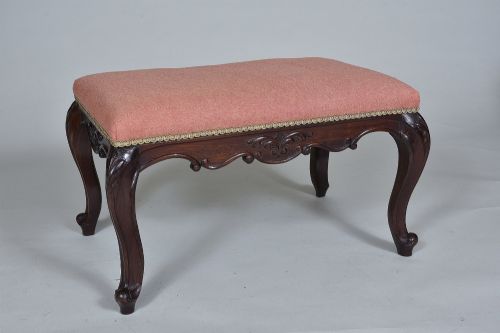
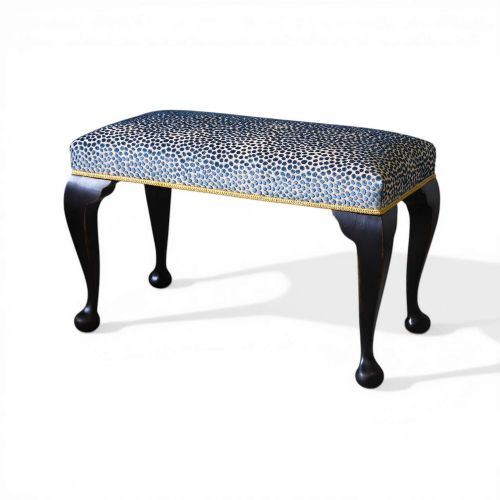
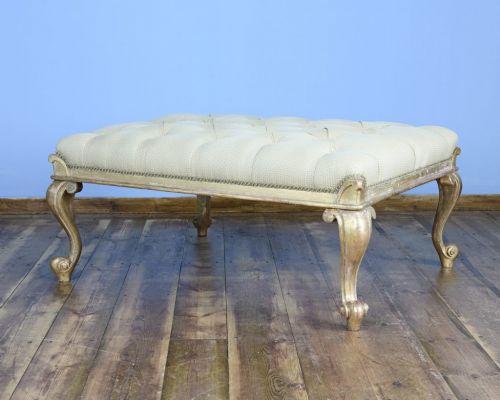

Low Upholstered Bench
A low upholstered bench brings practical seating and period charm to a room, offering versatility from dressing rooms to grand drawing rooms.
What these low upholstered benches are
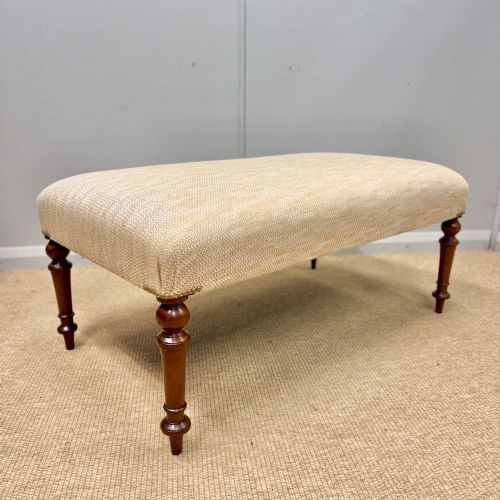
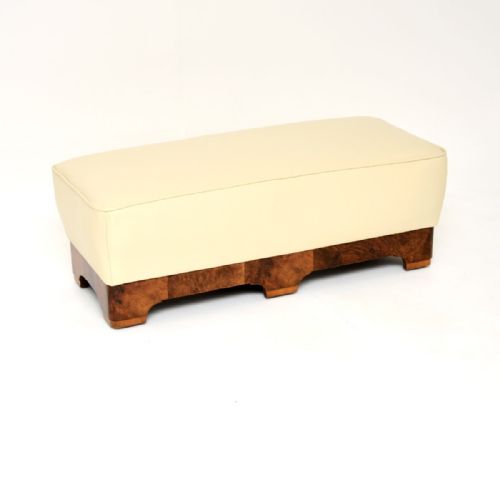
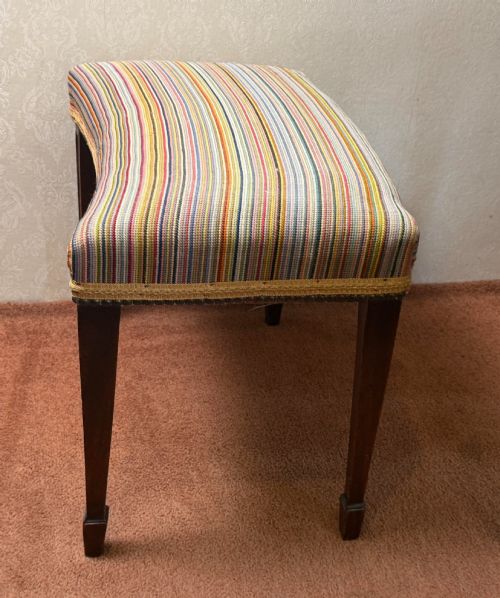
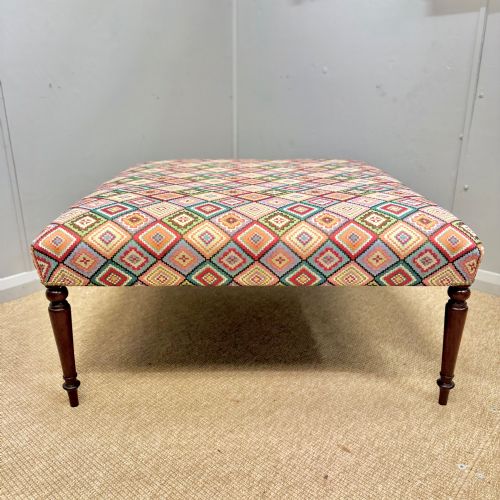
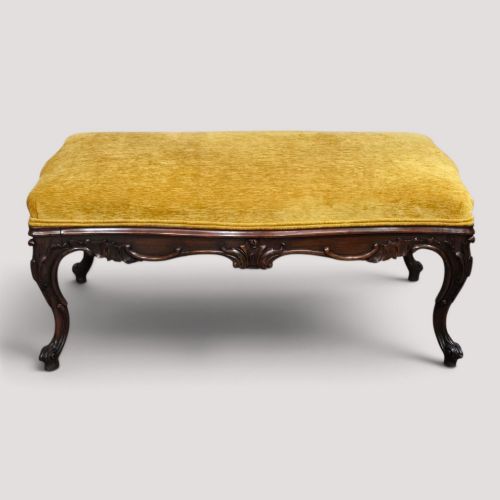
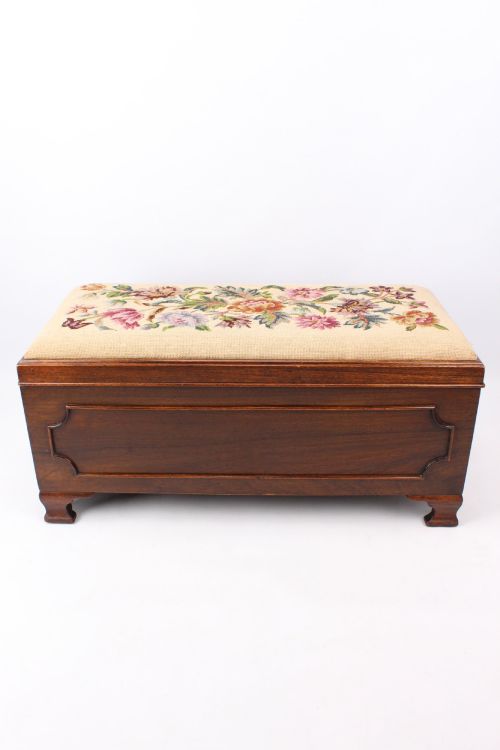
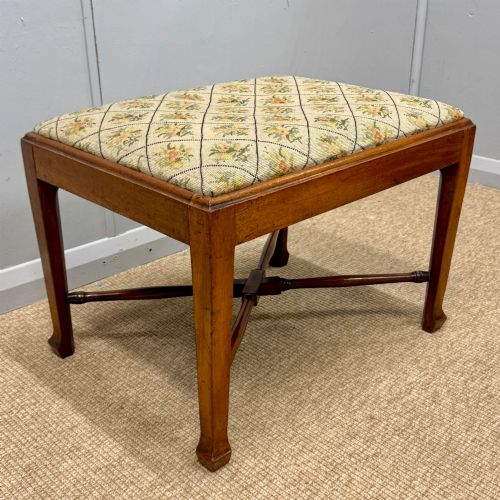
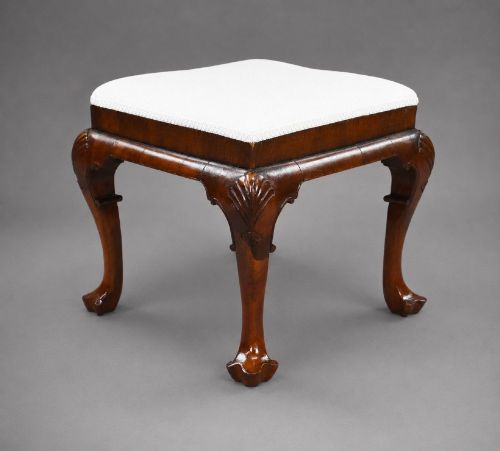
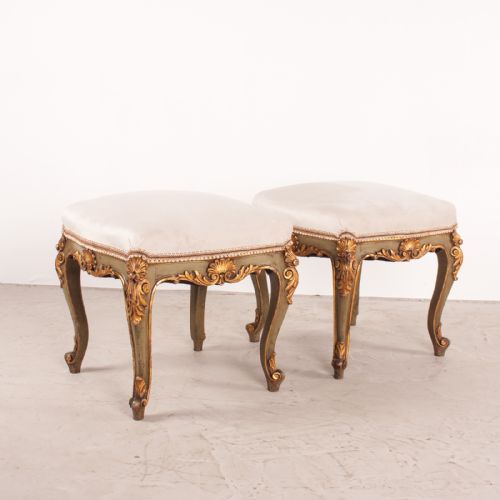
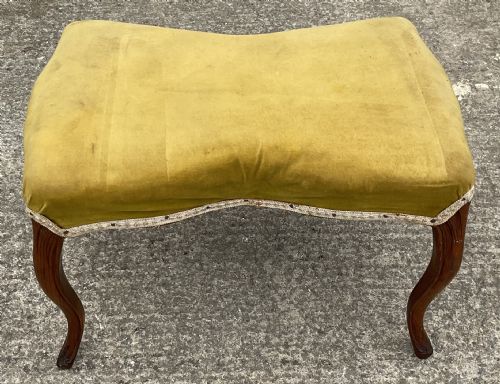
A low upholstered bench bridges the gap between functional footstools and compact seating, appearing across the Georgian, Victorian and Edwardian periods. Pieces range from grand scale parcel gilt foot stools to large country house ottomans and dressing stools.
Materials and construction
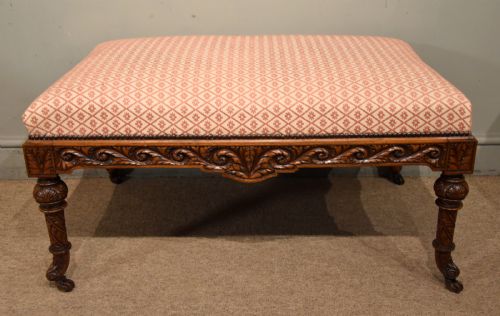
Maker construction relies on traditional timber framing using mahogany, rosewood, ebonised wood and general wood, frequently paired with decorative brass accents or castors. Frames support padded elements finished in fabric, upholstery fabric and secured with braid.
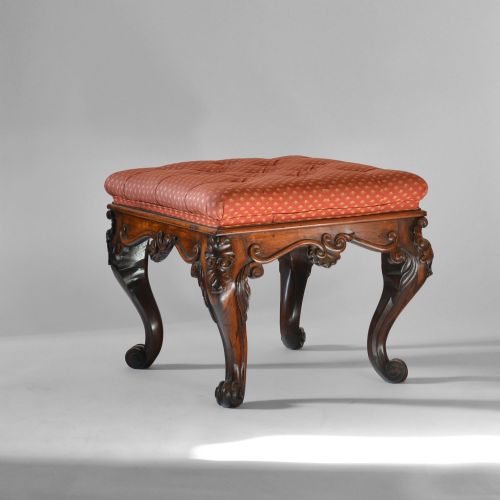
Surface detailing involves parcel gilding and ebonisation to enhance the timber structures. Structural integrity is provided by solid legs, including turned and cabriole forms beneath the padded tops.
Retail Price Guide 2026
Typical UK retail prices for low upholstered bench, calculated from the Sellingantiques database of over a million retail prices indexed since 2003. This retail price guide relies exclusively on Sellingantiques data; no external sources or auction records are used, so the figures do not describe the wider market.
Current listings span the Victorian, Edwardian, and Georgian periods, utilising mahogany, rosewood, and ebonised wood.
Judging quality
Quality rests on the sophistication of the timber work and the ambition of the style, moving from simple turned supports to intricate Chippendale revival or Victorian Rococo revival carving. The presence of grand scale proportions and specialist finishes like parcel gilding elevate a piece.
Detailing in the upholstery finish, such as deep buttoning and quality braid trim, distinguishes standard workshop output from finer examples. The selection of dense woods like mahogany and rosewood further separates baseline items from superior pieces.
The Low Upholstered Bench Glossary
- Cabriole leg
- A furniture leg that curves out and then in, resembling the leg of an animal. This style appears frequently on Victorian examples.
- Parcel gilt
- Partially covered with gold leaf or gold paint to highlight carved details. It adds a layer of decorative contrast to timber frames.
- Ebonised wood
- Timber treated to resemble ebony through staining or painting. This dark finish was popular during the Victorian and Edwardian eras.
- Ottoman
- A low upholstered seat or bench without arms or a back. Large country house versions provide substantial resting space.
- Deep buttoning
- An upholstery technique where stitches pull the fabric tight into the padding to form geometric indentations. This secures the filling and creates a textured surface.
Frequently Asked Questions
Where should I put a low upholstered bench?
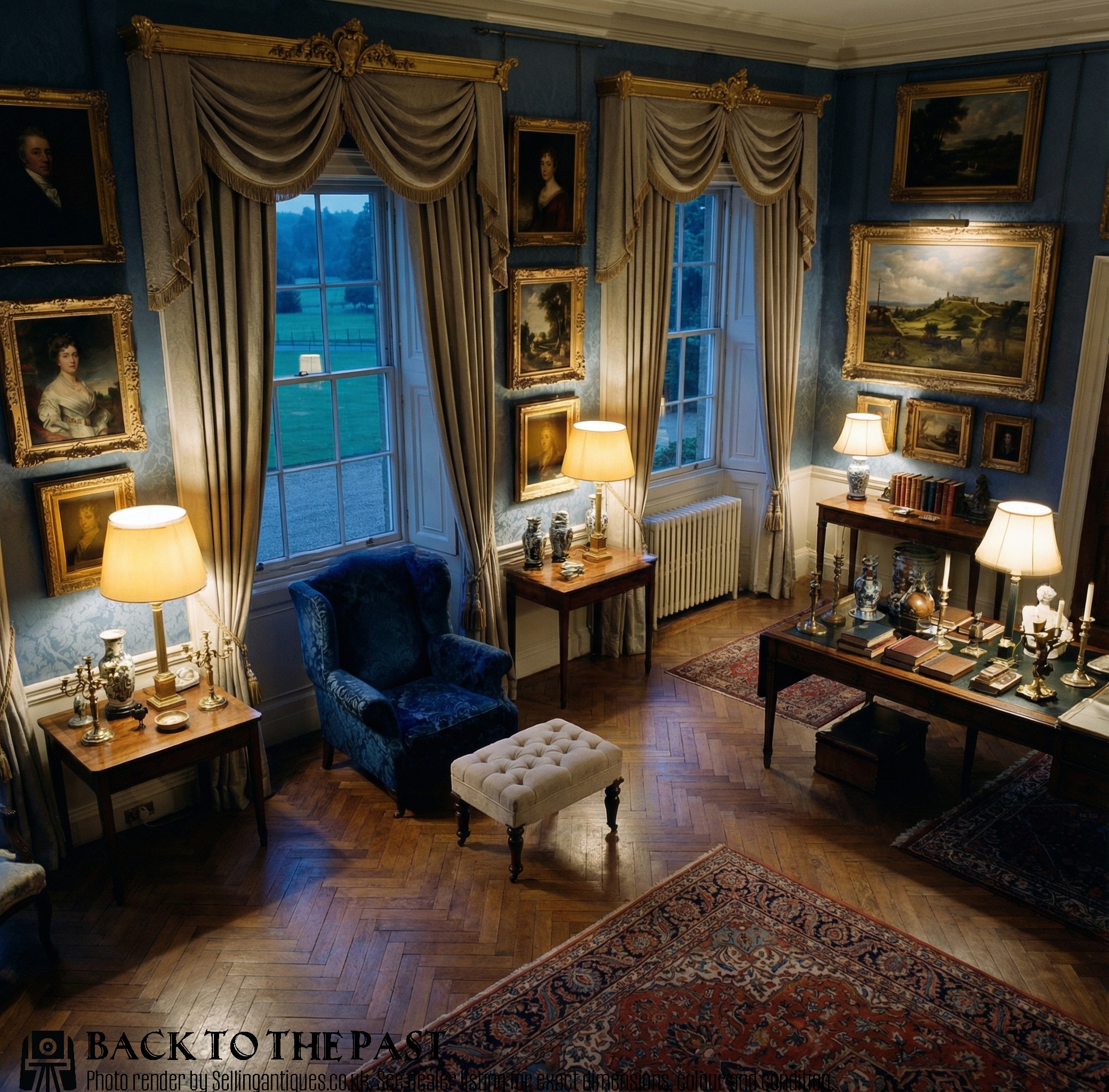
These pieces fit easily at the end of a bed, beneath a window, or beside a fireplace where extra seating is useful without blocking views.
Their compact height also suits dressing tables and hallways as quick resting spots.
How do I date a Victorian stool?
Look to the timber, leg style and upholstery method to help narrow the decade. Victorian pieces frequently utilise mahogany, walnut or ebonised wood alongside turned or cabriole legs.
Deep buttoning and castors also point firmly towards nineteenth-century workshop practices.
Can these benches be used as footstools?
Many examples on offer function equally well as large footstools or ottomans alongside armchairs and sofas. Their low profile makes them comfortable for resting feet.
Grand scale pieces provide a wide surface area for this dual purpose.
What is an ebonised finish?
Ebonisation is a chemical or surface treatment that dyes open-grained wood black to imitate expensive ebony. It became fashionable in furniture during the Victorian period.
This dark finish contrasts sharply with colourful or patterned upholstery fabrics.