
Edwardian Footstool
An edwardian footstool brings a touch of domestic comfort and period charm to any room, offering versatile seating or a place to rest tired feet.
Edwardian Footstool
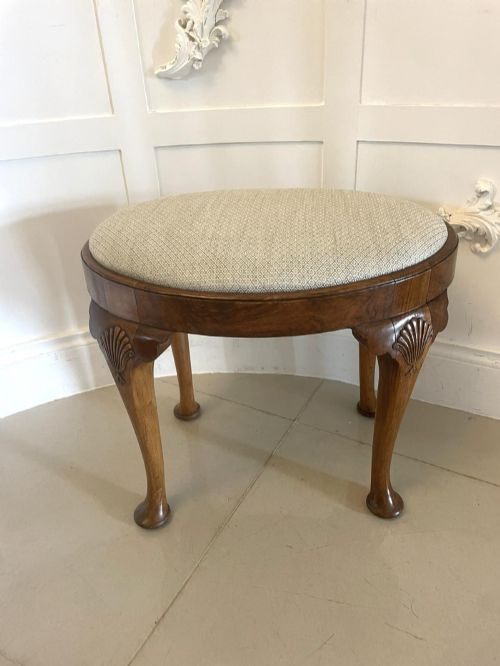
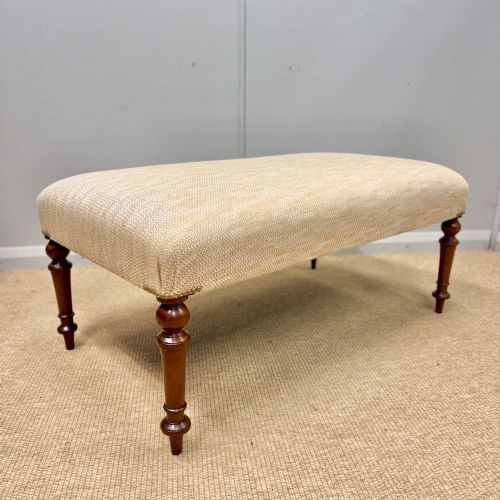
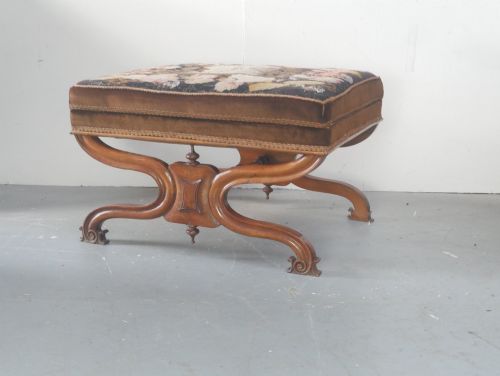
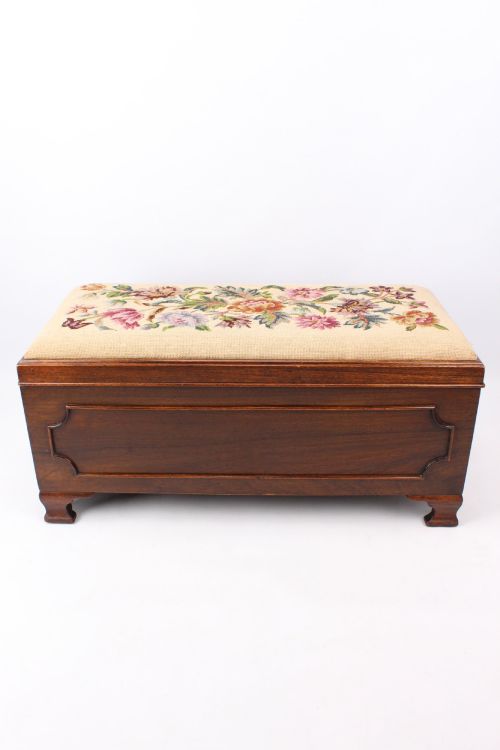
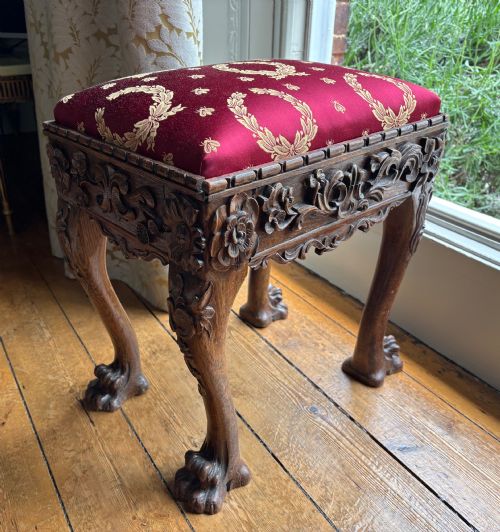
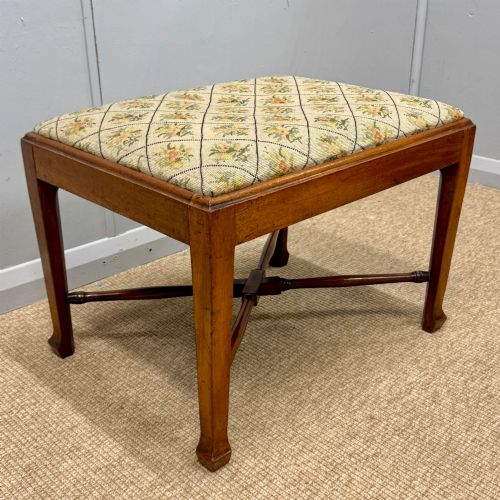
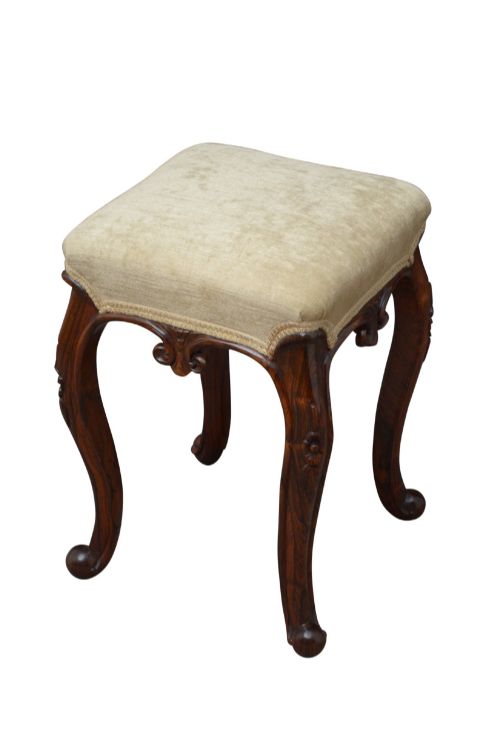
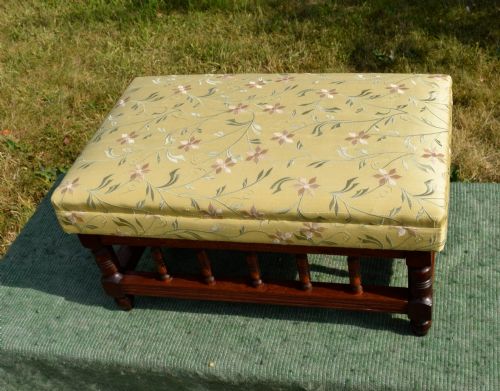
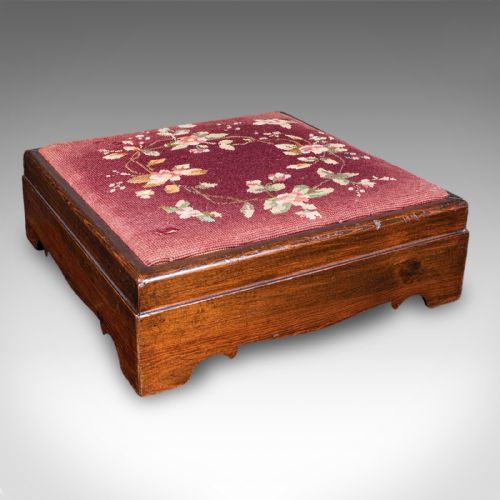
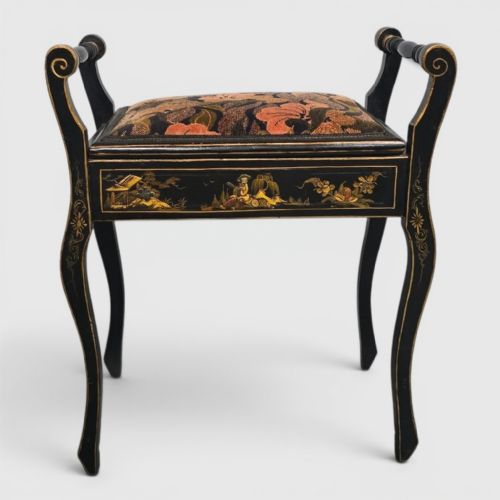
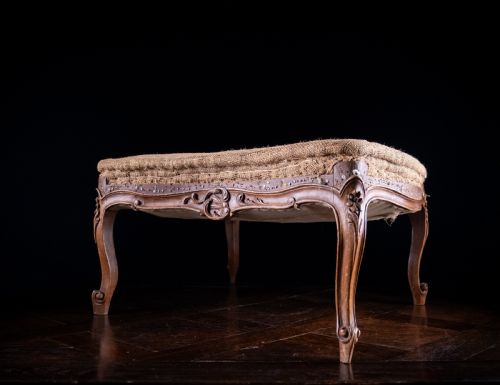
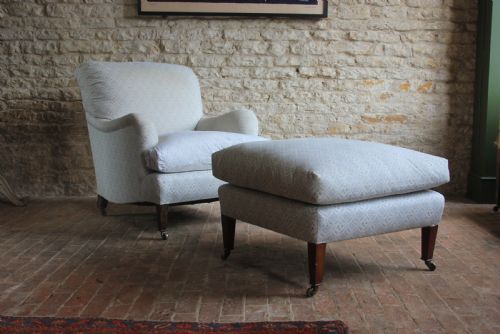
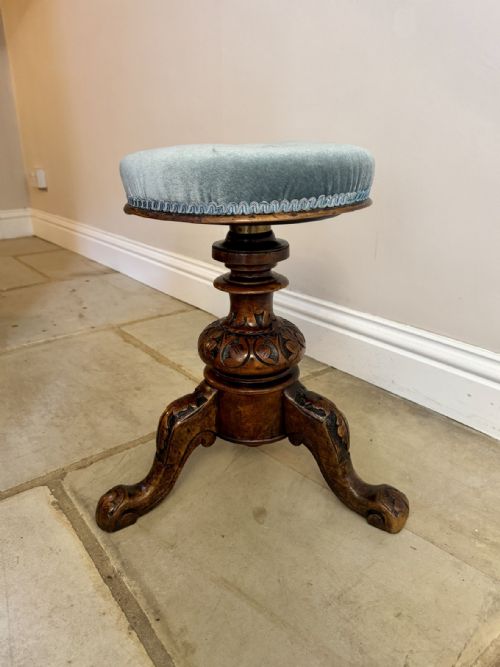
An edwardian footstool is a low seating piece designed for comfort, frequently appearing alongside armchairs, by firesides, or in dressing rooms. The listings show forms ranging from compact square and oblong stools to long ottomans and specialised piano stools.
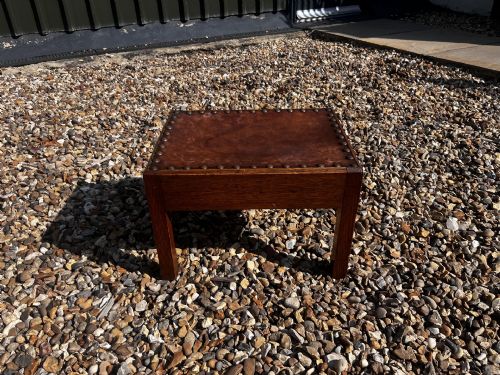
The materials and styles span Edwardian design alongside Victorian, Arts and Crafts, and revival influences, reflecting the domestic habits of the period. Walnut, mahogany, oak, and beech form the structural frames, often paired with needlework, leather, wool, or textile upholstery.
Materials and construction
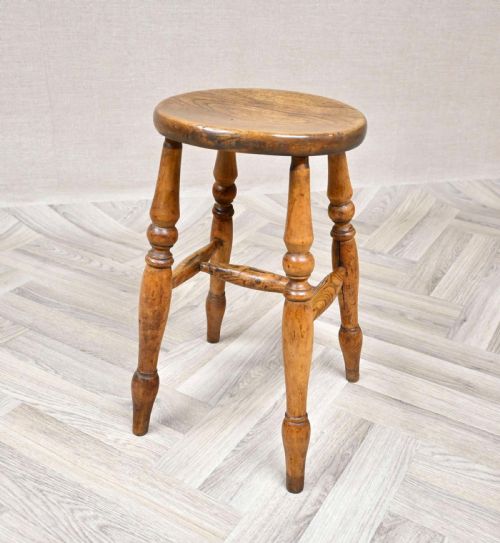
Makers utilised timber frames of mahogany, walnut, oak, and pitch pine, frequently joining components with traditional pegged construction or sturdy turned legs. Brass castors and carved details appear on finer examples to ease movement across carpets.
Upholstery methods involved textiles such as needlework, tapestry, damask, and hand-dyed leather stretched over padded seats. Many surviving pieces retain either original needlework or modern replacement covers.
Edwardian Footstool Retail Price Guide 2026
Typical asking prices for edwardian footstool among the pieces listed under this phrase on Sellingantiques today, from the lower quarter to the upper quarter. They describe what is for sale here now, not the wider market.
Some stools hide mechanical ingenuity beneath their plush upholstery, ready to prop up a weary foot or transform into an ottoman.
Judgements of quality
Quality rests in the timber selection, the crispness of any hand-carved ornamentation, and the structural integrity of the frame joints. Dense hardwoods like walnut and mahogany command greater respect than softer pines or common beech.
The choice and execution of upholstery elevate certain pieces, particularly where hand-stitched needlework, kilim, or quality leather remains intact. Proportion and the integration of functional elements such as brass castors or turned stretchers distinguish finer workshop output.
Arthur Simpson Of Kendal·Howard & sons
The Edwardian Footstool Glossary
- Cabriole leg
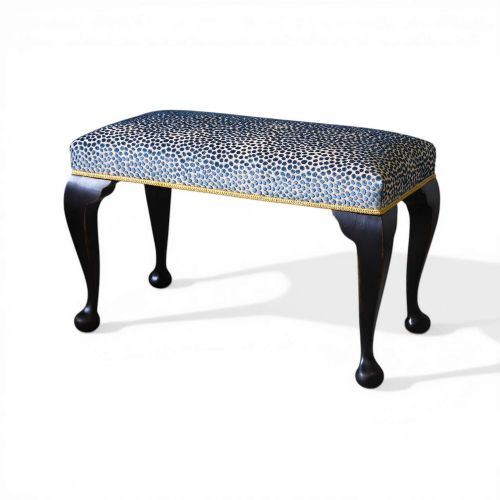
- A furniture leg that curves outward at the knee and tapers inward toward the foot, often ending in a pad or scroll. This shape draws inspiration from traditional animal forms.
- Cross stretcher
- Wooden bars connecting the legs horizontally near the floor to reinforce the frame. They add structural stability and visual weight to the underframe.
- Chinoiserie
- European decorative style reflecting Chinese artistic motifs, often rendered in black lacquer with gilt decoration. It appears on piano stools and low decorative seating.
- Metamorphic
- Furniture designed to transform into another functional object through hinges, ratchets, or pivoting mechanisms. Gout stools and adjustable piano stools frequently use this engineering.
Edwardian Footstool: Frequently Asked Questions
Where were footstools used in Edwardian homes?
These pieces sat predominantly in drawing rooms, parlours, and bedrooms, placed close to armchairs or dressing tables. They provided practical comfort for tired feet or served as extra seats when rooms filled with guests.
Their modest scale allowed servants or residents to move them easily around the house as daily routines shifted.
How do I identify an Edwardian footstool?
Look for lighter timber frames, particularly mahogany and walnut, paired with turned legs, subtle inlays, or ebonised finishes. Edwardian pieces often display cleaner lines than heavily carved Victorian furniture.
Upholstery fabrics such as kilim, leather, and floral needlework frequently point to the period's preference for tactile, comfortable furnishings.
Can I use an antique footstool every day?
Most solid wood frames with sound joinery handle daily use quite comfortably, provided the internal webbing and padding remain strong. Many surviving pieces have received fresh upholstery while retaining their original timber structure.
Checking the stability of the legs and frame joints ensures the piece handles routine weight without strain.
What is a metamorphic gout stool?
A metamorphic gout stool is a specialised adjustable rest designed to elevate and support a foot or leg at various angles. These pieces use internal ratchets or pivots to alter the height and slant.
They represent the Victorian and Edwardian focus on bespoke comfort for health and relaxation.