



Ebonised Wood Stool
These ebonised wood stool examples offer dark elegance and sturdy functionality, bringing versatile seating and resting surfaces into any room.
Ebonised Wood Stool
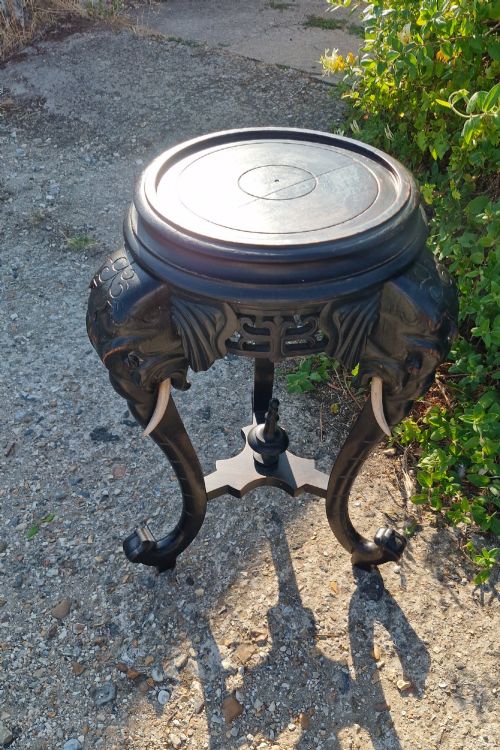
An ebonised wood stool is a seating piece finished in a dark, opaque coating that mimics ebony, appearing frequently in Victorian and Edwardian iterations. These furnishings range from simple piano stools with swivel bases to upholstered benches designed for domestic comfort.
Buyers seeking this phrase encounter pieces featuring turned legs, cane seats, or textile upholstery. Origins span traditional English workshops as well as Anglo-Indian and Japanese Meiji stylistic influences.
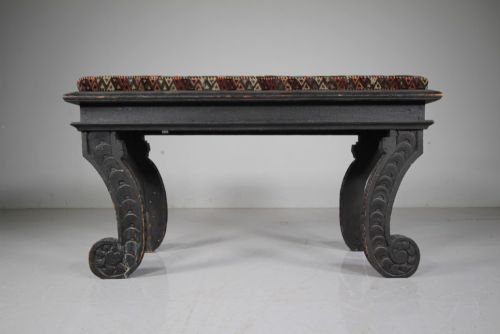
Forms include dedicated footstools and long daybed stools alongside standard variants, providing practical utility across nineteenth-century and early twentieth-century domestic spaces.
How they were made
Wood is stained, painted, or chemically treated to achieve a deep, dark ebonised finish, often applied to pine, elm, or carved hardwoods. This technique creates a uniform surface that emulates expensive tropical timbers.
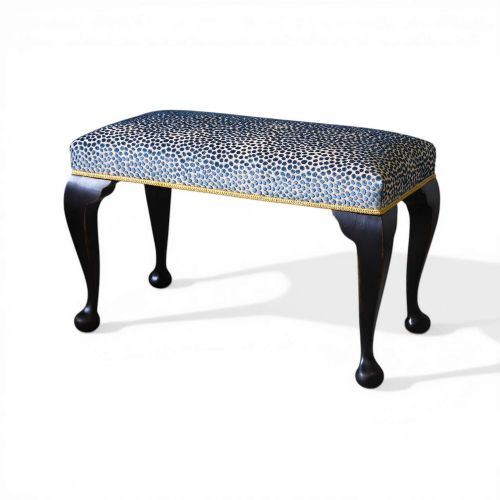
Upholstery, tapestry, and textiles provide the padding for seats, secured alongside turned wooden legs. Cane work appears on specific day bed variants, woven tightly into wooden frames.
Structural joinery utilises traditional turning methods for legs and supports, ensuring stability across swivel mechanisms and fixed frames alike.
Ebonised Wood Stool Retail Price Guide 2026
Typical asking prices for ebonised wood stool among the pieces listed under this phrase on Sellingantiques today, from the lower quarter to the upper quarter. They describe what is for sale here now, not the wider market.
Current listings feature pieces spanning the Victorian and Edwardian eras, utilising ebonised wood, pine, and painted finishes.
What varies in quality
The precision of the ebonised surface finish determines visual consistency, where smooth applications retain their depth over decades of use. Uneven pigment or flaking paint reveals lesser preparation beneath the dark coating.
The integrity of the underlying wood frame, whether pine, elm, or carved hardwood, dictates structural longevity. Sturdier joinery in turned legs and swivel mechanisms distinguishes better-constructed seating from simpler utility items.
The quality of the upholstery materials, textiles, and cane work affects tactile and visual appeal. Finer weaving and durable fabrics elevate the finished piece beyond basic domestic seating.
The Ebonised Wood Stool Glossary
- Ebonised wood
- Timber treated to resemble ebony through dark staining or painting. This finish gained popularity during the Victorian era for its sleek, dramatic appearance.
- Swivel base
- A rotating mechanism allowing the seat to turn independently of the legs. This feature appears commonly on piano stools.
- Turned legs
- Supports shaped on a lathe to create decorative curved profiles. Such legs provide both structural support and stylistic detail.
- Cane seat
- Woven plant material forming a flexible and breathable surface. It appears frequently on day beds and long stools.
Ebonised Wood Stool: Frequently Asked Questions
What periods do these stools date from?
The pieces span the nineteenth century up to the early twentieth century. Victorian and Edwardian examples dominate the selection.
Dating relies on stylistic markers such as turned legs and upholstery types rather than precise stamps.
How were piano stools used?
Musicians used them while playing upright or grand pianos. The swivel base allowed the player to adjust position easily.
Their sturdy height and adjustable nature also suited general domestic seating.
What is ebonised wood?
It is ordinary timber finished to look like solid ebony. Makers used paint, stain, or chemical treatments on woods like pine and elm.
This provided an affordable alternative to exotic imported hardwoods.
Are these stools comfortable for daily seating?
Many feature upholstered or textile tops designed for regular use. Swivel and piano variants offer ergonomic flexibility.
Cane versions provide a firmer, breathable surface suited to lighter resting.
How do I identify an Edwardian stool?
Edwardian pieces often display lighter proportions and simpler turned legs than their Victorian predecessors. They reflect the turn-of-the-century shift toward functional versatility.
Upholstery fabrics from this time lean towards practical domestic textiles.