

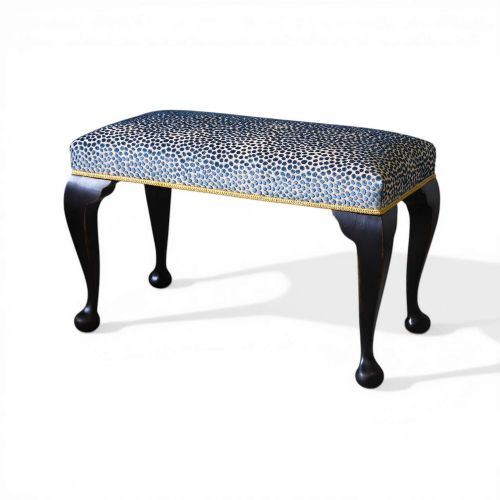
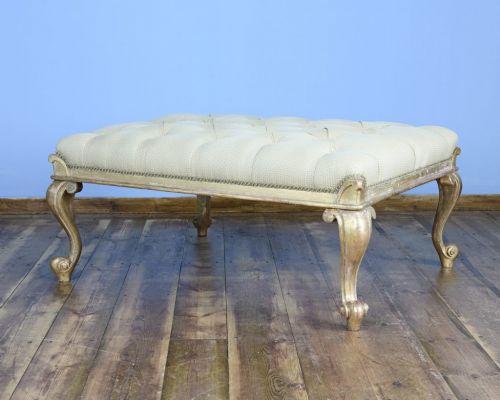


Padded Foot Bench
A padded foot bench offers a low, cushioned perch for tired feet, combining sturdy timber frames with traditional upholstery for everyday comfort.
Padded Foot Bench
A padded foot bench functions as a low seat or rest for the legs, appearing in forms such as footstools, long footstools, duet stools, and dressing stools. When you search for a padded foot bench, you encounter sturdy seating designed to sit before armchairs or vanity tables.
The examples gathered here span from the Georgian and Victorian eras through to the Edwardian period and the early twentieth century. You are most likely to meet mahogany or walnut frames carrying textile, tapestry, fabric, velvet, or wool upholstery.
Design influences draw upon historical idioms including Queen Anne style, Chippendale style, William IV, and George I. Makers also produced gothic oak pieces and X-framed designs alongside standard rectangular forms.
How they were made
Frames rely on dense hardwoods like mahogany, walnut, and oak, shaped into turned legs, carved rails, and X-frames. Cabinetmakers joined these structural timbers using traditional joinery to support the weight placed upon them.
Upholstery involves covering a padded core with textiles, leather, tapestry, velvet, wool, or standard fabric. Craftsmen secured these soft coverings over the timber base to provide a resilient surface for the feet or seat.
Padded Foot Bench Retail Price Guide 2026
Typical asking prices for padded foot bench among the pieces listed under this phrase on Sellingantiques today, from the lower quarter to the upper quarter. They describe what is for sale here now, not the wider market.
Listings feature mahogany, walnut, and oak frames paired with velvet, tapestry, and leather upholstery across multiple centuries.
What varies in quality
The distinction between standard examples and finer pieces lies in the crispness of the timber carving and the scale of the frame, such as grand scale parcel gilt designs or carved walnut structures. Superior execution shows in the balanced proportions of turned legs and the selection of materials.
The treatment of the upholstery finish also separates everyday items from more ambitious workshops, with hand-worked tapestry or quality leather indicating a higher tier of production.
The Padded Foot Bench Glossary
- Duet stool
- A wider seat designed to accommodate two people playing a keyboard instrument together. It shares the low profile and upholstered top of standard foot benches.
- X-framed stool
- A piece featuring crossing diagonal legs that form an X shape when viewed from the side. This ancient form provides robust structural support.
- Parcel gilt
- A surface decoration where selected carved details receive a thin application of gold leaf while the surrounding wood remains visible. It highlights specific ornamental motifs.
- Ebonised
- Timber treated with chemical solutions or dark finishes to imitate the appearance of ebony. This dark surface creates a sharp contrast against lighter upholstery fabrics.
- Tapestry
- A thick textile woven with pictorial or geometric designs on a loom. It provides a durable and decorative covering for seating tops.
Padded Foot Bench: Frequently Asked Questions
What is a padded foot bench used for?
These pieces serve primarily as low rests for the feet when sitting in an armchair or as standalone seats at a dressing table. They provide an accessible platform to elevate the legs during relaxation.
Certain larger formats, such as duet stools, function as seating for musical instruments. Their low frames keep the user stable and comfortable during extended periods of sitting.
How do I identify a Victorian foot bench?
Victorian examples often utilise dark timbers like walnut or mahogany, frequently paired with leather or heavy woven textiles. The woodwork displays characteristic nineteenth-century turns and carved details.
These pieces typically reflect the heavier proportions and functional durability favoured during the reign of Queen Victoria. They match the broader furniture output of the nineteenth century.
What woods are common in these benches?
Mahogany and walnut appear most frequently across the historical range, prized for their strength and rich grain patterns. Oak also appears in specific revival or gothic designs.
Cabinetmakers selected these hardwoods to ensure the frame could withstand regular pressure. The timber forms the rigid skeleton beneath the padded upholstery.
How do I care for antique upholstery?
Maintenance involves gentle dusting and protection from direct sunlight to prevent the textile, velvet, or wool from fading. Regular care preserves the condition of the historic fabric.
Avoid harsh chemical cleaners on delicate materials like tapestry or leather. Professional conservation methods help maintain older soft furnishings safely.