





Regency Rosewood Stool
A regency rosewood stool brings dense timber and clever mechanics together for the parlour or music room.
Regency Rosewood Stool
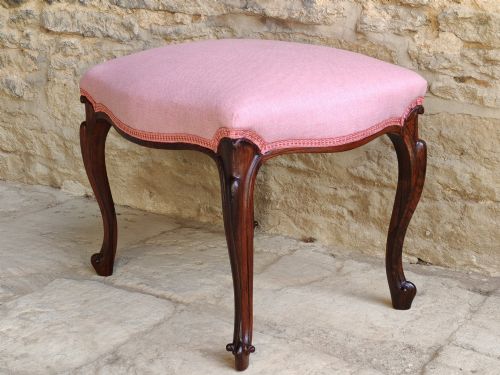
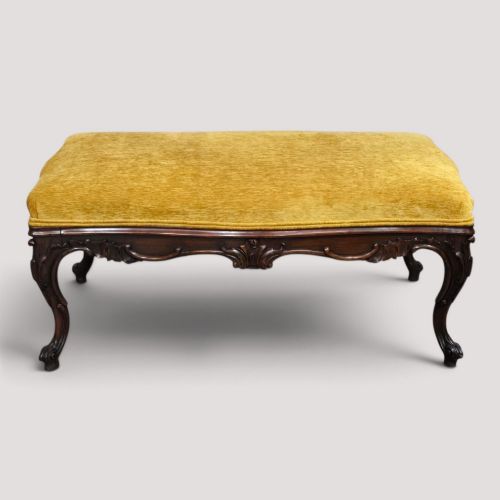
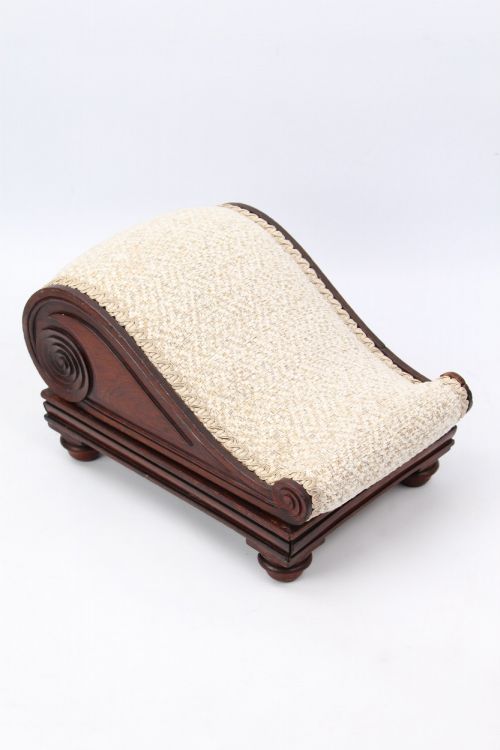
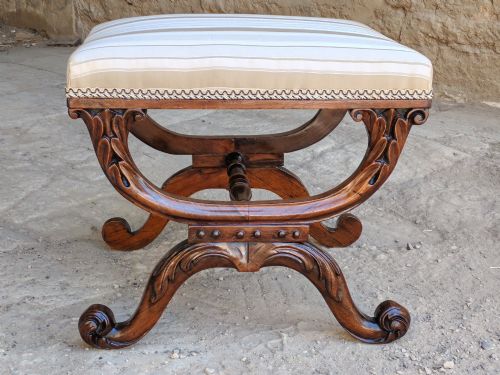
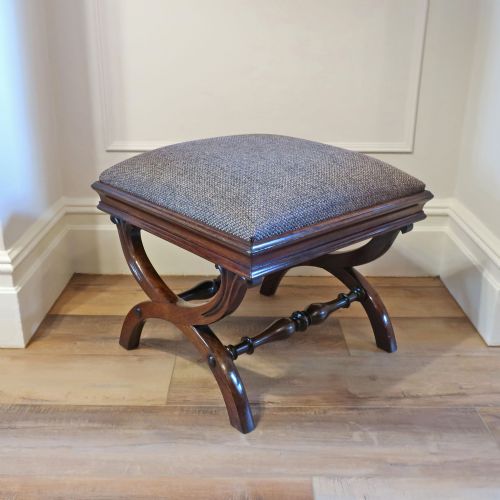
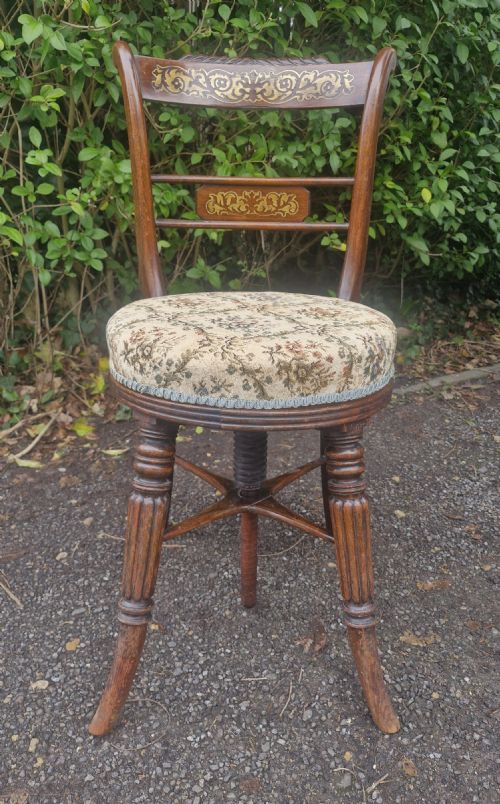
A regency rosewood stool appears in various configurations designed for the drawing room, library or music salon. These pieces range from low footstools and gout rests to revolving piano stools and grand X-framed centre seats.
The evidence shows that these items cross the Georgian, Regency, William IV and early Victorian periods, with many bearing the characteristic heavy grain of rosewood.
Most examples encountered on this page date from the early nineteenth century, incorporating practical adjustments for musicians or comfortable upholstered tops for resting the feet.
Materials and construction
Cabinet makers utilised solid rosewood or applied fine veneers over secondary timbers, occasionally employing simulated rosewood finishes where the grain was painted onto a cheaper base. Brass inlay, scrolling sabre legs and carved paw feet provided decorative detail to the structural frame.
Upholstery materials varied from leather and silk to velvet, tapestry and woven fabric, often placed over needlework or buttoned padding. Mechanical elements such as screw threads allowed piano and music stools to rise and fall for the performer.
Regency Rosewood Stool Retail Price Guide 2026
Typical asking prices for regency rosewood stool among the pieces listed under this phrase on Sellingantiques today, from the lower quarter to the upper quarter. They describe what is for sale here now, not the wider market.
Some music chairs required performers to spin completely around to adjust their height before the invention of the central screw.
Craftsmanship and design
Superior examples distinguish themselves through the crispness of carved details like paw feet and scrolling frames, alongside the complexity of the timber grain. Solid rosewood construction commands greater respect than simulated alternatives, though painted decoration executed with skill holds its own distinct place.
The integrity of the internal mechanism on adjustable piano stools separates ordinary pieces from those of finer workshop origin. Well-balanced proportions on X-framed and sarcophagus forms indicate a higher standard of design and execution.
Gillows
The Regency Rosewood Stool Glossary
- Rosewood
- A dense, dark timber featuring rich dark brown figuring that was favoured for fine cabinet work during the nineteenth century. It takes a high polish and forms the primary material for these seats.
- X-Frame
- A structural base formed of crossing members that create a curule shape reminiscent of classical Roman furniture. This design provides both stability and decorative weight to centre stools.
- Gout Stool
- A specialised low footrest featuring an adjustable angle to elevate and support the foot of a sufferer. These often incorporate leather pads and scrolling wooden forms.
- Simulated Rosewood
- A painted finish applied to an alternative timber to imitate the distinctive grain pattern of genuine rosewood. Cabinet makers utilised this technique when solid exotic wood was restricted or costly.
- Sarcophagus
- A monumental form with sloping sides resembling a stone coffin, adapted here for the heavy box bodies of large footstools. This architectural shape adds substantial presence to the piece.
Regency Rosewood Stool: Frequently Asked Questions
How do I identify a genuine period piece?
Examine the timber construction, joinery methods, and the weight of the rosewood used in the frame. Period pieces exhibit traditional hand-cut joints and timber movement consistent with early nineteenth-century cabinet making.
Look closely at the secondary woods underneath and inside the frame, as these often reveal the true age of the structure before any later repairs or upholstery work took place.
Were all these seats used for pianos?
Many served specific roles in the music room, but others functioned as footstools, gout rests, window seats, or grand centre stools. Adjustable mechanisms generally indicate a musical purpose for the pianist or harpist.
Fixed-height ottomans and X-framed pieces served the drawing room as decorative furnishings or comfortable foot supports for seated guests.
What upholstery materials should I expect?
Original coverings rarely survive intact, so most pieces feature later upholstery applied over the original webbing and stuffing. Common traditional covering materials include leather, velvet, silk, tapestry, and needlework.
When buying, check whether the current fabric suits your interior, knowing that the underlying frame and springs represent the true antique value.
How do adjustable piano stools work?
These models operate via a central wooden or metal screw thread hidden beneath the seat pad. Turning the top allows the user to raise or lower the seat to the desired playing height.
Ensure the internal screw mechanism moves smoothly without excessive wobble, as a well-aligned thread guarantees the mechanical parts remain original and functional.