

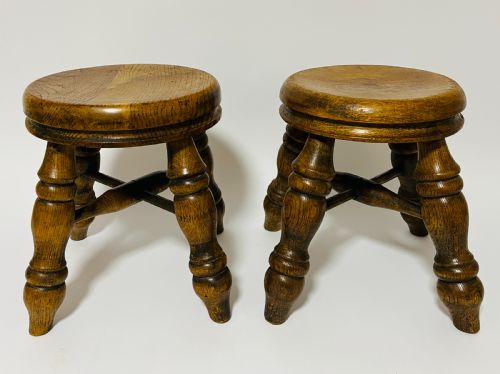


Small Victorian Footstool
These small victorian footstool pieces offer compact fireside support, combining period timber frames with tactile textile tops for domestic comfort.
Small Victorian Footstool
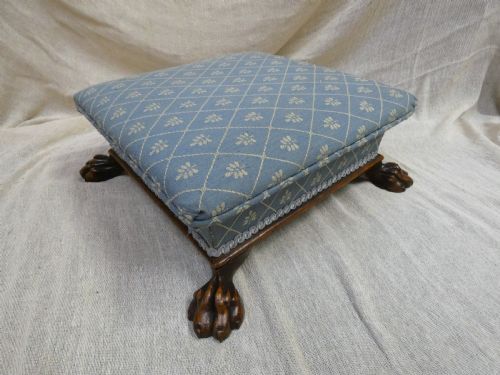
When you search for a small victorian footstool, you encounter low timber resting pieces designed for fireside use, music rooms, or general seating. The most common format is a compact wooden frame carrying an upholstered surface, often associated with gout stools or low lounge rests.
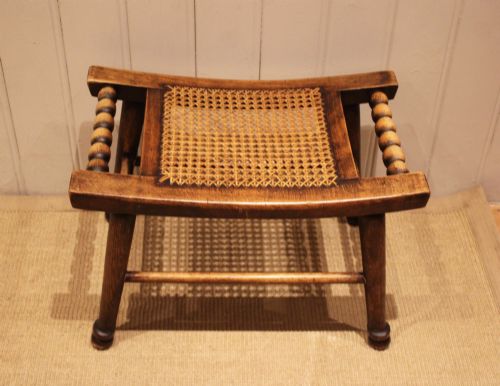
The evidence spans the wider nineteenth century, capturing Victorian periods alongside rustic farmhouse, gothic revival, and aesthetic movement interpretations. Forms range from simple turned wood iterations to inlaid walnut, ebonised wood, and burr yew examples.
Makers and workshops of the era produced these items in various woods, including mahogany, oak, walnut, and pitch pine. Buyers frequently find pairs or individual stools intended for specific domestic settings such as dressing tables and nurseries.
What varies in quality
Quality rests upon the selection of timber and the complexity of the frame carving, from plain turned beech to intricately inlaid tunbridge ware and carved walnut. Superior pieces exhibit refined craftsmanship in the woodwork and tighter joinery.
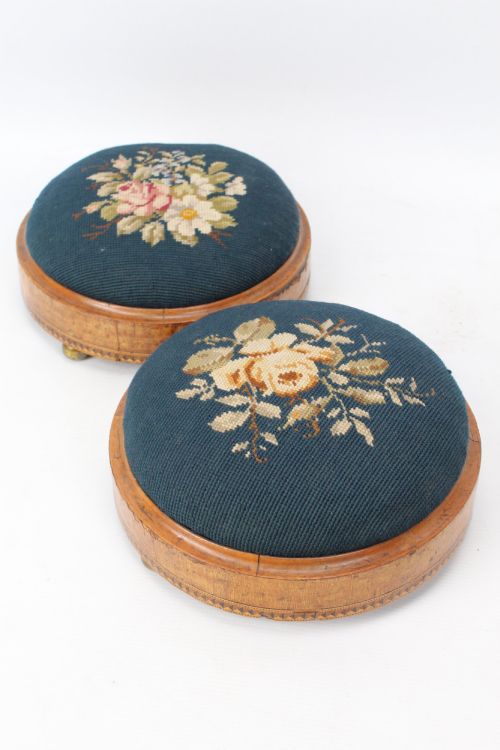
The choice of top covering also dictates the grade of the piece, with hand-worked needlepoint tapestry and geometric kilim standing apart from standard plain fabric upholstery. The presence of secondary materials like parcel gilding elevates the decorative ambition of the stool.
Stool forms span standard foot rests, music stools, nursery seats, and storage boxes.
A Blain And Son
The Small Victorian Footstool Glossary
- Gout stool
- A low footrest designed to elevate the feet for individuals suffering from joint ailments. These items often feature adjustable sloped tops.
- Tunbridge ware
- Woodworking craftsmanship characterised by mosaic-like pictorial designs assembled from tiny pieces of naturally coloured woods. This technique decorates the wooden surrounds of specific Victorian pieces.
- Parcel gilt
- The practice of applying thin gold leaf or paint to specific portions of a carved wooden frame. This method highlights particular decorative details against an ebonised background.
- Needlepoint tapestry
- Hand-stitched canvas work using yarn to create dense geometric or floral patterns. This textile frequently forms the upper surface of period footstools.
- Ebonised wood
- Timber treated with a dark finish to imitate the appearance of ebony. This treatment was popular in Victorian furniture to create striking contrast.
Small Victorian Footstool: Frequently Asked Questions
What is a gout stool?
A gout stool is a low-slung Victorian footrest specifically designed to support and elevate aching feet near the hearth. Many versions incorporate adjustable mechanisms to alter the angle of the rest.
These pieces reflect the domestic health requirements of the nineteenth century, combining functional utility with polished timber frames and needlepoint covers.
How do I identify a Victorian footstool?
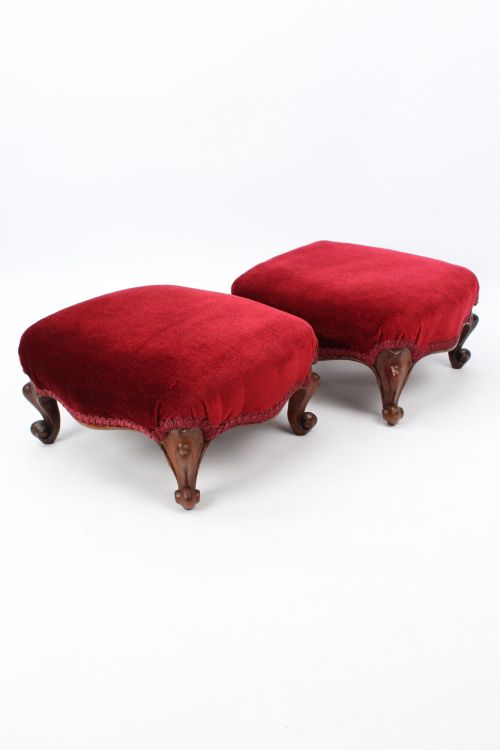
Victorian footstools are recognised through their characteristic timber frames, such as walnut, mahogany, or oak, combined with period upholstery textiles like tapestry or velvet. Construction details often include turned wooden legs and traditional joinery.
Dates generally span the nineteenth century, sometimes accompanied by stylistic clues like gothic revival or aesthetic movement influences.
Were these stools used in pairs?
Makers occasionally produced matching pairs of small footstools for formal Victorian reception rooms and fireside settings. Single examples remain far more common in everyday domestic survivals.
Pairs often feature identical timber turning and matching tapestry needlepoint work, designed to flank a hearth or seating arrangement.