
Vanity Dressing Stool
A vanity dressing stool provides a practical seat at a bedroom mirror, spanning styles from Victorian revival to Art Deco.
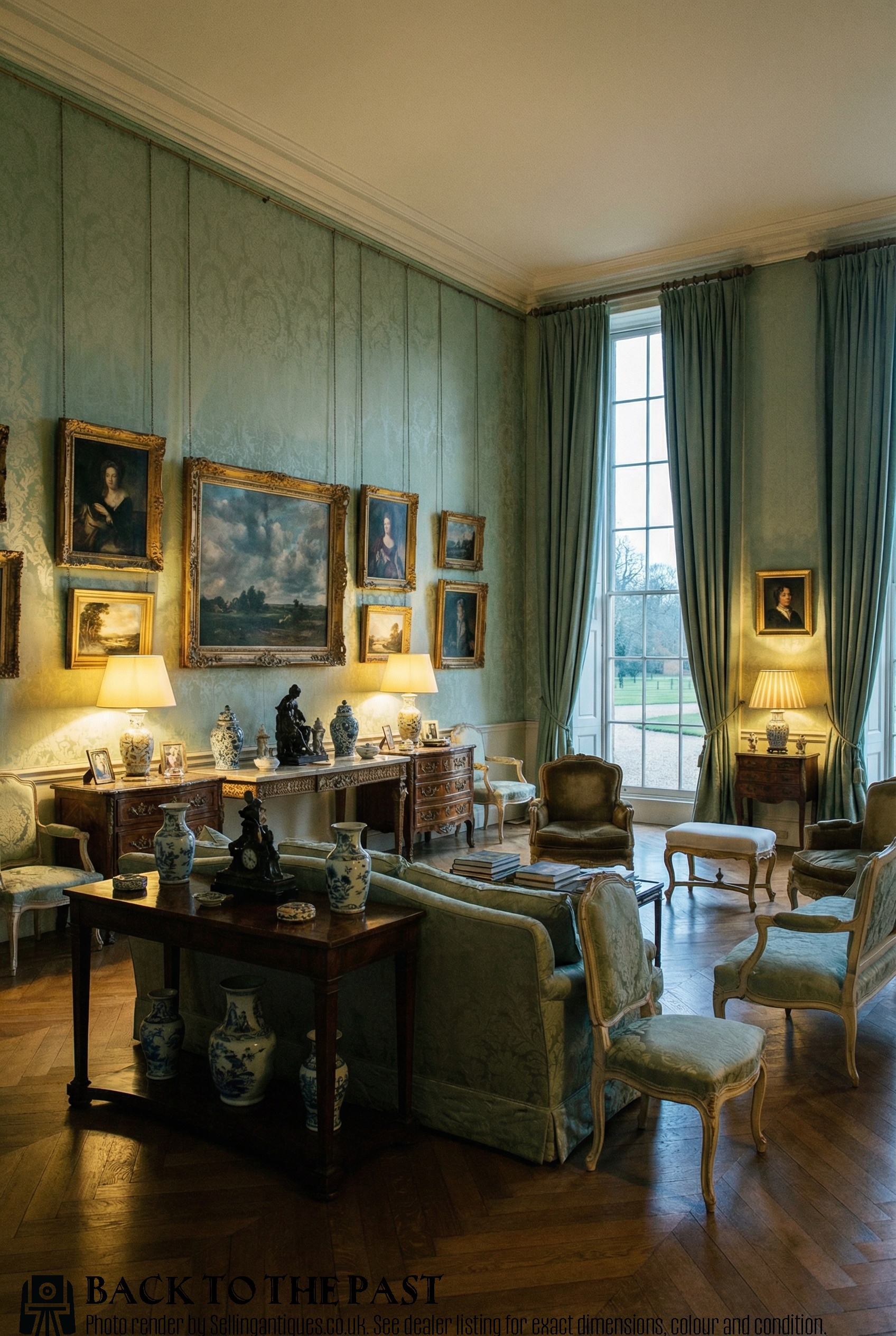
Vanity Dressing Stool
A vanity dressing stool is a low seat designed primarily for use at a dressing table or bedroom mirror. The selections here include specialised piano stools, footstools, and small chairs intended for domestic dressing routines.
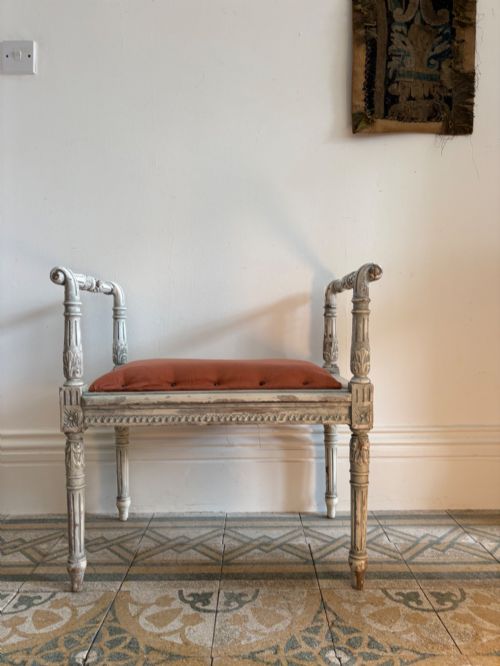
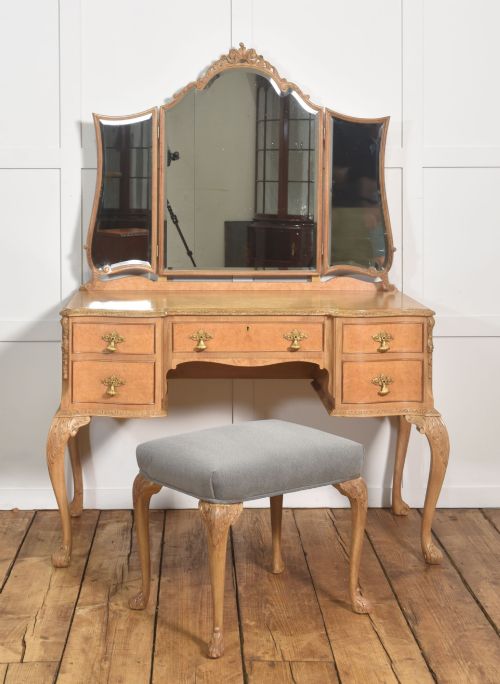
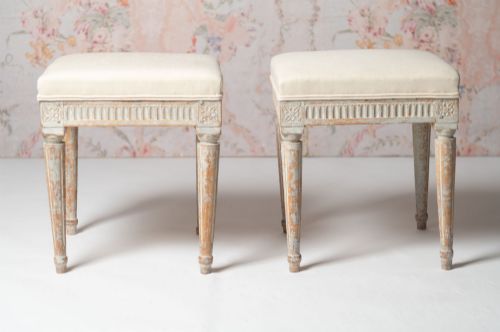
The pieces on this page cross multiple centuries and design revivals. Examples range from eighteenth-century mahogany and Gustavian painted seating up through Victorian walnut interpretations and nineteen-thirties Art Deco designs.
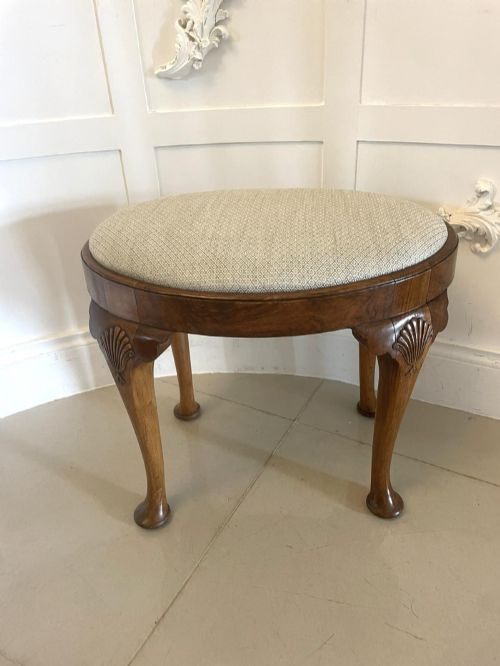
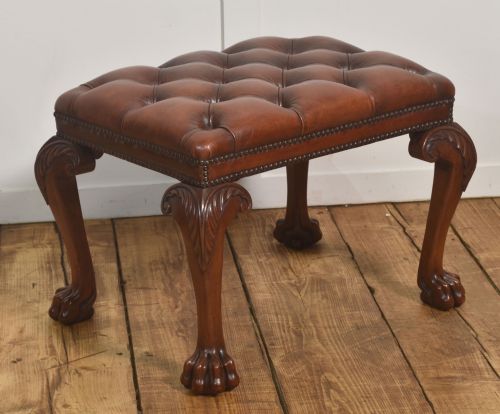
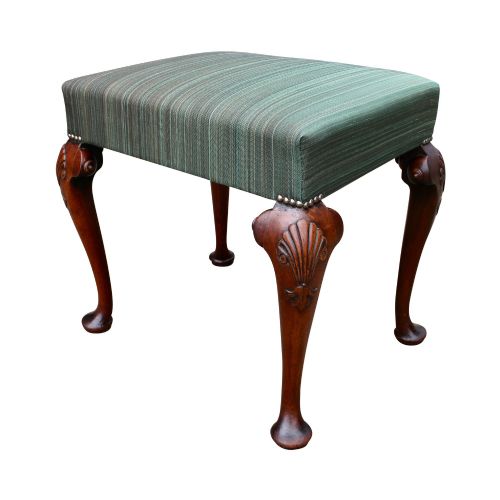
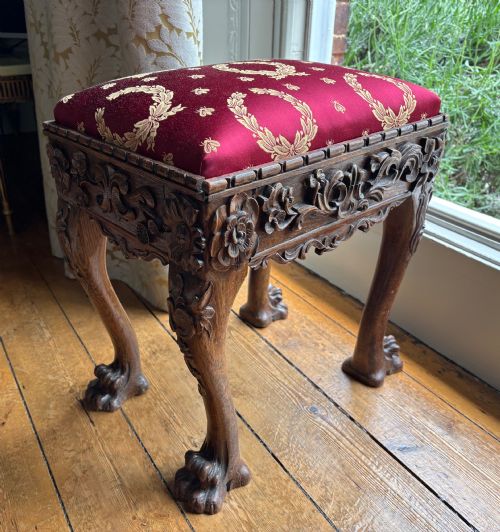
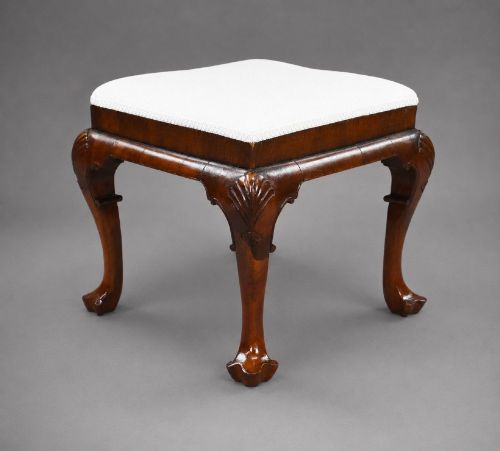
Makers drew on historical forms such as Queen Anne cabriole legs, Chippendale styling, and Rococo curves. Many items function equally well as moveable occasional seating or footstools in a modern interior.
Woods and upholstery techniques
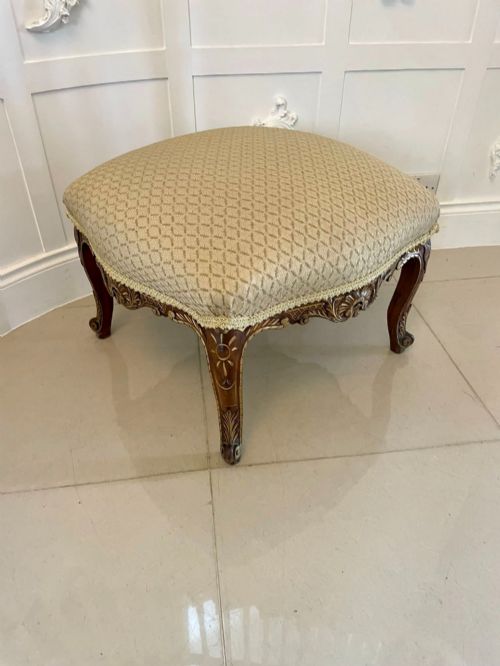
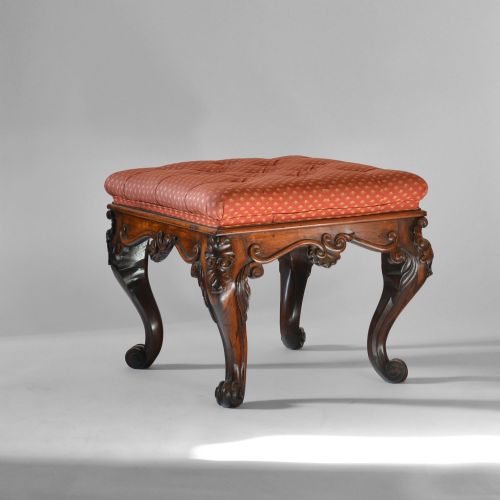
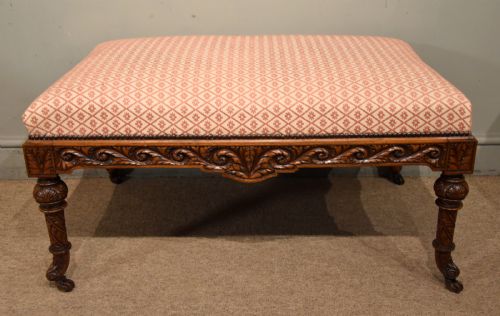
Cabinetmakers constructed these frames using dense hardwoods like walnut, mahogany, rosewood, and oak, occasionally applying paint, gilt, or ebonised finishes. Turned legs, bobbin turnings, and carved cabriole supports define the structural framework.
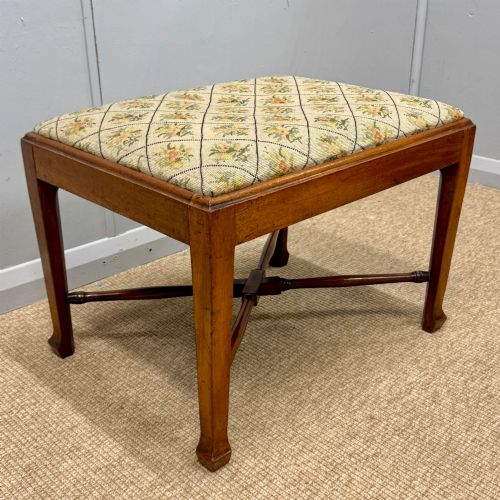
Upholstery forms an essential component of the construction, utilising traditional textiles, leather, silk, and velvet over supportive seat bases. Cross stretchers and X-frames frequently provide added stability to the wooden underframes.
A nineteenth-century rosewood model rests on bobbin legs, proving that miniature wooden spheres have supported bottoms for generations.
Craftsmanship and material selection
Quality rests in the crispness of the wood carving, the selection of figured timber veneers, and the structural integrity of the frame joints. Superior examples display harmonious proportions and careful attention to secondary details like leg tapering and stretcher placement.
The integrity of the upholstery foundation and the selection of covering materials also distinguish individual pieces. Original surface patination and restrained decorative carving elevate certain items above standard production work.
Harry and Lou Epstein
The Vanity Dressing Stool Glossary
- Cabriole leg
- A furniture leg that curves outward at the knee and tapers inward toward the ankle, ending in a pad or claw foot. This popular eighteenth-century form reappeared frequently in Victorian revival seating.
- Cross stretcher
- Wooden rails connecting the lower legs of a stool diagonally for added structural reinforcement. They often intersect at a central point beneath the seat.
- X-frame
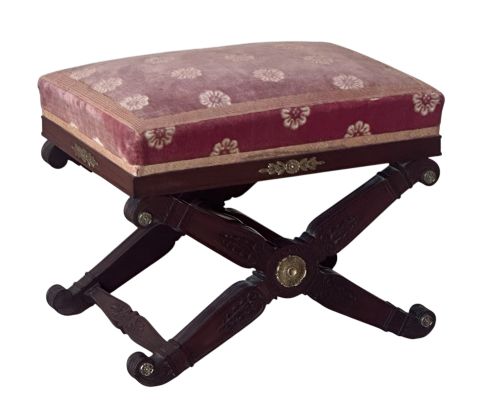
- A furniture support structure formed by intersecting diagonal timbers resembling the letter X. This classical X-form appears on French Empire and revival stools.
- Ebonised
- Wood finished with a dark stain or black lacquer to imitate expensive ebony. Victorian and Edwardian makers utilised this technique for dramatic visual contrast.
- Bobbin leg
- A turned furniture leg shaped to resemble a series of rounded wooden beads or bobbins threaded together. This technique dates to the seventeenth century and returned in nineteenth-century designs.
Vanity Dressing Stool: Frequently Asked Questions
What is a vanity dressing stool used for?
A vanity dressing stool provides a comfortable, low-profile seat positioned in front of a bedroom dressing table or mirror. They facilitate daily grooming routines and makeup application while matching the aesthetic of the dressing suite.
Beyond the bedroom, these compact pieces function effectively as occasional seating in living spaces or as decorative footstools paired with armchairs.
How do I identify a Victorian dressing stool?
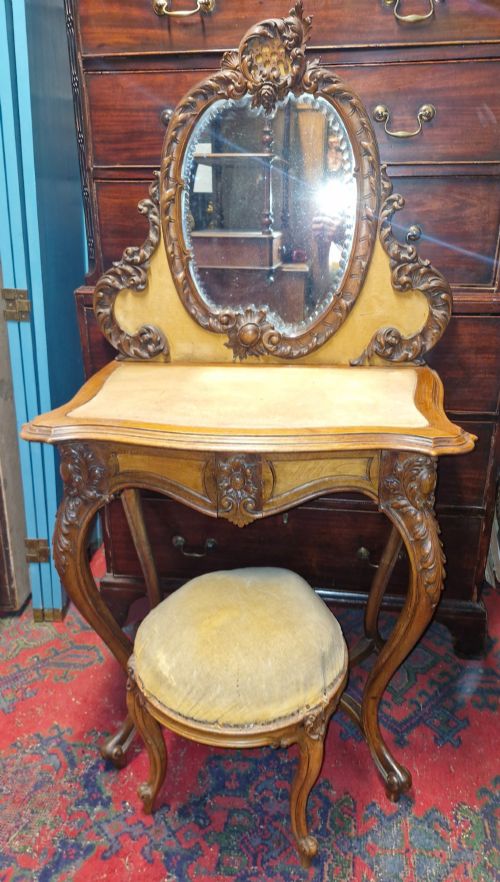
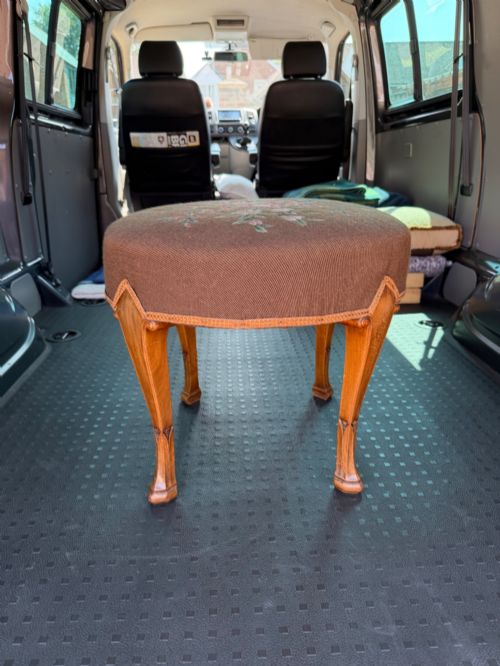
Victorian examples typically employ heavy hardwoods like walnut, rosewood, or oak combined with rich upholstery materials such as velvet or tapestry. Look for carved cabriole legs, gilt accents, and rounded or oval seat shapes characteristic of nineteenth-century revival tastes.
Many of these pieces match specific dressing table suites from the same era, utilising turned or carved structural elements that reflect mid-to-late nineteenth-century cabinetmaking.
Are these stools comfortable for daily use?
Most vanity dressing stools feature padded upholstered tops covered in fabric, leather, or silk designed for short periods of sitting. Their compact dimensions make them easy to tuck entirely beneath a dressing table when not in use.
While they provide adequate support for grooming tasks, buyers seeking deep lounging comfort generally pair them with larger ottomans or armchairs.
What timber types appear most frequently?
Walnut and mahogany dominate the timber selections across these listings, providing sturdy frames with rich grain patterns. Rosewood, satinwood, and oak also appear regularly in various nineteenth-century and revival models.
Some pieces feature painted or ebonised surface treatments, particularly Swedish Gustavian imports or later Edwardian designs that departed from natural wood finishes.