


Victorian Gilt Stool
A victorian gilt stool brings metallic warmth and upholstered comfort to a room, ranging from small fireside footstools to grand salon seats.
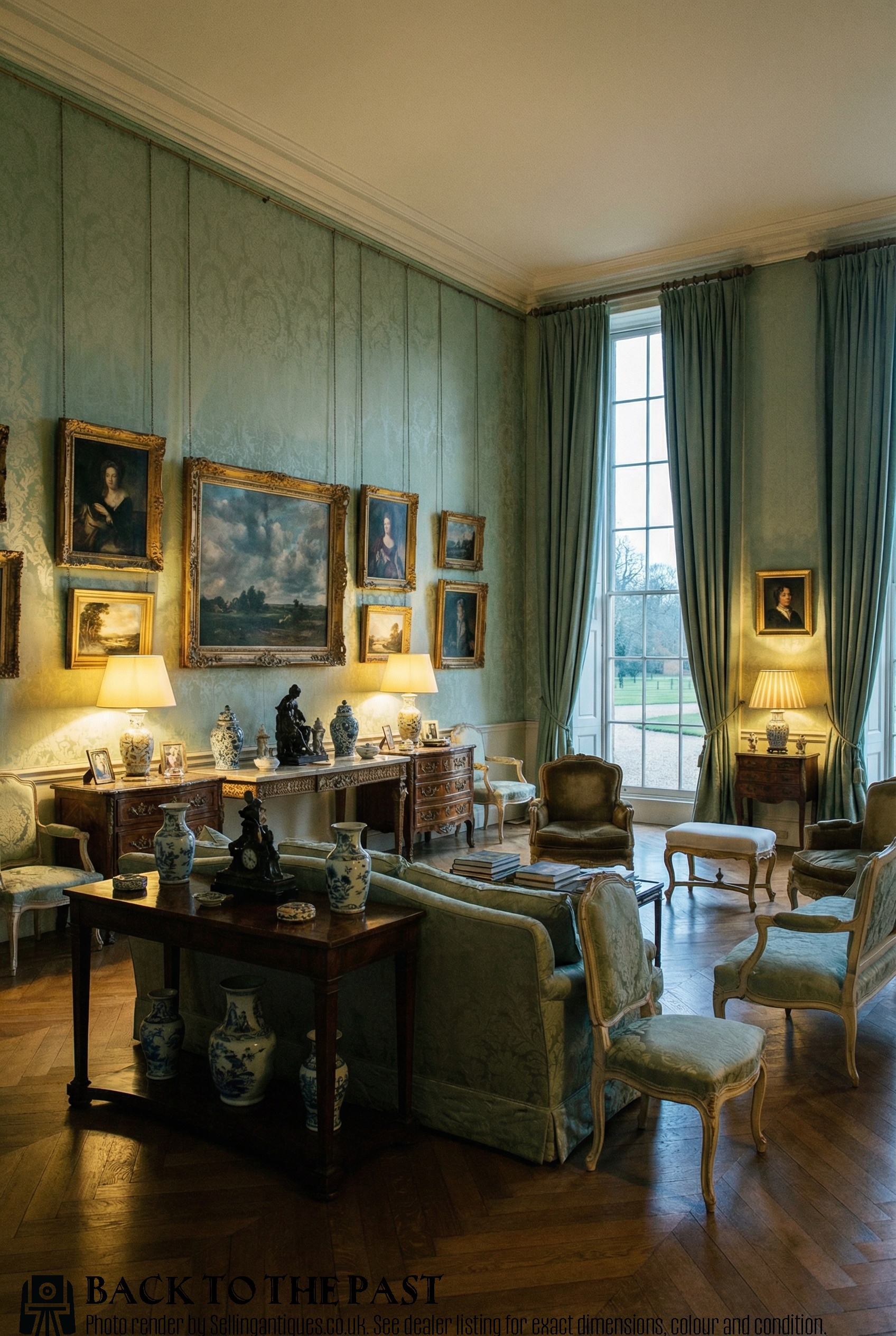
Victorian Gilt Stool
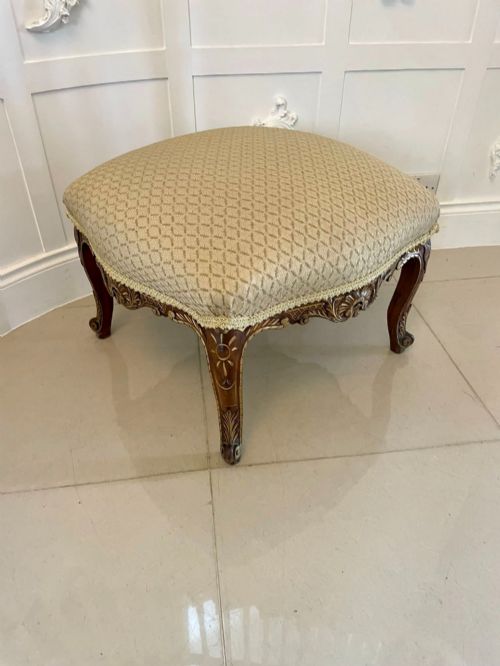
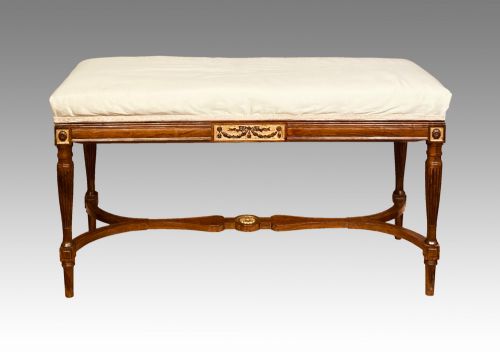
When you search for a victorian gilt stool, you encounter low seating designed for drawing rooms, dressing tables and firesides. The records show forms spanning standard footstools, long window seats, dressing table stools and piano stools.
Most examples date from the nineteenth century, carrying revivalist influences like Louis XV, Louis XVI and Victorian Rococo. They appear in giltwood, parcel gilt, ebonised wood with gilt highlights, and carved walnut or mahogany.
Makers and designers of the period adapted French court aesthetics for British domestic interiors. You will find pieces shaped as small 'X' frame supports, cabriole leg footstools and larger upholstered benches.
How they were made
Carinthian or native hardwoods such as walnut, oak, mahogany and ebonised wood formed the structural frames. Artisans carved these woods with floral motifs, scrolls and classical details before applying gold leaf or parcel gilt finish.
Upholstery relied on traditional stuffing techniques, securing fabric, velvet and embroidered textiles over sturdy webbing and horsehair. Brass fittings and gilt brass components occasionally reinforced the frames and joints.
One rocking gout stool from the late nineteenth century offered relief for sore feet alongside formal Victorian elegance.
What varies in quality
The crispness of the wood carving separates standard production from exceptional pieces. Deep, hand-chiseled foliage and well-defined structural lines indicate superior craftsmanship by skilled cabinetmakers.
The integrity and preservation of the gilt surface determine the visual impact. Original gold leafing that retains its matte or burnished sheen holds greater appeal than heavy modern re-gilding.
Charles Nosotti·Holland & Son·A.M.E. Fournier
The Victorian Gilt Stool Glossary
- Giltwood
- Wood that has been coated with gold leaf or gold paint for decorative effect. This finish catches the light in formal reception rooms.
- Parcel Gilt
- A technique where only specific carved details or raised portions of the wooden frame receive gilding. The contrasting bare wood or ebonised surface highlights the design.
- Aesthetic Movement
- A late nineteenth-century design current that prioritized artistic expression and visual beauty over moral narrative. Pieces from this era often feature simpler geometric lines combined with rich surface decoration.
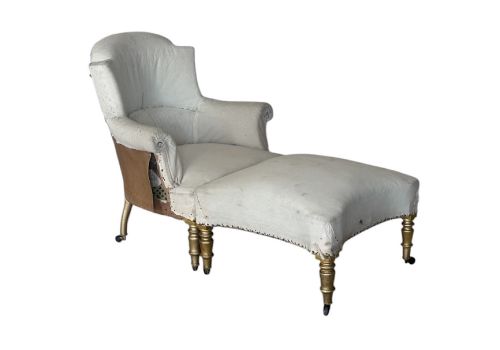
- Duchess Brisee
- A multi-part daybed arrangement consisting of an armchair paired with a matching stool or footrest. It offers extended seating for relaxation.
Victorian Gilt Stool: Frequently Asked Questions
Where were these stools used?
These stools served functional and decorative roles across nineteenth-century homes. They sat beside fireplaces as footrests, accompanied dressing tables, or stood near pianos for musicians.
In larger reception rooms, long window seats and pairs of gilt stools provided flexible seating for guests during gatherings.
How do I distinguish revival styles?
Revival styles draw inspiration from distinct historical periods of French and English design. Rococo revival pieces display asymmetrical curves, flowing leaf motifs, and cabriole legs.
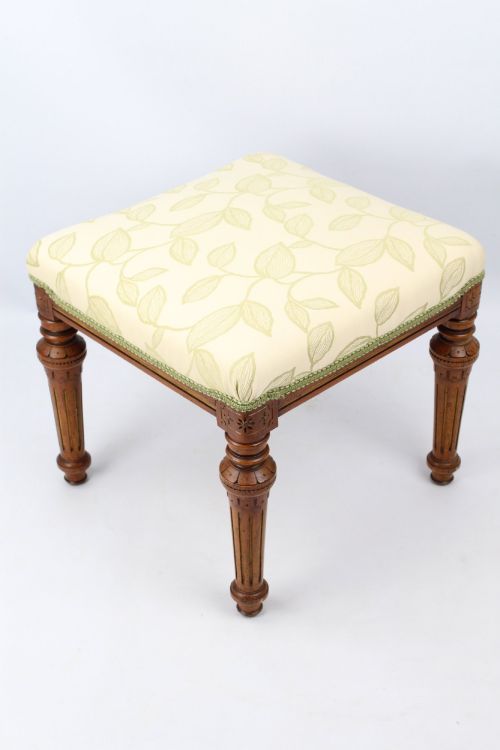
Neoclassical pieces feature straighter lines, fluted columns, and symmetrical ornamentation reminiscent of Louis XVI furniture.
Can I use them with modern decor?
Gilt stools function effectively as accent pieces within contemporary interiors. Their metallic finishes and compact footprints allow them to sit beside modern sofas or serve as bedside stands.
Upholstery can be updated to complement existing colour schemes while preserving the historic wooden frame.
What is parcel gilding?
Parcel gilding involves applying gold leaf selectively to carved highlights rather than covering the entire wooden surface. This method creates contrast against ebonised or natural wood backgrounds.
It was widely utilised during the Victorian era to accentuate intricate joinery and relief carving.