




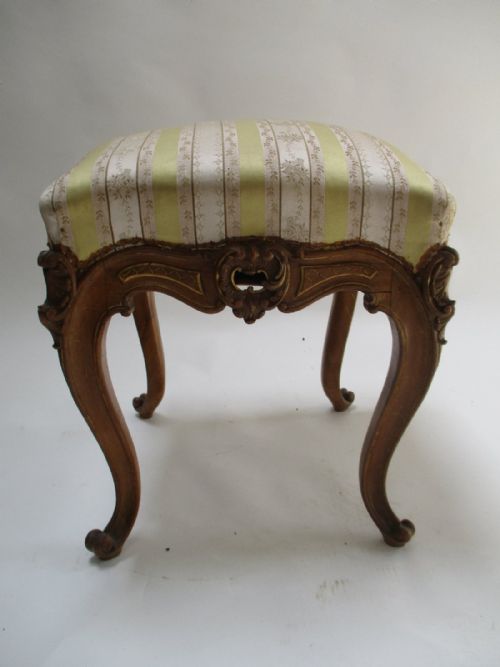
Gilded Footrest
A gilded footrest brings a touch of opulent surface and tailored comfort to a room, drawing the eye down to a finely worked base.
Gilded Footrest
A gilded footrest sits among a diverse array of footstools and stools, appearing frequently in nineteenth-century interpretations of historical styles. These pieces combine supportive wooden structures with rich surface gilding, textile upholstery, and sometimes rocking actions or X-frames.
The Regency and Victorian eras dominate the selection, offering everything from mahogany scroll tops to carved giltwood frames. Buyers searching for a gilded footrest will encounter French Rococo revival pieces, Baroque revival models, and Edwardian chinoiserie variations.
Makers and workshops ranged from English cabinet-makers to Parisian enterprises, producing stools of varying scales from intimate fireside companions to large seating pieces. The common thread across these objects is the application of gold leaf or gilt finishes upon timber frames.
Materials and construction methods
Makers utilised solid timbers such as mahogany and walnut for the foundational frames, carving intricate details like scrolls and foliage directly into the wood before applying giltwood or ormolu embellishments. Brass components occasionally reinforce the structural joints or provide subtle decorative accents.
Surfaces received layers of gesso and gold leaf to create the signature gilded finish, while upholstery involved durable textiles, fabric, linen, and occasionally black lacquer work for specialised aesthetic effects. The combination of carved timber and applied textile transformed a simple utility object into a decorative luxury.
Gilded Footrest Retail Price Guide 2026
Typical asking prices for gilded footrest among the pieces listed under this phrase on Sellingantiques today, from the lower quarter to the upper quarter. They describe what is for sale here now, not the wider market.
Listings feature periods from the Regency era through to the Edwardian period, utilising materials such as giltwood, mahogany, and brass.
Judging execution and finish
Quality rests upon the crispness of the wood carving and the depth of the gilding, where hand-tooled surfaces outshine flat or mechanically finished applications. The integration of the upholstery with the wooden frame reveals the maker's underlying skill.
Maker signatures and stamps provide tangible evidence of workshop origin, elevating pieces produced by notable firms above anonymous workshop output. Proportion and balance in revival styles separate refined interpretations from heavier, less successful copies.
Mathew Gregson·Loidrault Freres Paris·Miles & Edwards
The Gilded Footrest Glossary
- Giltwood
- Timber treated with gesso and covered in fine gold leaf. This method provides a brilliant reflective surface that ages with a soft patina.
- Ormolu
- Cast brass that has been mercury-gilded or electroplated with gold. It adds metallic highlights and sculptural detail to furniture frames.
- X Frame
- A structural base formed by intersecting diagonal members resembling the letter X. This classical design offers both inherent strength and visual lightness.
- Scroll Top
- A terminal carved into a curving, spiral form resembling a rolled scroll. This shape frequently terminates the arms or ends of seating furniture.
Gilded Footrest: Frequently Asked Questions
What periods do these footstools come from?
The available pieces span the nineteenth and early twentieth centuries, encompassing Regency, Victorian, and Edwardian eras. Stylistic revivals such as French Rococo, Baroque, and Louis XV heavily influence the design repertoire.
Craftsmen during these periods drew upon historical design books and continental precedents to shape the carved frames and gilded surfaces.
How were gilded footstools originally used?
These pieces served in principal reception rooms to support the feet of seated guests or to provide additional low seating. Their decorative finishes ensured they contributed to the overall aesthetic scheme of a formal parlour.
Rocking variants and gout stools offered specific comfort functions for those seeking relief while resting in armchairs.
How should I care for antique giltwood?
Giltwood requires careful handling to protect the delicate gold leaf and underlying gesso from moisture and abrasive cleaning. Dusting should be performed gently with a soft, dry brush rather than a cloth that might snag on carved edges.
Keep these items away from direct sunlight and excessive temperature fluctuations to preserve the integrity of the wood and the gilt finish.
How can I distinguish Regency from Victorian styles?
Regency pieces often display classical restraint, clean lines, and architectural mahogany frames inspired by antiquity. Victorian examples tend towards heavier proportions and exuberant revivalism, featuring elaborate carving and dense gilding.
Examining the underlying timber construction and the specific vocabulary of the carved ornament usually clarifies the period of manufacture.